


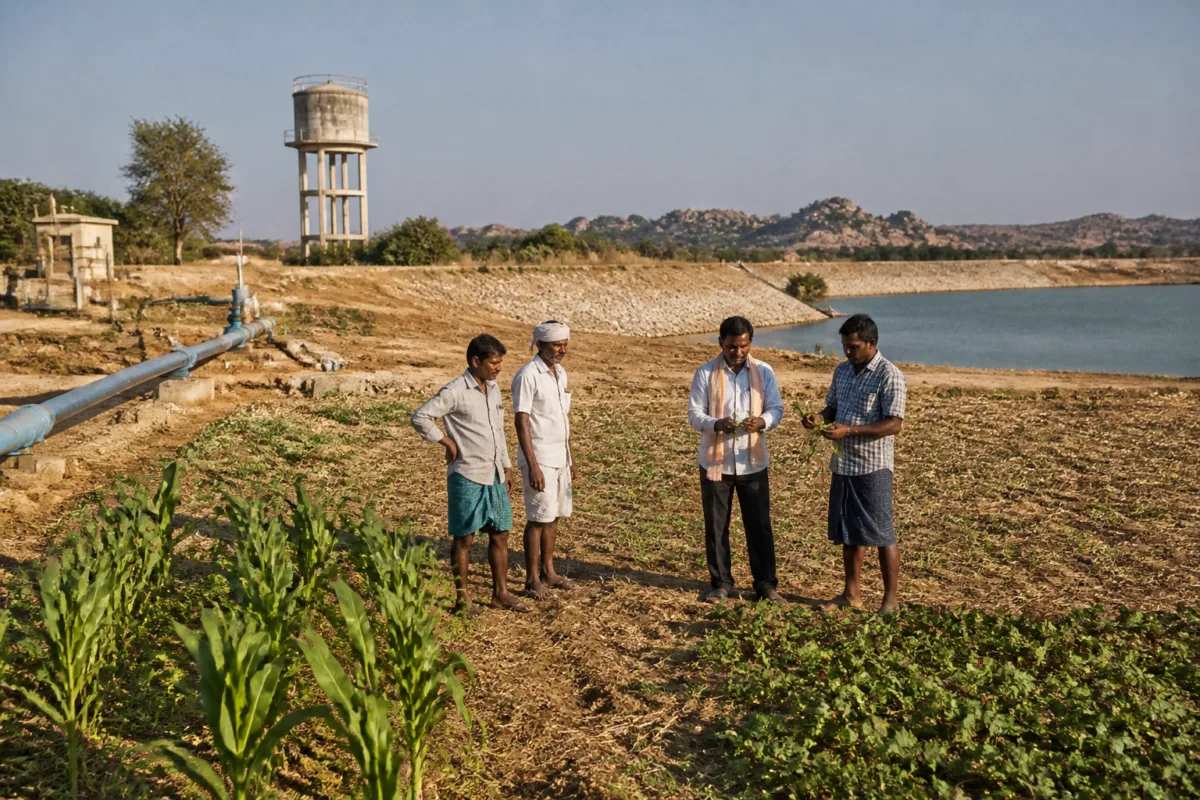
Nizamabad district authorities have directed officials to protect drinking water and electricity supplies in the coming months and discourage farmers from cultivating paddy during the Yasangi season, citing concerns over water availability linked to El Nino conditions.
District collector Ila Tripathi issued the directions during a review meeting at the integrated district offices complex on Thursday. She called for a comprehensive action plan covering drinking water requirements, irrigation availability, groundwater levels, electricity consumption, alternative crops and water conservation measures.
The administration has asked agriculture and horticulture officials to conduct village-level awareness meetings explaining groundwater conditions, available water resources and the risks of growing paddy without assured irrigation. Farmers have been encouraged to consider maize, pulses, oilseeds, vegetables and oil palm, depending on local water availability.
Tripathi said stored reservoir water must be used judiciously because adequate supplies could not be guaranteed for Yasangi paddy cultivation. The direction places drinking water needs ahead of irrigation planning and requires officials to ensure that no village faces a drinking water shortage until the next monsoon.
The district administration has also instructed officials to prepare village-wise plans for the next eight to 10 months. These plans are expected to assess drinking water demand, irrigation capacity, groundwater levels, electricity use, alternative cropping patterns and water conservation requirements. The approach is intended to identify shortages in advance rather than respond after village supplies come under pressure.
Electricity demand is also expected to increase, and the collector directed officials to make advance preparations to prevent disruptions. The link between irrigation and power demand is significant in areas dependent on agricultural borewells, where falling groundwater levels can increase pumping requirements and place additional pressure on electricity infrastructure.
To strengthen drinking water preparedness, officials have been asked to undertake urgent repairs to existing pipelines and lay new pipelines wherever necessary. The administration also directed arrangements for agricultural borewells to be made available on a rental basis to meet drinking water needs.
The district’s instructions show how a seasonal crop decision is being treated as a wider public-utility issue. Reservoir storage, groundwater conditions, farm power consumption and village drinking water networks are being planned together, rather than as separate departmental concerns.
Additional collectors Raja Goud and V. Bhujangarao, revenue divisional officers Rajendra Kumar and Vijaya Kumari, and officials from several departments attended the review meeting. The next operational step is the preparation of village-wise plans and the launch of awareness meetings before the Yasangi cultivation cycle advances.

