


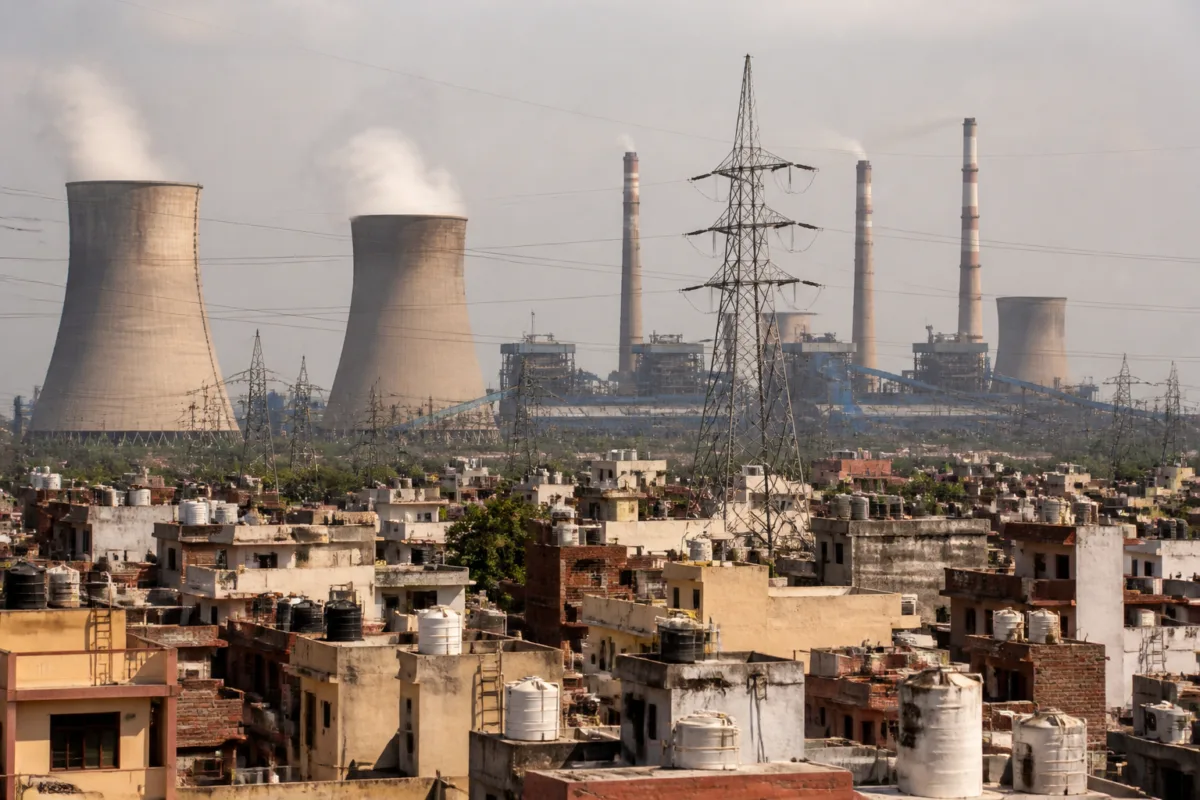
India’s power system is facing a difficult combination: weaker wind and hydropower generation at the same time as hotter conditions push up demand for air conditioning. The result, according to analysis cited by The Hindu BusinessLine, could be an electricity gap of nearly 18 terawatt-hours (TWh) over the year to June 2027, increasing pressure on coal-fired power plants and exposing the limits of a grid still adapting to weather-driven volatility.
The immediate issue is not simply whether India has enough installed generation capacity. It is whether the electricity system can provide power at the right time when renewable output falls and demand rises. That distinction is increasingly important for cities, where cooling demand is concentrated, commercial activity depends on reliable supply and households are exposed to the cost of running air conditioners, coolers and fans for longer periods.
The report links the risk to El Niño, a climate pattern associated with unusually warm sea-surface temperatures that can alter weather conditions. In the account cited by BusinessLine, El Niño-related conditions contributed to lower wind velocity and below-normal rainfall, affecting two renewable sources that normally strengthen India’s electricity supply during the monsoon period.
The Institute for Energy Economics and Financial Analysis (IEEFA) said renewable generation typically rises during the monsoon because stronger winds support wind power and seasonal water availability supports hydropower. But generation trends in July-September 2026 were affected by the weather conditions. Hydropower generation, including small and large projects and imports from Bhutan, fell 14.4 per cent year-on-year in the third quarter of 2026, according to the analysis cited in the report.
That decline matters because hydropower and wind do more than add electricity to the annual supply mix. Their availability changes with weather and season, while demand follows a different pattern. When renewable output declines during a period of high temperatures, the system must turn to other resources that can respond quickly or operate for longer periods. In India’s present system, coal-fired generation remains the principal fallback for sustained supply.
IEEFA analysts Saloni Sachdeva Michael, Charith Konda and Kaira Rakheja said weaker wind and hydropower output, combined with rising demand for air conditioning, could widen the gap between electricity demand and available supply by nearly 18 TWh over one year to June 2027. They said the potential shortfall could increase reliance on thermal power generation.
The figure combines two pressures that are often discussed separately. The first is lost generation from weather-sensitive renewable sources. The second is additional electricity use caused by warmer temperatures. Manoj Kumar, an analyst at the Centre for Research on Energy and Clean Air (CREA), told BusinessLine in July 2026 that additional cooling demand could reach as much as 10 TWh within a year. He compared that volume with a quarter of Delhi’s annual electricity use.
Kumar described this as a double challenge: falling winds and rainfall could reduce generation from wind turbines and hydropower, while higher temperatures could increase demand from power-intensive air conditioning. Taken together, the decline in available supply and increase in consumption could produce a generation gap of nearly 18 TWh, he said.
The urban significance of this calculation is substantial. Cooling is not a discretionary service for all electricity consumers. During periods of extreme heat, access to fans, coolers and air conditioners affects health, productivity and the ability of homes, offices, hospitals, data facilities, transport systems and public services to function. A stressed grid can therefore become a city-management problem, not only an energy-sector problem.
The demand trend cited in the report already points to a system under pressure. Crisil Intelligence expects India’s power demand to grow by 10-11 per cent year-on-year to between 1,885 billion units and 1,895 billion units in financial year 2027. The forecast is supported by stronger cooling demand amid higher temperatures and below-normal rainfall linked to El Niño conditions.
Power demand surged by around 22 per cent year-on-year in October 2026 to approximately 160 billion units, described in the report as the highest October demand on record. Peak demand rose by roughly 24 per cent year-on-year to 261 gigawatts. These figures are important because peak demand is a test of the system’s maximum operating requirement, while annual consumption reflects the total amount of electricity used over a longer period. A grid can have adequate annual energy in theory and still face stress during specific high-demand hours.
The October figures also illustrate why the timing of generation is becoming as important as the total volume of generation. Solar output, for example, is concentrated in daylight hours, while cooling demand can remain high into the evening. Wind and hydropower availability can also vary with weather and season. If demand rises during periods when these sources are weaker, the system needs dispatchable generation, storage or demand-management tools to close the gap.
The report says fossil-fuel-based generation increased faster than renewable generation in the third quarter of 2026. That trend does not establish a permanent reversal of India’s energy transition, but it shows how quickly weather and demand can change the balance in the short term. When reliability becomes the immediate priority, coal plants can gain operational importance even as renewable capacity expands.
This is the central infrastructure challenge: capacity additions alone do not guarantee resilience. A power system with more renewable generation also requires transmission, storage, flexible generation and forecasting systems that can manage fluctuations. IEEFA said the availability of flexible resources, including energy storage and responsive power generation, would be important for managing weather-related variability and maintaining system reliability.
Storage can help shift electricity from periods of high renewable production to periods of higher demand, although the supplied report does not specify the amount of storage India would require or identify particular projects. Responsive generation can provide additional power when renewable output falls, while improved forecasting can help grid operators plan procurement and dispatch. These functions are increasingly relevant as demand becomes more sensitive to temperature.
The institutional responsibility is spread across the electricity system. Generators must maintain available capacity, grid operators must balance supply and demand, distribution companies must serve rising loads, and policymakers must address fuel availability, transmission and investment. Cities and state authorities also influence demand through building design, cooling standards, public facilities and urban planning, although the supplied material does not quantify the contribution of any specific city-level programme.
The projected 18 TWh gap should therefore be read as a risk estimate rather than a confirmed shortage. The report attributes the estimate to IEEFA analysts and separately cites CREA’s assessment of cooling demand and Crisil Intelligence’s power-demand forecast. It does not establish that consumers will experience scheduled outages, nor does it provide a plant-by-plant assessment of coal availability, transmission constraints or state-wise supply conditions.
That distinction is important for public reporting. A projected gap can be addressed through additional generation, greater thermal output, imports, demand management, storage or other operational measures. The analysis indicates increased pressure on coal-fired generation, but it does not state the exact volume of additional coal that would be burned or identify which plants would meet the potential shortfall.
For India’s cities, the more durable lesson is that climate variability is becoming an electricity-planning variable. Higher temperatures affect both the supply side and the demand side: they can reduce the availability of some renewable resources while increasing electricity consumption for cooling. This creates a compound risk that is more difficult to manage than a simple rise in demand.
The evidence cited in the report confirms three linked developments: hydropower generation fell in the third quarter of 2026, electricity demand reached unusually high levels, and analysts expect cooling demand and renewable variability to widen the supply challenge through June 2027. What remains uncertain is how much of the potential gap will materialise and how the system will respond. The next indicators to watch are renewable generation, peak demand, thermal plant utilisation, storage deployment and the reliability of electricity supply during the hottest months.

