


The New Delhi Municipal Council (NDMC) has approved draft Solid Waste Management Bylaws 2026, proposing higher monthly user charges, mandatory four-way segregation and stronger enforcement for waste generators across residential, commercial and industrial properties in Lutyens’ Delhi.
The draft was approved at an NDMC council meeting on Monday and will come into force after notification by the Delhi government’s urban development department. NDMC has already been implementing some provisions of the 2026 Rules since April, according to officials.
For residential properties, the proposed monthly charge will be Rs 100 for plots up to 50 square metres, up from Rs 50 under the Solid Waste Management 2018 Bylaws. Properties measuring between 50 and 200 square metres will pay Rs 200 instead of Rs 100, while plots larger than 200 square metres will attract a charge of Rs 300, compared with Rs 200 earlier. Charges for other categories of waste generators will also increase.
The draft proposes advance payment options covering five and a half months or 10 months. The user fee is scheduled to rise automatically by 5% every year from January 1. Unpaid charges may be recovered as arrears under the NDMC Act, while continued violations could lead to fines and prosecution procedures.
NDMC generates around 300 tonnes of waste a day and currently processes about 300 tonnes daily against an available processing capacity of 509 tonnes per day. The council said the proposed bylaws will shift the operational focus from collection and disposal to segregation, recovery, recycling and decentralised processing.
“The user fee is included in the water bills charged from residential and commercial users. Between Jan and Aug this year, we collected Rs 2.5 crore, including Rs 1.7 crore from commercial users and Rs 83.8 lakh from residential users,” NDMC vice-chairman Kuljeet Chahal said.
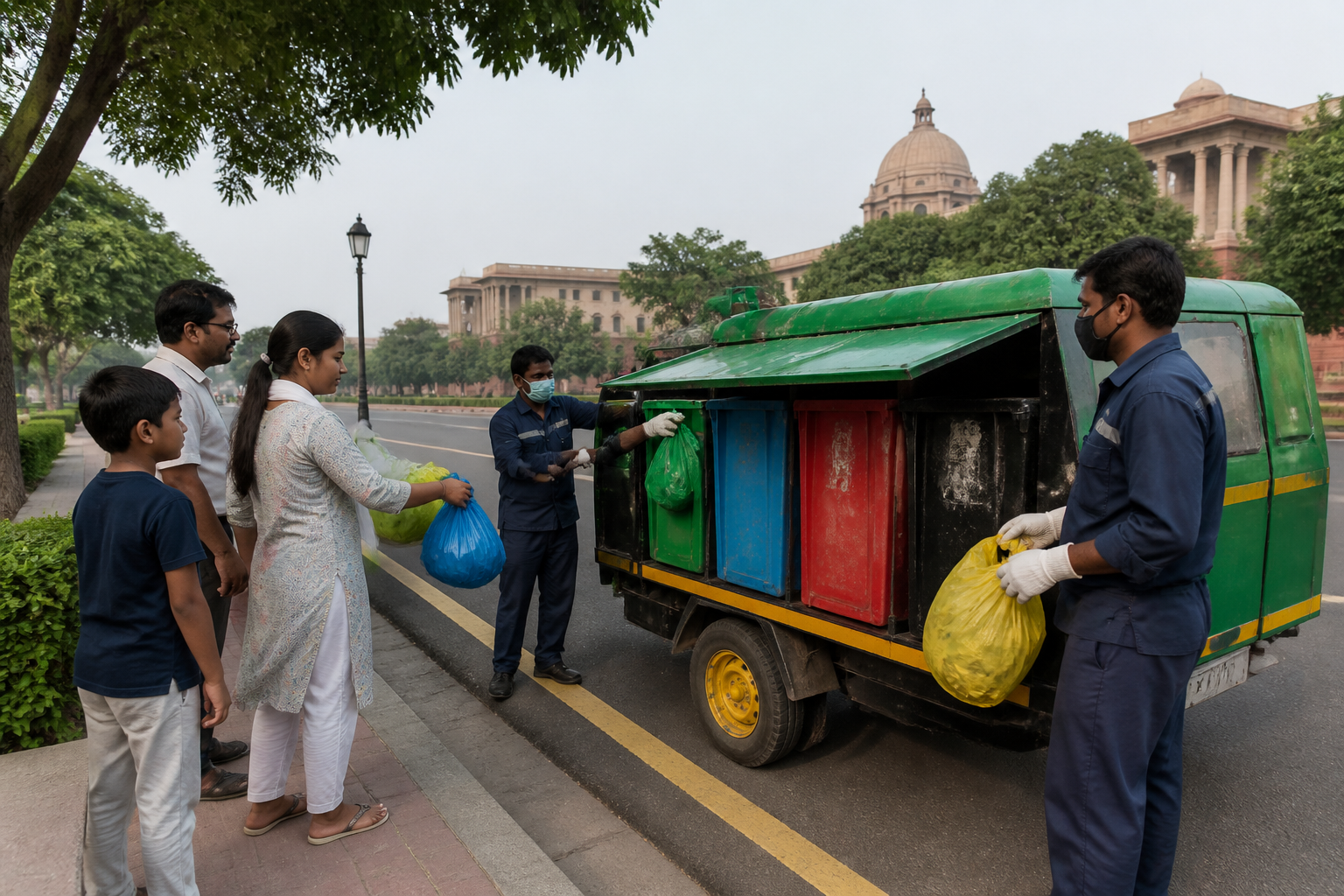
NDMC said it has arranged for four-way segregation at source into wet, dry, sanitary and special-care waste. Its auto-tippers used for door-to-door collection have four compartments, with a helper assigned to each vehicle to support segregation. Awareness jingles are also played during collection rounds, Chahal said.
The council’s compliance system includes awareness campaigns, field monitoring and enforcement. An independent consultant has been engaged for third-party audits, while the ‘Har Din 4 Bin’ campaign is being conducted through resident welfare associations, market associations, schools and other institutions.
Three sanitation squads covering all 14 sanitation circles have been formed for surprise inspections and enforcement. Officials said NDMC recorded 433 challans for violations between January 1 and August 31, including 87 in August alone.
The draft bylaws also strengthen requirements for 29 bulk waste generators. Their compliance is being monitored through day-wise data, while NDMC continues to identify other generators covered by the rules. The council uses its 311 platform, management information system and Integrated Command and Control Centre, along with photographic evidence and field inspections, to monitor whether segregated waste remains separate during collection and transportation.
Under the proposed norms, the centralised Central Pollution Control Board portal will be used for registration, returns and GPS tracking of collection vehicles. The bylaws will become effective after the Delhi government’s urban development department issues the formal notification.
