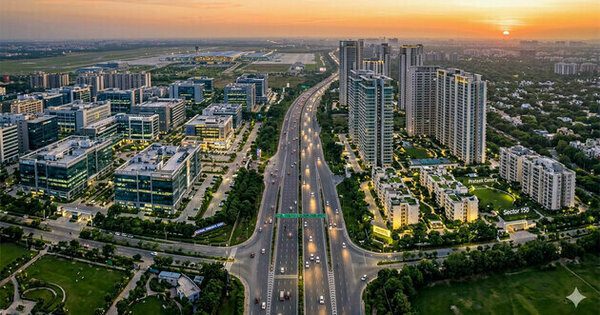
The geography of growth in the National Capital Region (NCR) is undergoing a structural shift, with new investment corridors emerging beyond Delhi’s traditional urban core. Infrastructure expansion, improved connectivity, and changing lifestyle preferences are driving this transition, positioning peripheral cities as the next wave of economic and real estate activity.
These NCR investment corridors are increasingly anchored around transport-led development. Expressways, metro extensions, and airport-linked infrastructure are reshaping accessibility across the region, allowing satellite cities such as Noida, Greater Noida, Gurugram, and Faridabad to function as independent growth centres rather than mere extensions of Delhi. The upcoming rapid transit systems and regional corridors are expected to further integrate these nodes, reducing travel times and unlocking new development zones. One of the most significant drivers of this transformation is airport-led urbanisation. The operationalisation of the Noida International Airport in Jewar is already triggering large-scale investment across the Yamuna Expressway belt, attracting manufacturing, logistics, and data-driven industries. This has created a multi-layered investment landscape where corporate offices cluster in established hubs like Noida, while industrial and logistics expansion spreads into Greater Noida and adjoining corridors. Gurugram, meanwhile, continues to evolve through micro-market expansion rather than geographic sprawl. Areas along the Dwarka Expressway and Southern Peripheral Road are emerging as high-value corridors, supported by strong infrastructure and proximity to employment centres.
These zones illustrate how NCR investment corridors are not uniform but vary in function—ranging from premium residential clusters to logistics and industrial hubs. A defining feature of this shift is the decentralisation of real estate demand. As land constraints and high costs limit expansion within Delhi, both developers and buyers are moving towards peripheral regions offering larger land parcels, better planning potential, and relatively lower entry costs. This trend is reinforced by post-pandemic preferences for larger homes, integrated townships, and improved environmental quality. However, the rapid rise of NCR investment corridors also raises critical planning challenges. Urban experts warn that infrastructure-led growth, if not aligned with sustainability goals, could replicate the same issues seen in older urban centres—congestion, inadequate public services, and environmental stress. The expansion of built-up areas without parallel investments in public transport, water systems, and green infrastructure risks undermining long-term liveability. There are also governance complexities. NCR’s multi-state administrative structure means that different development authorities operate with varying priorities, approval systems, and regulatory frameworks. This fragmentation can impact project timelines, infrastructure delivery, and overall urban coherence.
From an economic perspective, the diversification of growth corridors is strengthening the region’s resilience. By distributing investment across multiple nodes, NCR is reducing dependence on a single urban centre while enabling sector-specific clustering—technology in Noida, logistics in Greater Noida, and corporate services in Gurugram. As the region continues to expand, the success of these NCR investment corridors will depend on how effectively they integrate infrastructure, land use, and environmental planning. The next phase of growth is likely to be defined not just by connectivity, but by the ability to create balanced, climate-resilient urban ecosystems that can sustain both economic momentum and quality of life.