


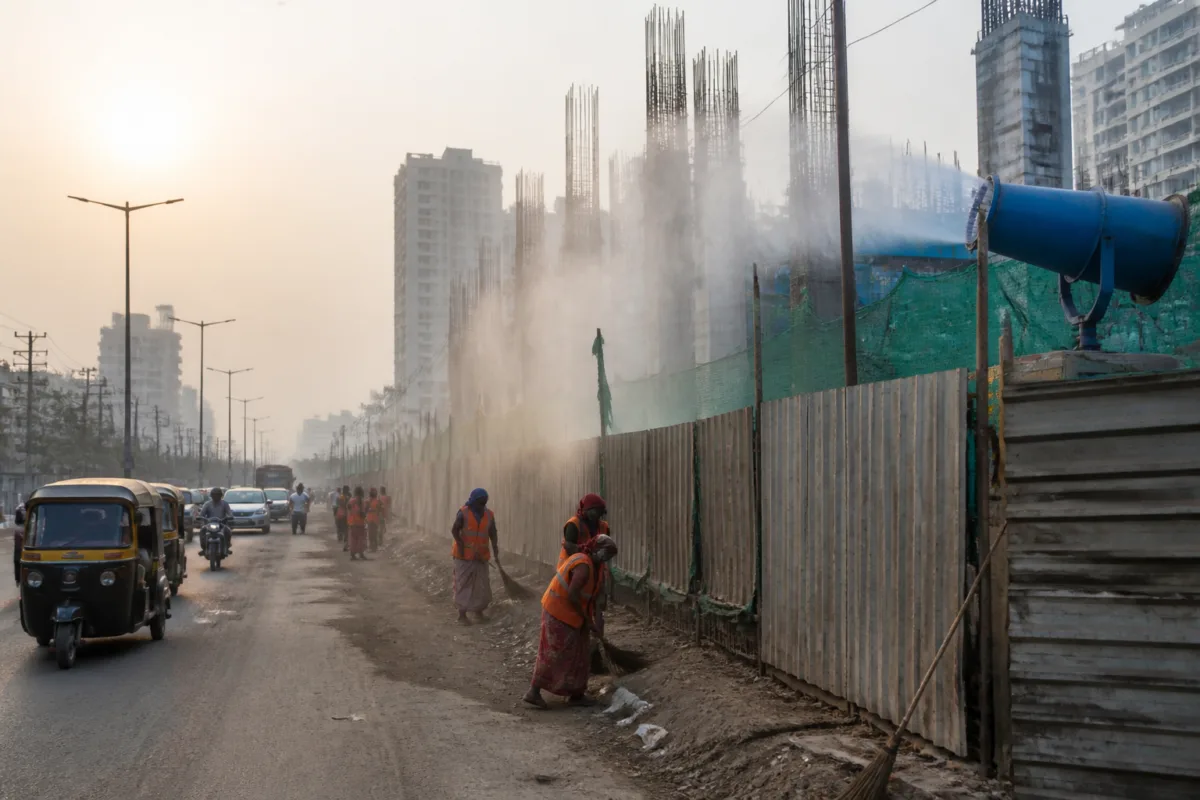
Morning smog has increased across Navi Mumbai in recent days, prompting environmental advocates to seek stronger measures from the municipal administration to control air pollution and maintain air quality, according to a report by Loksatta.
The report said residents had noticed more haze during the early morning and morning hours, with some experiencing coughing, colds and breathing-related discomfort. It did not provide air-quality readings or independently verified medical data linking these symptoms to the reported smog.
The Navi Mumbai Municipal Corporation is reported to have tightened its position on construction companies. Developers and architects who fail to follow the prescribed standard operating procedure for controlling dust and noise pollution at construction sites may face financial penalties, the report said.
The measures described include installing 30-foot-high metal sheets and green safety nets around plots, along with foggers, water-sprinkling systems and air-quality monitoring equipment. These requirements are intended to limit the spread of construction dust and monitor conditions around active sites.
The report did not specify how many developers or architects had been penalised, whether the stated requirements are part of a newly issued municipal order, or how frequently compliance inspections are being conducted. It also did not report the number of construction sites covered by the measures.
Residents have also drawn attention to soil and construction debris on roads as sources of pollution. They have called for the municipal corporation to clean roads, remove accumulated soil and debris, and wash roads with treated water. The civic body is reported to claim that it sprays water on busy roads, although residents and environmental advocates have sought an expansion of that activity.
The concerns place construction-site enforcement and road maintenance alongside seasonal or weather-related factors in the city’s pollution discussion. For residents, the effectiveness of the response will depend on whether dust-control equipment is installed and operated at construction sites, whether roadside debris is removed promptly, and whether municipal water-spraying and cleaning activities are carried out consistently. The available report, however, does not provide monitoring data to assess the impact of these measures.

