


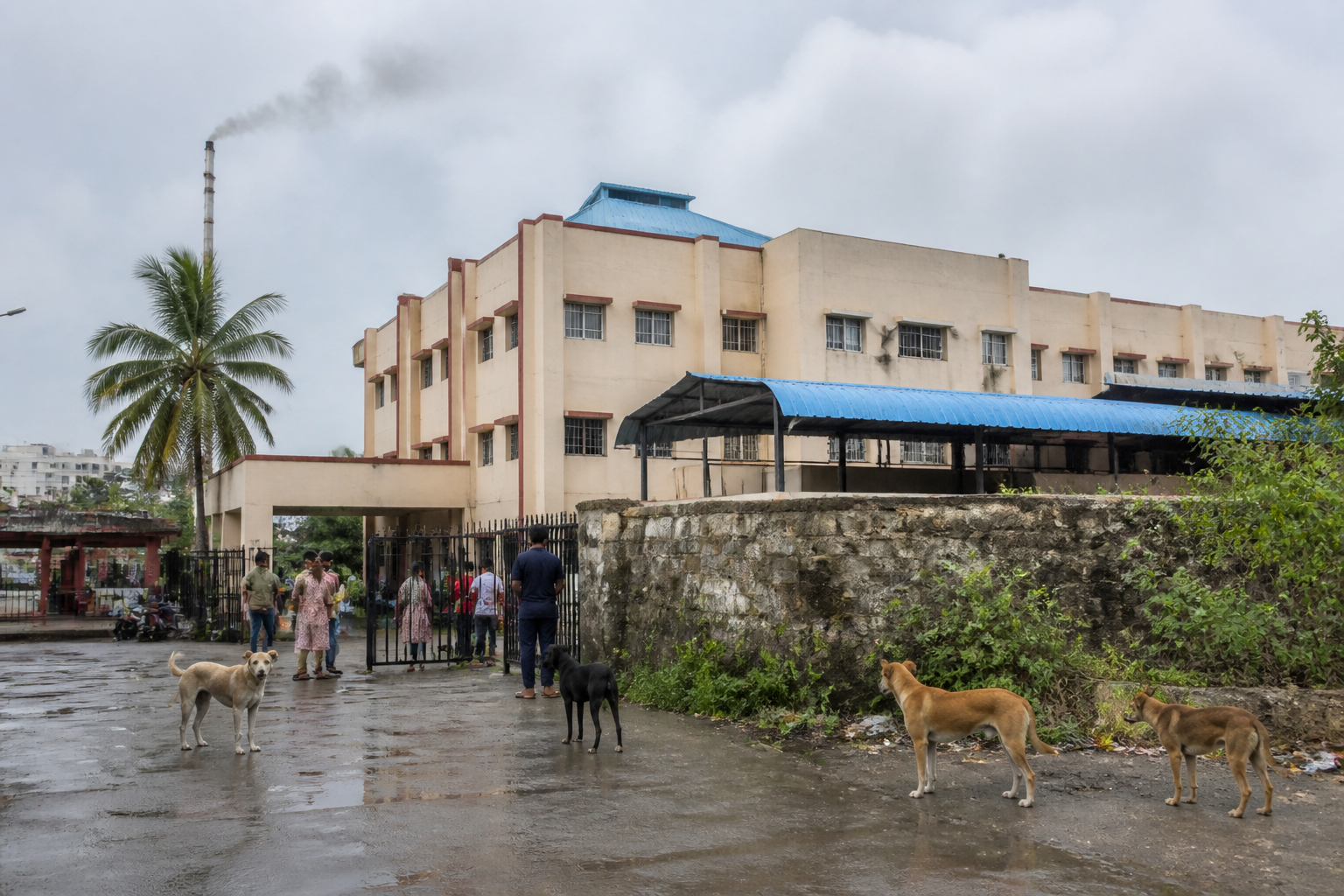
Navi Mumbai’s veterinary hospital in Juinagar, built by the municipal corporation at a reported cost of Rs 5 crore, is facing criticism from citizens and elected representatives over the lack of essential facilities. Members associated with the Maharashtra Navnirman Sena and Shiv Sena have demanded immediate measures, while the chairperson of the civic health committee has issued directions for action, according to a report by Loksatta – Navi Mumbai.
The hospital was constructed on a plot beside the Juinagar crematorium to provide timely treatment and care for animals in the Navi Mumbai Municipal Corporation area. However, representatives have alleged that the facility is functioning largely in name only because the required services and infrastructure are not available in sufficient capacity.
The reported shortfall has led to demands that the civic body make all necessary facilities available without delay. Citizens have expressed concern that a building constructed after spending crores of rupees is not able to deliver the veterinary services for which it was established.
The facility is part of the municipal corporation’s stated effort to ensure that animals in the city receive appropriate care and treatment. The report does not specify which medical equipment, staffing arrangements or treatment services are currently unavailable at the hospital. It also does not provide a municipal response detailing the steps already taken to address the complaints.
The issue has implications beyond animal welfare. Veterinary facilities are also linked to the management of infectious diseases among animals and to public awareness about safe handling and sale of meat. The Navi Mumbai Municipal Corporation had previously organised workshops to provide information about infectious diseases affecting animals and to create awareness among meat sellers.
One such workshop was conducted at the civic headquarters’ knowledge centre in collaboration with Mumbai Veterinary College, Parel. The programme focused on technology developed for the production of clean and safe chicken, goat and sheep meat for citizens. Meat sellers operating within the municipal area were given information about this technology, according to the report.
The contrast between these awareness initiatives and the reported shortage of facilities at the Juinagar hospital has become a point of concern for residents and representatives. A functioning veterinary facility is expected to support treatment, animal care and the wider public-health responsibilities associated with disease prevention and food safety. The report, however, does not establish the hospital’s current staffing levels, patient load, equipment inventory or operating schedule.
The demands now centre on making the hospital fully operational and ensuring that animals receive treatment on time. The health committee chairperson’s directions indicate that the matter has reached the municipal committee level, but the report does not state a completion deadline or identify a specific funding and implementation plan.
Further action by the Navi Mumbai Municipal Corporation on the requested facilities, staffing and medical services will determine whether the Juinagar hospital can operate at the capacity envisaged when the building was constructed.
