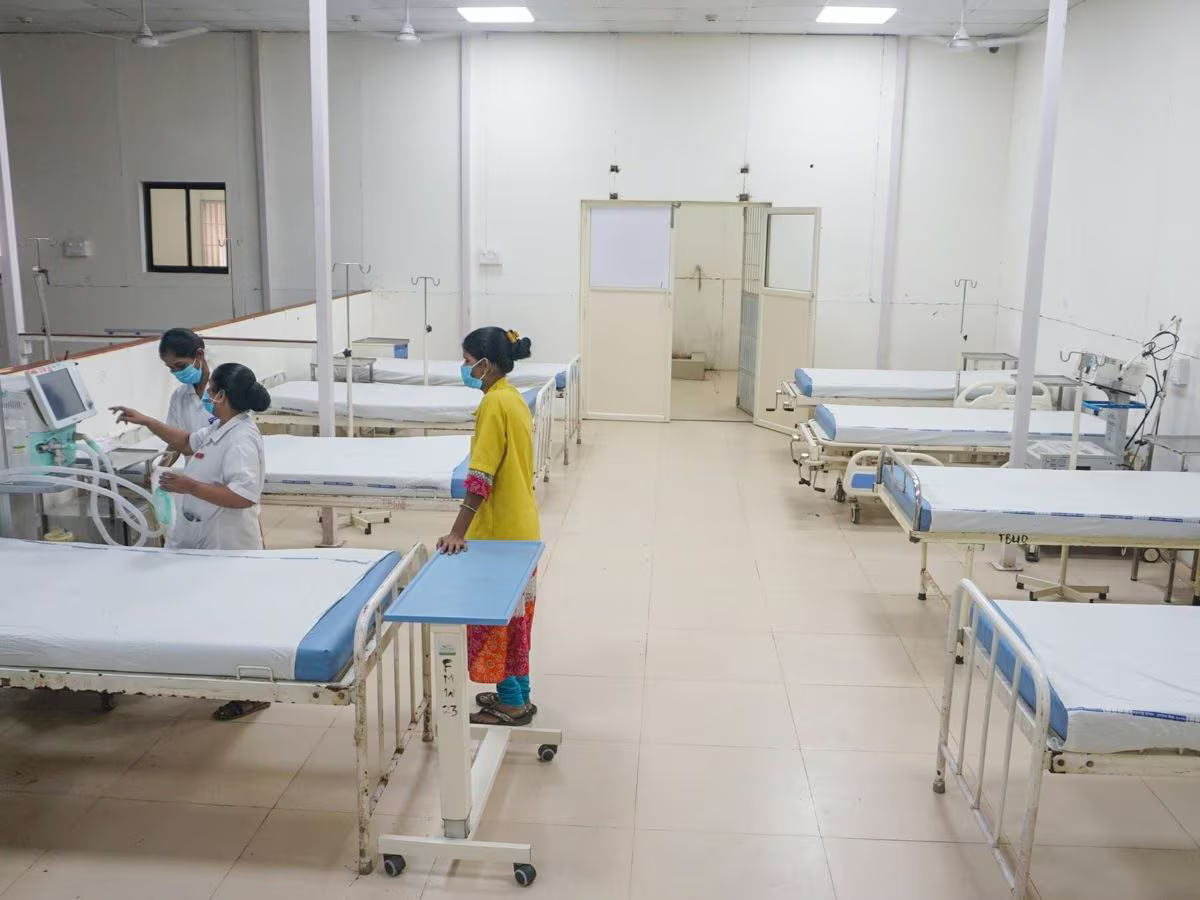
Navi Mumbai Health Infrastructure Push Gains Momentum
Navi Mumbai’s civic administration has initiated a broad upgrade of municipal healthcare infrastructure, including the launch of a blood bank at Airoli’s Rajmata Jijau Hospital, as authorities move to strengthen public medical services amid rising urban healthcare demand across the rapidly expanding satellite city. The Navi Mumbai Municipal Corporation (NMMC) has directed multiple operational and infrastructure improvements across civic hospitals following a review of healthcare facilities in Airoli and Turbhe. Officials said the planned interventions are intended to improve accessibility, reduce patient waiting times and expand specialised treatment capacity within the municipal healthcare network.
Among the immediate measures is the establishment of a blood bank at the Airoli hospital, expected to become operational within weeks. Public health planners say such facilities are increasingly essential in fast-growing urban regions where emergency care demand continues to rise alongside population density and traffic-linked accident risks. The Navi Mumbai hospitals upgrade also includes expansion of departments such as orthopaedics, dental care and ear, nose and throat treatment services. Authorities are additionally exploring future introduction of specialised medical care in areas including gastroenterology and fertility treatment, reflecting changing healthcare needs in urban populations. Healthcare administrators acknowledged that staffing shortages remain a major operational challenge despite the availability of doctors in several facilities. Municipal authorities have therefore prioritised recruitment and deployment of paramedical workers, technicians and support staff to improve hospital efficiency and patient management systems. Particular attention is being directed towards diagnostic bottlenecks affecting women patients. Officials reviewing hospital operations identified long waiting periods for sonography services, prompting instructions for additional manpower deployment and process optimisation.
Urban health experts note that healthcare infrastructure has become a critical component of sustainable city planning, particularly in metropolitan regions experiencing rapid residential growth. As Navi Mumbai continues to attract housing development and economic investment, public healthcare systems are facing increased pressure to provide equitable access across income groups. The administration has also directed hospitals to improve utilisation of existing surgical infrastructure, including modular operation theatres that remain underused due to scheduling inefficiencies and staffing gaps. Medical planners say better operational management can significantly improve service delivery without requiring major new construction expenditure. Digital transformation has emerged as another priority within the Navi Mumbai hospitals upgrade initiative. Civic authorities are pushing for faster digitisation of patient records and registration systems to reduce administrative delays and improve continuity of care across departments. Public health concerns linked to maternal and neonatal outcomes have additionally triggered targeted administrative intervention. Municipal health officials have been instructed to study high anaemia prevalence among pregnant women and the incidence of low birth weight births, issues that continue to affect urban public health indicators despite improving healthcare access.
The civic administration is also planning to introduce milk bank facilities across municipal hospitals to strengthen neonatal care services for vulnerable infants. Urban policy analysts say Navi Mumbai’s healthcare expansion reflects a wider shift in Indian cities where municipal governance is increasingly being evaluated not only on transport and housing infrastructure, but also on the resilience and inclusivity of public health systems. As urban populations continue to grow, experts argue that healthcare accessibility will become central to long-term liveability and economic productivity across metropolitan regions.