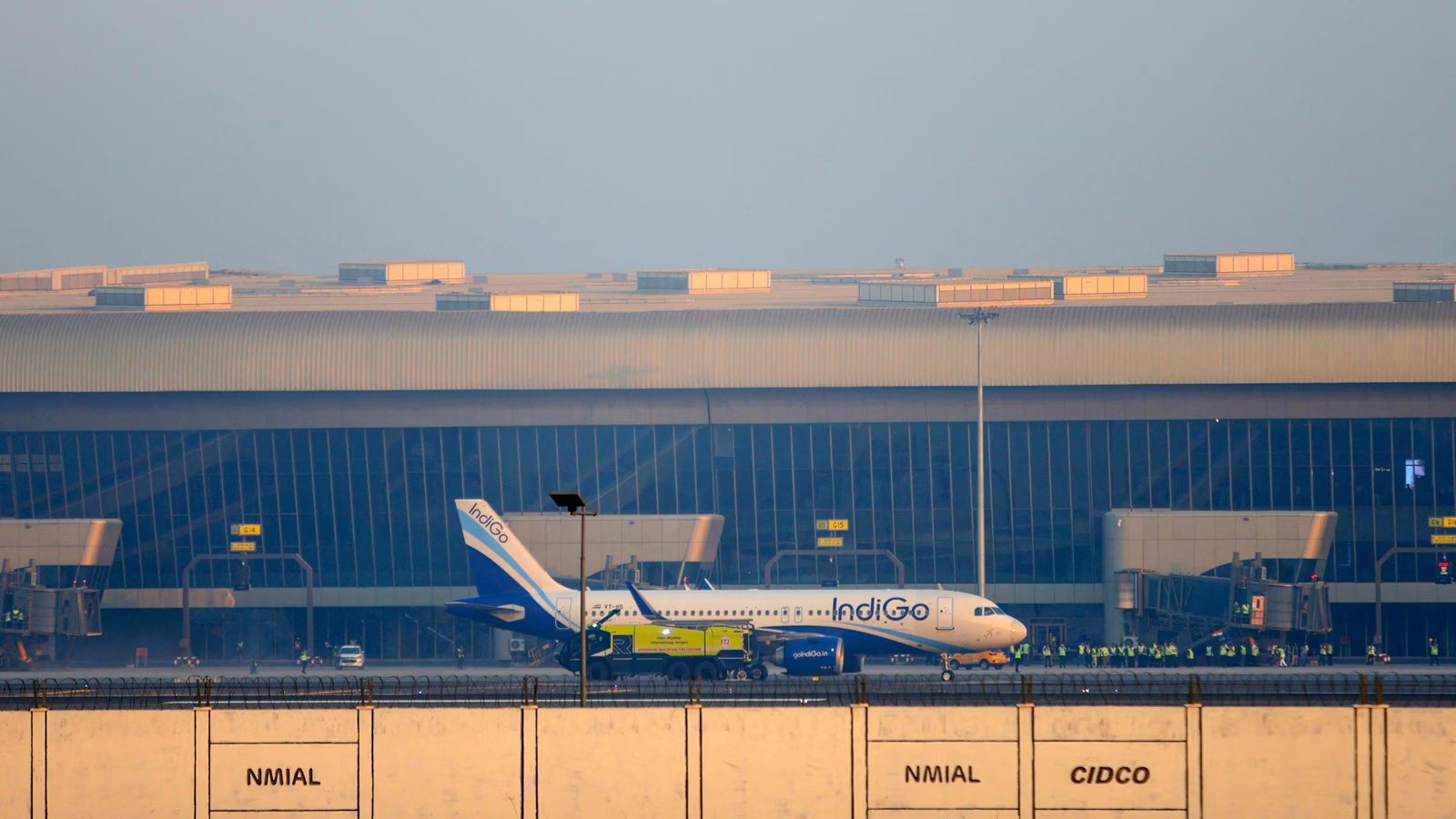
Navi Mumbai’s newly operational airport is witnessing a rapid rise in domestic traffic, with projections indicating a sharp increase in daily passenger volumes even as its international rollout faces delays. The development underscores both the growing demand for air travel in the Mumbai Metropolitan Region and the complexities of aligning global connectivity with geopolitical realities. Since beginning domestic operations late last year, the airport has steadily scaled up its capacity, now handling tens of thousands of passengers each day. Aviation planners expect this number to more than double in the coming months, with flight movements also rising significantly. The expansion is being closely watched as it reflects how quickly new infrastructure can absorb overflow demand from the region’s saturated primary airport.
A key driver of this growth has been the increasing presence of low-cost carriers, which have rapidly expanded their schedules to tap into demand from Navi Mumbai and surrounding urban clusters. Industry analysts note that the airport’s location, combined with improved road and upcoming rail connectivity, is beginning to reshape travel patterns, reducing dependence on legacy hubs in the city. However, the anticipated launch of international operations has been deferred, highlighting the vulnerability of aviation planning to global uncertainties. Airline strategies for overseas routes are being recalibrated due to evolving geopolitical conditions, particularly in regions that serve as major transit corridors. As a result, initial plans for limited international services have been pushed back, despite early interest from carriers. Urban development experts argue that this delay, while temporary, could influence the pace at which the airport integrates into global networks. I
International connectivity is often a catalyst for broader economic activity, including trade, tourism, and investment. Without it, the airport’s role may remain largely domestic in the near term, even as passenger volumes grow. At the same time, the rise in domestic traffic highlights a deeper structural trend. India’s aviation market continues to expand rapidly, driven by rising incomes, regional connectivity schemes, and a shift towards air travel for intercity mobility. In this context, Navi Mumbai Airport is positioned as a critical pressure valve for the region, helping to decongest existing infrastructure while supporting future growth. From a sustainability perspective, experts caution that expansion must be accompanied by efficient multimodal integration and environmentally responsible operations. Airports are high-emission nodes, and their long-term viability will depend on how well they align with low-carbon mobility strategies, including public transport access and energy-efficient design.
Looking ahead, officials remain optimistic that international services will commence once external conditions stabilise. For now, the focus remains on scaling domestic operations and building a robust passenger base. The coming year will be crucial in determining whether the airport can transition from a supplementary facility into a fully integrated aviation hub within India’s busiest metropolitan region.