


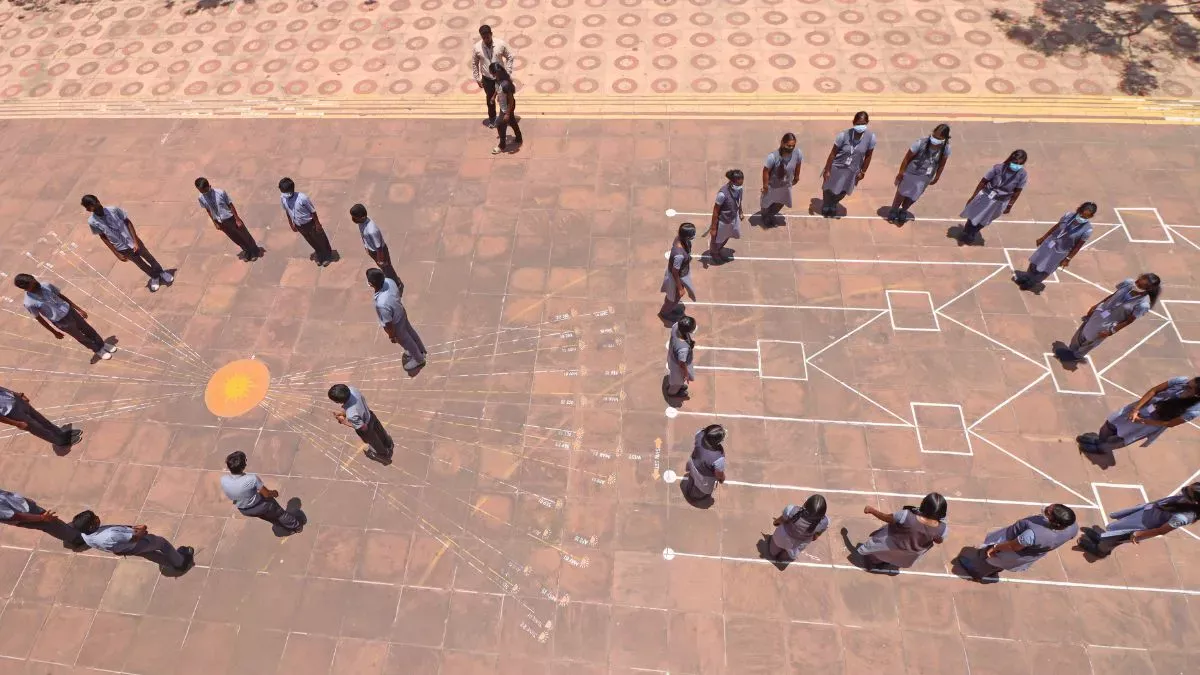
Bengaluru is set to host an educational workshop centred on the phenomenon of Zero Shadow Day, an astronomical event that occurs when the sun is positioned directly overhead, causing vertical objects to cast no shadow. The initiative reflects a growing effort by science institutions in the city to make complex natural phenomena more accessible to the public, particularly students and young learners.
The workshop will focus on explaining the science behind solar positioning and Earth’s axial tilt, offering participants an opportunity to observe and understand how such events occur. Zero Shadow Day typically takes place in regions located between the Tropic of Cancer and the Tropic of Capricorn, making cities like Bengaluru uniquely positioned to experience it twice a year.Organisers aim to use the event as a platform for hands-on learning, encouraging participants to engage with simple experiments that demonstrate the absence of shadows at solar noon. Such initiatives are increasingly being viewed as important tools for bridging the gap between theoretical science education and real-world observation.Urban educators point out that events like these can play a broader role in shaping scientific awareness in rapidly growing cities.As urban environments become more built-up, opportunities for direct engagement with natural phenomena often diminish. Structured workshops and public outreach programmes help counter this by bringing attention back to the relationship between urban life and natural systems.
The relevance of such educational efforts extends beyond astronomy. Understanding solar movement has practical implications for urban planning, including building orientation, daylight utilisation and energy efficiency. In the context of climate-responsive design, insights into sun paths can inform strategies to reduce heat gain, improve ventilation and optimise the use of natural light in dense urban settings.Bengaluru’s emphasis on science outreach also aligns with its broader identity as a hub for research and innovation. By fostering curiosity and encouraging observational learning, institutions contribute to building a knowledge-driven urban culture that supports long-term innovation ecosystems.At a time when climate awareness and sustainability are becoming central to urban discourse, integrating scientific literacy into public engagement is gaining importance.Workshops focused on phenomena like Zero Shadow Day not only spark curiosity but also provide a gateway to deeper conversations about the environment, energy use and sustainable urban living.Participants are expected to gain both conceptual understanding and practical insights, making the experience relevant across age groups. For students in particular, such exposure can complement formal education and inspire interest in science, technology and environmental studies.
As cities continue to evolve, initiatives that connect residents with natural processes are likely to play a key role in fostering informed and engaged communities. Bengaluru’s upcoming workshop highlights how even simple astronomical events can be leveraged to promote awareness, learning and a more thoughtful approach to urban living.
Also Read:Bengaluru sustainable innovation event explores climate solutions
