


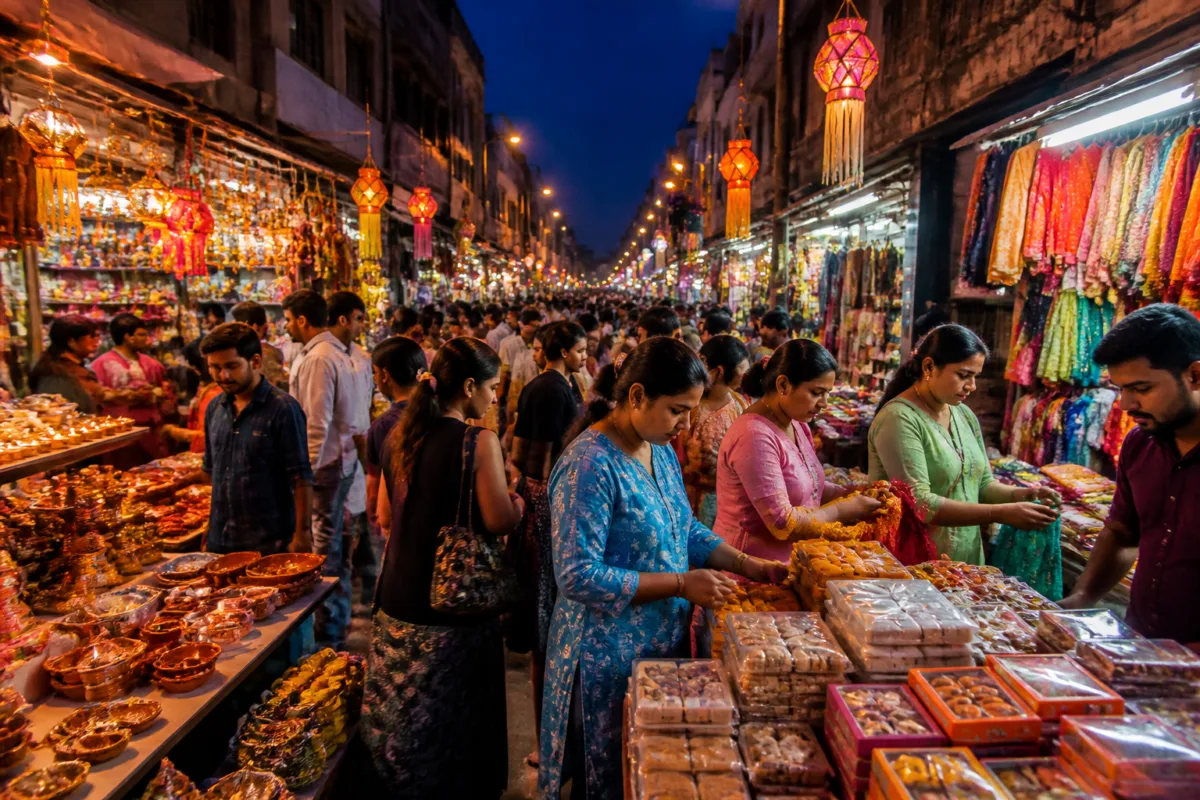
Nashik’s Diwali shopping rush has intensified after industries paid bonuses ranging from Rs15,000 to Rs1.25 lakh to workers, increasing consumer demand across garments, gold, automobiles, electronics, household goods and other retail categories. The surge has been visible in the city’s major commercial areas ahead of the festival.
Shoppers crowded Main Road, MG Road, Shalimar, Saraf Bazaar, Kapada Market and Raviwar Karanja on Tuesday evening to buy clothes, lanterns, diyas, decorative items, sweets, dry fruits, gifts and household essentials. The increased purchasing power is being linked to bonus payments made by industries in the Satpur and Ambad MIDC estates within Nashik Municipal Corporation limits.
Ashish Nahar, president of the Nashik Industries and Manufacturers Association, said bonuses of Rs15,000 to Rs1.25 lakh had been paid to workers this year. He estimated that around Rs500 crore would be distributed as Diwali bonuses to nearly one lakh workers employed across more than 3,500 industrial units in the two estates.
Nahar said industries had good order books across sectors including automobiles, electrical and electronic goods, and were working to complete orders on time. According to him, the bonus payments would further support markets and Nashik’s economy during the festive period.
Retailers reported that customer footfall had risen since November 1, although inflation was influencing purchasing decisions. Naresh Parakh, president of the Nashik Retail Cloth Merchants’ Association, said garment stores had seen increased visits but expected Diwali business could remain below last year’s level because customers were spending cautiously.
The effect of the bonus payments was also being reported in the automobile market. Sachin Mahajan, president of the Maharashtra unit of the Federation of Automobile Dealers Associations, said competitive prices and festive offers were supporting vehicle sales. He said industrial workers’ bonuses were a major factor driving demand and that some consumers were booking vehicles during their first visit to dealerships, rather than taking additional time after inspecting them.
The spending pattern links Nashik’s industrial employment base with activity in its traditional markets and organised retail sectors. The scale of the estimated payout will determine how strongly the festive demand is sustained as Diwali shopping progresses, while retailers continue to monitor the effect of inflation on final purchases.

