


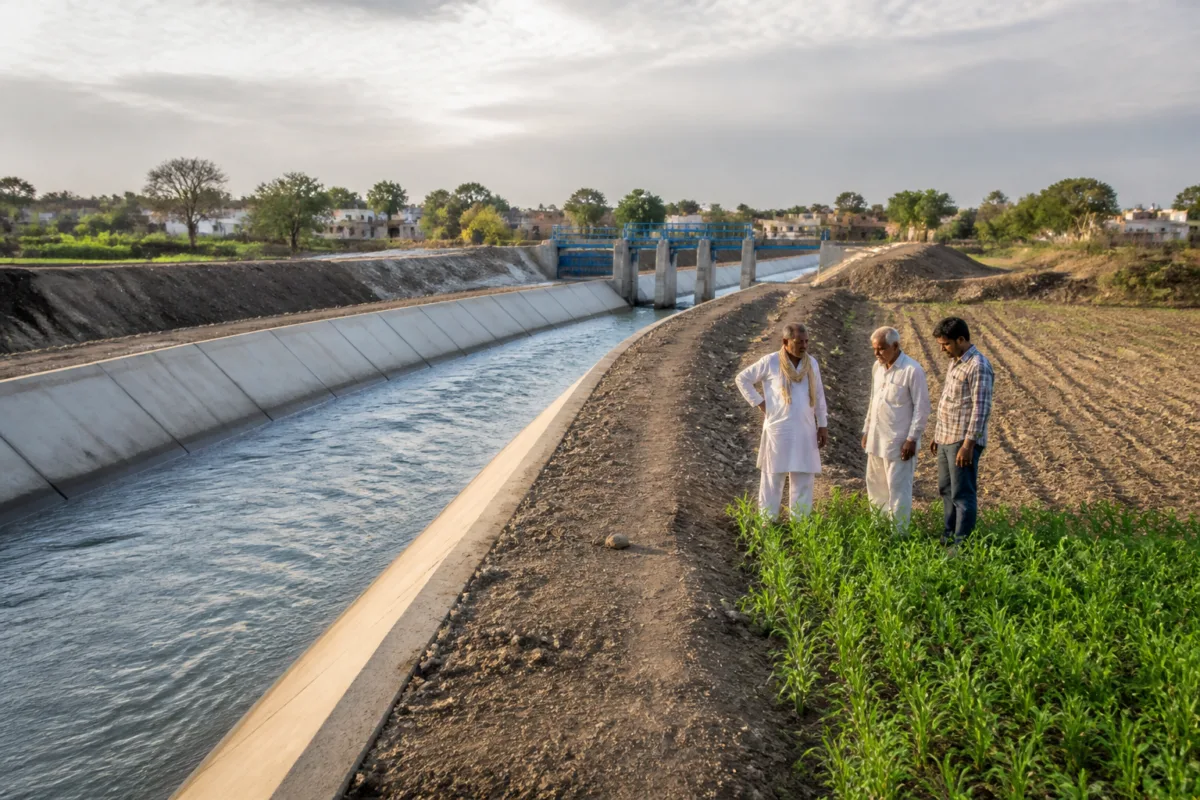
The Rs 2,387 crore Narmada-Mahi link irrigation project was inaugurated in Sardarpur, Dhar district, on Saturday, with the Madhya Pradesh government stating that it will provide water to more than 57,000 hectares of agricultural land across 260 villages in Dhar and Jhabua districts.
Chief minister Mohan Yadav inaugurated the project, which is expected to benefit an estimated 70,000 farmers. According to the Times of India report, the project covers 66 villages in Dhar and 194 villages in Jhabua. It is intended to improve the availability of water for irrigation, drinking and industrial requirements across the two districts.
The project is being presented as a major expansion of the region’s agricultural water infrastructure. By linking villages across Dhar and Jhabua, it is expected to extend irrigation access to areas that depend on more variable rainfall and existing water sources. The supplied report does not provide details of the project’s engineering components, construction schedule, command-area development or the expected date by which the full irrigation coverage will become operational.
The inauguration also included a direct transfer of Rs 317.84 crore under the Pradhan Mantri Fasal Bima Yojana. The payment covers 16.7 lakh farmer applications for the Rabi 2025–26 crop insurance cycle, according to the report. The transfer was announced alongside the irrigation project and is separate from the project’s capital cost.
At the event, Sardarpur MLA Pratap Grewal urged the authorities to conduct a survey of villages left out of the project and consider incorporating them into its coverage. He also sought a sports stadium to support local female athletes, an extension of water supply from Mahi Dam to Kalikrai and the declaration of Dhar district as drought-affected because of deficient rainfall.
The demands indicate that questions over coverage and wider water stress remain part of the region’s administrative agenda even after the project’s inauguration. The immediate implementation milestones, including the construction and commissioning timeline and the process for reviewing left-out villages, were not specified in the supplied report. The state government’s next steps on these demands will determine how the announced project is extended across the two districts.

