


Nariman Point Cuff Parade bridge: what the CRZ recommendation unlocks for Mumbai
The proposed 1.87-kilometre bridge between Nariman Point and Cuff Parade has moved closer to implementation after the central government’s Expert Appraisal Committee recommended CRZ approval for the project. The recommendation is not the final environmental clearance, but it advances a project that has been planned as a response to congestion in two of Mumbai’s most constrained south Mumbai districts.
The Mumbai Metropolitan Region Development Authority, or MMRDA, is still awaiting the final CRZ approval. Once that approval is received, the authority will need to obtain a no-objection certificate from the Indian Navy, secure other permissions and conduct the tender process before construction can begin. The sequence shows that the committee’s recommendation is an important regulatory step, but not the end of the project’s approval process.
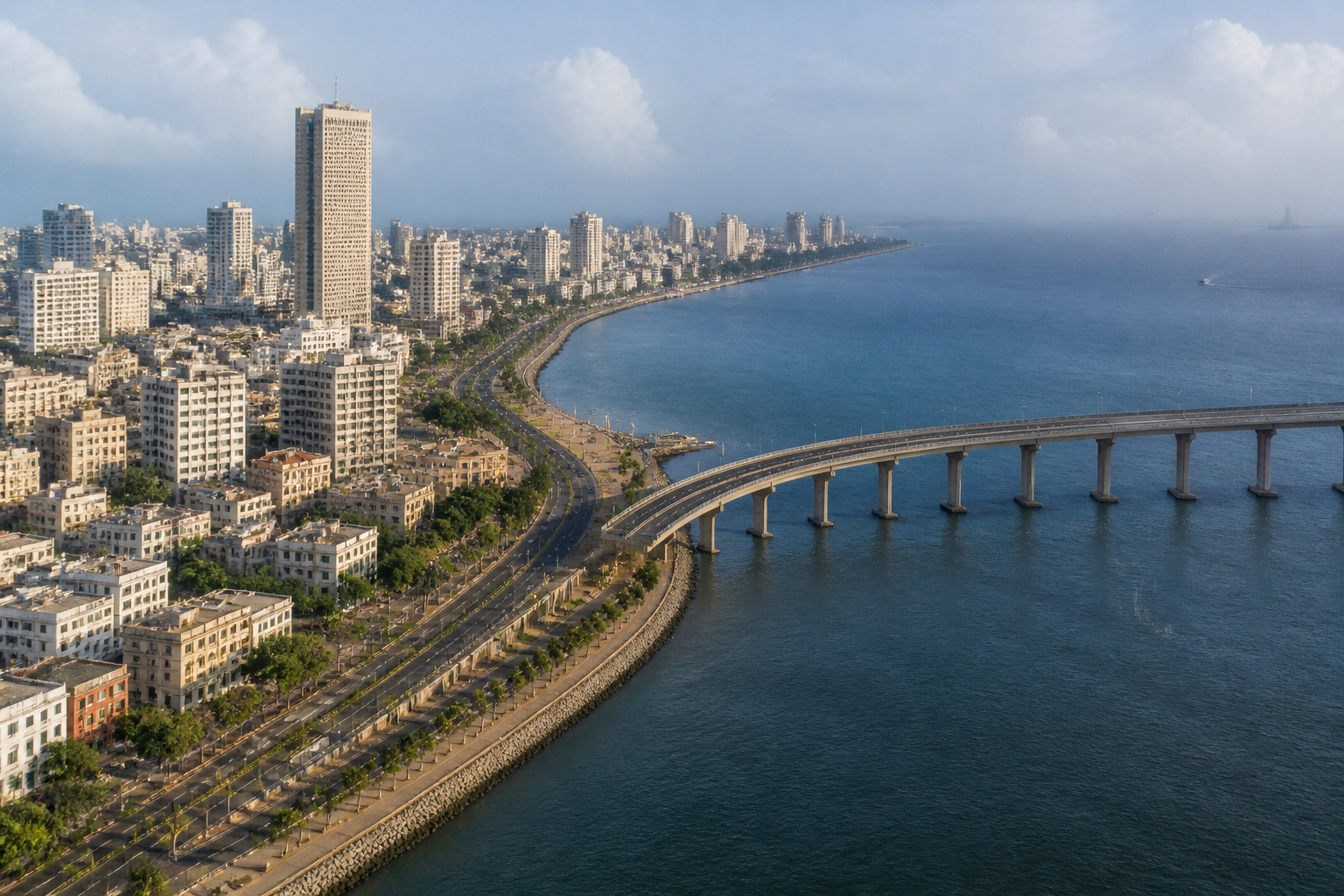
The bridge is planned to begin near the National Centre for the Performing Arts at Nariman Point and end at Captain Prakash Pethe Marg in Cuff Parade. The estimated cost is Rs 588.36 crore. Its proposed width will vary between 16 metres and 36 metres, while 1,665 square metres of land is expected to be acquired for the project. If completed and opened to traffic, the connection is expected to reduce the travel time between Nariman Point and Cuff Parade to about five minutes.
The project originated in recommendations from Comprehensive Transport Study-I, according to the report. MMRDA initially considered a sea link between Nariman Point and Cuff Parade, but the proposal was subsequently modified. The current plan is for a bridge running parallel to the coastline rather than a conventional link extending directly across the sea.
That change in alignment is significant because the bridge must pass through a heavily regulated coastal environment. MMRDA first submitted its CRZ clearance proposal to the Maharashtra Coastal Zone Management Authority. After the state-level authority supported the proposal, it was forwarded to the Centre for further consideration. The central expert committee has now recommended clearance under the CRZ Notification, 2019. The final decision is still awaited.
The committee’s reported reasoning connects the project directly to congestion and travel time. Nariman Point and Cuff Parade are geographically close, yet traffic conditions can make short journeys slow and unpredictable. The proposed bridge is intended to provide an additional connection between the two areas and reduce pressure on existing routes. The project’s stated transport benefit, therefore, depends not only on the bridge being built but also on how effectively it connects with the surrounding road network.
The approval process also brings the project’s environmental and physical impacts into view. MMRDA’s proposal states that 132 trees are affected by the work, of which 79 will be transplanted. It also states that no mangrove tree will be affected. The proposal further records that 45 structures will be affected by the project. These details make clear that the bridge is not only a transport intervention; it is also a land, vegetation and built-structure intervention in a tightly developed part of Mumbai.
The distinction between mangroves and other affected trees is relevant to the project’s environmental permissions. The proposal’s assertion that no mangroves will be harmed addresses one of the key sensitivities associated with coastal infrastructure. At the same time, the planned transplantation of 79 trees raises an implementation question: the project’s environmental commitments will depend on how the transplantation is carried out and maintained during and after construction. The supplied report does not provide details on the proposed transplantation locations, monitoring process or survival targets.
The project also requires a defence-related clearance because of its location. The report states that development work in the area requires the Navy’s permission and that MMRDA will seek a no-objection certificate after the final CRZ approval. This makes the Navy clearance another formal milestone before tenders can be invited. Until those permissions are secured, the construction timeline and start date remain unspecified.
The bridge’s cost and dimensions indicate a substantial piece of urban infrastructure, but the available information does not establish whether the Rs 588.36 crore estimate includes all associated road improvements, land acquisition costs, environmental mitigation and future maintenance. Nor does the report state the expected traffic volume, the number of lanes, the design speed or the operational arrangements at either end. Those details will matter in assessing whether the bridge can deliver the intended five-minute journey and how it will affect traffic beyond its immediate alignment.
The project’s history also reflects a recurring feature of Mumbai infrastructure planning: a short urban connection can require a long chain of institutional approvals. MMRDA is responsible for advancing the proposal, the Maharashtra Coastal Zone Management Authority has considered it at the state level, the central expert committee has made a recommendation, and the Navy’s clearance is still required. The eventual tendering and construction stages will add further administrative and contractual steps.
This layered process is partly a consequence of the site. The bridge is planned along the coast, in an area where transport objectives intersect with CRZ rules, land requirements, tree management, existing structures and defence considerations. The project cannot be assessed only as a road link between two points. Its feasibility depends on whether all these requirements can be met without changing the alignment, scale, cost or construction conditions described in the current proposal.
The reported recommendation also illustrates the difference between regulatory progress and project delivery. A committee’s recommendation can move a proposal forward, but it does not itself authorise construction. Final CRZ approval is pending, followed by the Navy’s no-objection certificate and other permissions. Only after those stages can the authority proceed to tenders. The project’s immediate status is therefore one of conditional advancement rather than construction readiness.
For residents, workers and visitors travelling between Nariman Point and Cuff Parade, the principal promise is a shorter and more direct journey. For the city, the larger question is whether a new coastal connection can relieve congestion without shifting traffic pressure to the approaches at either end. The source material establishes the project’s intended travel-time benefit, but it does not include a traffic forecast or a detailed assessment of how the bridge would interact with existing streets.
The next milestones are defined by the approval sequence. MMRDA is awaiting the final CRZ decision. If that approval is granted, the authority plans to seek the Navy’s no-objection certificate, obtain remaining permissions and then invite tenders. Until those milestones are completed, the bridge remains a proposed project with a key environmental recommendation in its favour, rather than an active construction project.
