


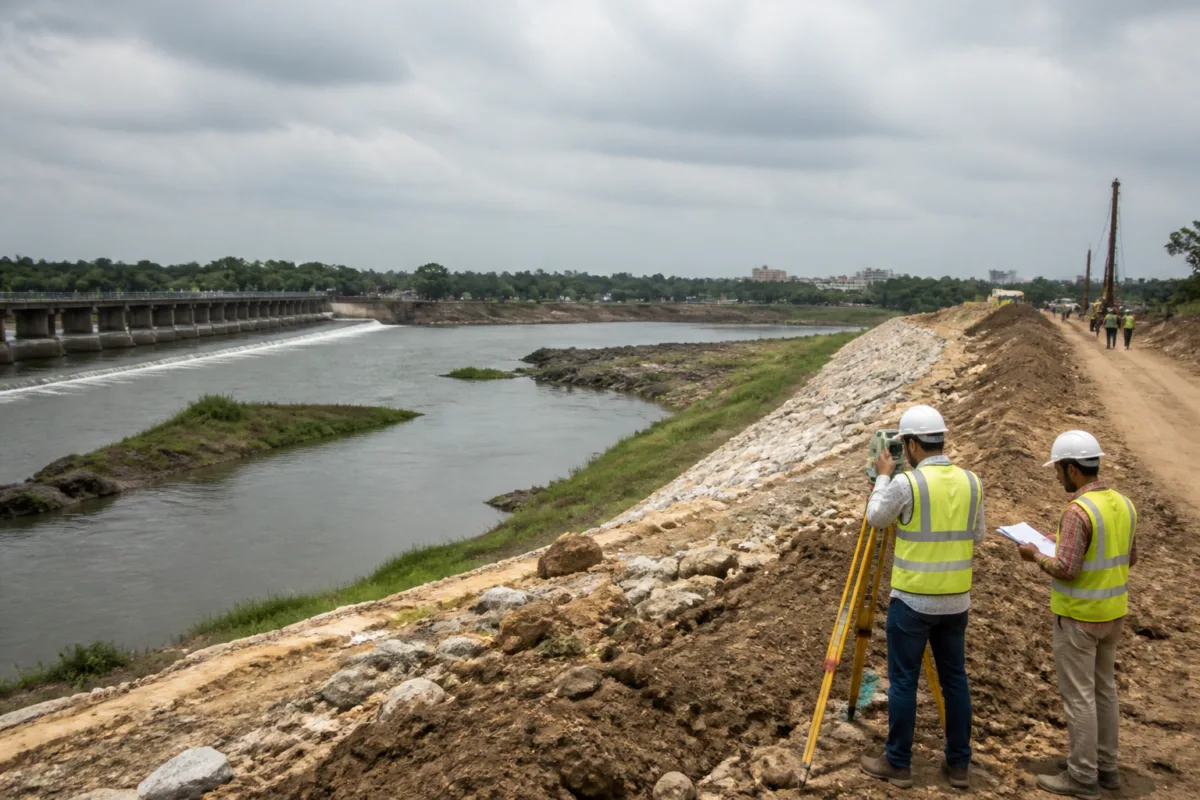
Nagpur Municipal Corporation has asked Maharashtra’s urban development department to directly fund the Rs 952 crore Kanhan-Kolar barrage, saying its existing loans and bond liabilities limit its ability to borrow for the project. The proposed barrage is intended to strengthen the city’s water supply until 2056.
Municipal commissioner Vipin Itankar made the request in a letter to the additional chief secretary of the urban development department. The letter followed directions issued at a water scarcity review meeting on October 31 by guardian minister Chandrashekhar Bawankule, according to a report by Times of India – Nagpur.
The irrigation department has prepared the Rs 952 crore estimate and submitted it to the planning and finance departments for administrative approval. NMC has now sought the entire project cost from the state government instead of executing the work through a loan raised against a state government guarantee.
The funding request reflects a dispute over how a major water infrastructure project should be financed. Earlier directions from the chief minister had required NMC to undertake the project by raising a loan against a state government guarantee. The municipal commissioner has argued that the civic body’s current financial position makes another major borrowing difficult. Bawankule subsequently directed officials to approach the urban development department for direct funding, taking NMC’s liabilities into account.
The proposed barrage would be built on the Kanhan river in Kamptee tehsil, with the irrigation department expected to execute the project. It is planned to have a live storage capacity of 67.81 million cubic metres and is expected to make 179.60 million cubic metres of water available annually through the Kanhan, Kolar-Kanhan and Rohna water supply schemes.
The project has been framed around Nagpur’s projected water demand over the next three decades. The irrigation department estimates that the city could require around 400 million cubic metres of water in the coming years. The proposed annual availability from the barrage would therefore form a significant part of the supply planning for the city’s future requirements, although the supplied report does not establish the project’s final share of total demand or the proposed construction schedule.
For residents, the immediate issue is not yet the completion of a new water source but whether the project secures administrative approval and a financing model that NMC can sustain. Direct state funding would avoid adding the full project burden to the municipal balance sheet, while a loan backed by a state guarantee would still require the civic body to take on repayment obligations.
The proposal now awaits the state government’s decision on direct funding and administrative approval. The irrigation department is expected to execute the barrage if the project receives the required approvals and financial sanction.

