


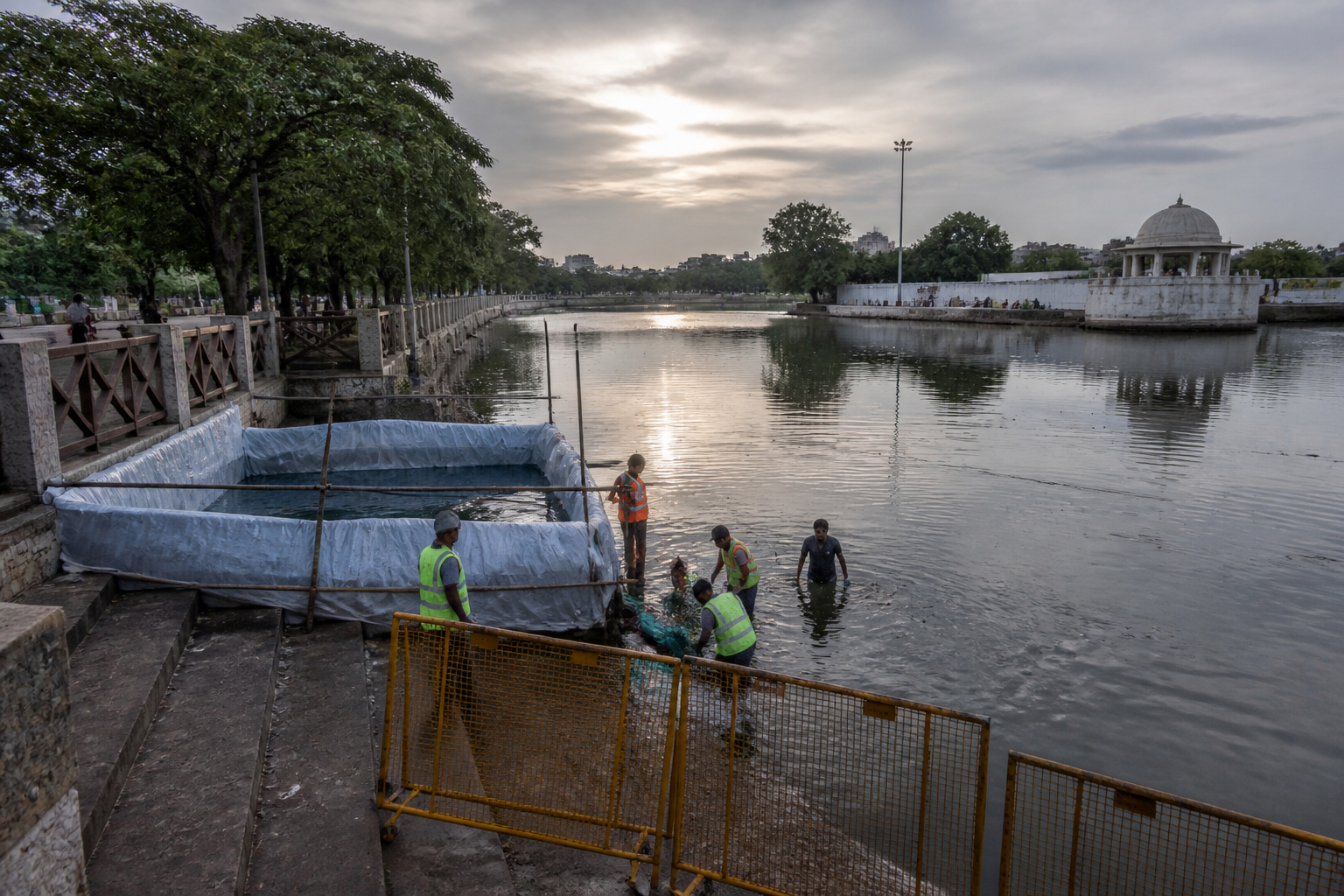
Nagpur’s blanket ban on Ganesh idol immersion in natural water bodies was breached on Thursday night when the Bhonsale dynasty’s Maskarya Ganpati idol was immersed in Gandhisagar Lake, prompting the Nagpur Municipal Corporation (NMC) to seek an explanation from a senior civic officer.
The immersion was captured in a video that later circulated on Instagram. The footage reportedly shows swimmer Jagdish Khare assisting organisers at Gandhisagar despite the prohibition. NMC deputy municipal commissioner for Solid Waste Management Rajesh Bhagat said the state government and municipal commissioner Vipin Itankar had barred idol immersion in natural water bodies. The Public Health Engineering department is responsible for implementing the orders.
Bhagat said the civic body had issued a show-cause notice to Pramod Wankhede, assistant municipal commissioner and Dhantoli zonal officer, asking why action should not be taken against him over the incident. The notice places the enforcement question within the municipal administration, as the immersion took place despite the ban and the civic body’s arrangements for alternative facilities.
Raje Mudhoji Bhosale defended the immersion, saying the tradition associated with the Bhonsale family had continued for about 300 years. He said the idol was made from clay and did not contain plastic, thermocol or other non-biodegradable material. According to Bhosale, the idol dissolved completely in the lake and did not cause pollution.
“This is a 300-year-old tradition, so why should it suddenly become an issue?” Bhosale said. He added that the family immerses two idols each year: the Ganesh idol and the Maskarya Ganpati. He also questioned the proposed development of a hanging garden and a hanging hotel near the lake, saying their possible environmental impact should be examined.
The dispute has brought Gandhisagar’s cultural history into conflict with the city’s current lake-protection policy. Bhosale said the lake had been built by his ancestors and questioned why other traditional water bodies, including those near Raman Science Centre and Cotton Market, had been closed without preserving their historical and cultural significance.
The enforcement issue is particularly significant because Gandhisagar has undergone substantial civic investment. Information from the PHE department cited by the report shows that Rs36.92 crore was spent on the first phase of a lake rejuvenation project, which received total administrative approval of Rs49.82 crore. The work included desilting, strengthening the lake walls, and developing pathways and electrification infrastructure.
NMC Swachh Bharat ambassador Kaustav Chatterjee called for strict action, including an appropriate fine against those responsible for immersing the large idol. He said the civic body’s barricading of lakes, installation of more than 400 artificial tanks and work by non-governmental organisations would lose meaning if violations were not addressed. He also said residents and mandals that complied with the appeal to use artificial tanks should not be treated unfairly.
The NMC has arranged a dedicated facility for traditional Maskarya Ganesh idol immersion at a tank in Police Line, Takli. As of Friday, 10 idols had been immersed at the facility out of 129 artificial tanks installed across the city. Mayor Neeta Thakre has appealed to mandals to use the arrangements to prevent pollution of natural water bodies.
