


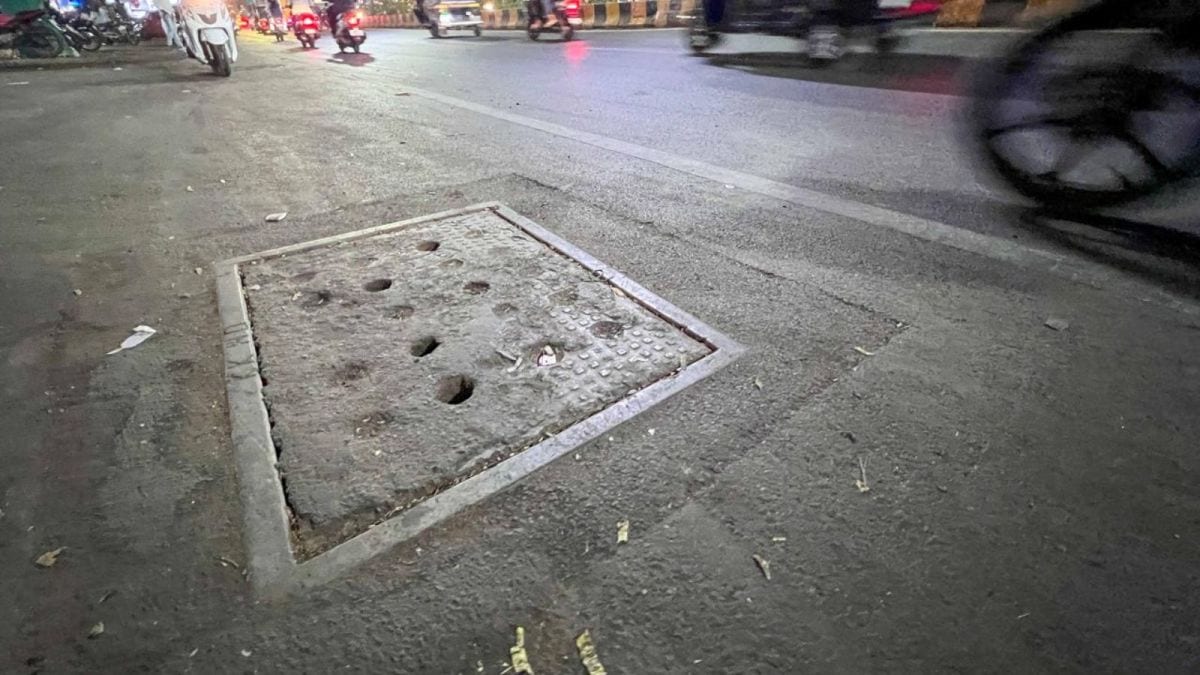
Recurring excavation work at a busy junction in Nagpur has disrupted daily travel for commuters and reignited debate over how cities manage underground infrastructure maintenance. Sections of the traffic island at Bajaj Nagar have been dug up again to address utility-related works beneath the road surface, leading to congestion and commuter complaints about repeated disruptions. The latest round of construction activity has narrowed lanes near the Bajaj Nagar junction excavation, slowing traffic at a key intersection that connects several residential and commercial neighbourhoods. Temporary barricades and uneven road surfaces have forced vehicles to move cautiously through the area, creating bottlenecks during peak hours.
Officials overseeing the work say the excavation is necessary to address infrastructure components located beneath the intersection. These underground networks typically include water pipelines, drainage channels, telecom cables and electrical conduits. Maintenance or repairs to any one of these systems can require reopening previously restored road sections. Urban infrastructure specialists say the Bajaj Nagar junction excavation highlights a common challenge in rapidly growing cities where multiple service networks share limited underground space. Roads built decades ago often did not account for the dense web of utilities that modern urban areas require. As infrastructure ages or expands, repeated digging becomes difficult to avoid without coordinated planning. Nagpur’s vehicle population has grown steadily over the past decade as the city expands as a commercial and logistics hub in central India. Intersections such as Bajaj Nagar handle large volumes of traffic moving between residential districts, institutional zones and arterial roads linking different parts of the city. Even short-term disruptions at such locations can affect mobility across surrounding neighbourhoods. Transport planners argue that repeated excavation at the same site signals the need for better coordination among municipal departments and service providers. Integrated infrastructure planning can allow agencies to carry out maintenance simultaneously rather than reopening roads multiple times for separate projects. Another concern relates to the long-term durability of road surfaces. Each instance of excavation weakens structural layers beneath the asphalt, increasing the likelihood of potholes and uneven pavement over time. For commuters, this can translate into slower travel speeds, higher vehicle maintenance costs and increased safety risks, particularly for two-wheeler riders. Urban development experts say cities worldwide are increasingly adopting digital mapping systems that record the precise location of underground utilities. Such tools help authorities plan infrastructure upgrades more efficiently and minimise repeated road cutting. The situation at Bajaj Nagar also reflects the broader pressures of urban growth. As cities expand, infrastructure networks must evolve simultaneously. Roads, drainage systems and utility lines require continuous upgrades to support rising population density and economic activity. Authorities indicate that the ongoing work will be completed in phases to restore normal traffic movement as quickly as possible. However, commuters navigating the Bajaj Nagar junction excavation say lasting solutions will depend on better planning and coordination between agencies responsible for urban infrastructure.
For Nagpur, improving infrastructure management could play an important role in ensuring that essential maintenance does not repeatedly disrupt mobility in a city striving to strengthen its transport networks and urban resilience.
ALSO READ – Nagpur Ashok Chowk flyover opens to ease traffic
Nagpur Bajaj Nagar road digging disrupts traffic flow
