


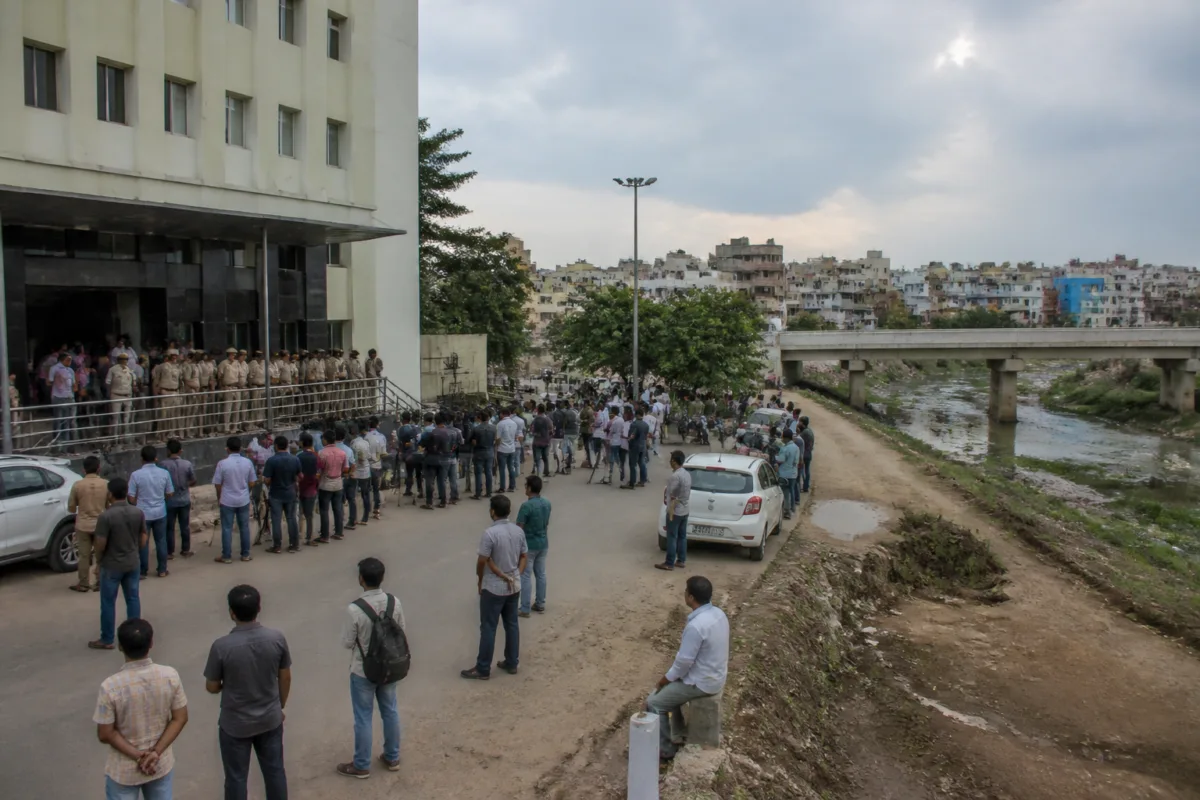
Bharat Rashtra Samithi leader and former Telangana minister Sabitha Indra Reddy and her son were placed under house arrest by Telangana Police on Wednesday, ahead of a public hearing on the proposed Musi River Development Project in Hyderabad. The action has triggered a political dispute over access to public consultations and the treatment of opposition leaders during a contentious urban redevelopment process.
The hearing was scheduled at the Water and Land Management Training and Research Institute (WALAMTARI) for people affected by the Musi project. According to Reddy, police officials informed her and her son that they would not be allowed to leave their residence on the day of the hearing.
Reddy alleged that the action amounted to arbitrary detention and accused Chief Minister A. Revanth Reddy’s administration of imposing “Emergency-like restrictions” on opposition leaders. She said the government’s response to BRS leaders visiting areas facing public distress or attending hearings was to restrict their movement.
“Today, a public hearing was scheduled for the people affected by the Musi project. Because of that, police officials informed us that neither my son nor I would be allowed to leave the house today, placing us under house arrest,” Reddy said, according to the report. She also alleged that orders had been issued to track the movements of opposition leaders.
The Musi River Development Project has become a major political and urban policy issue because of its proposed cost and the potential effect on families living along areas targeted for redevelopment. Reddy questioned the urgency of the project and cited the reported proposed outlay of Rs 1.40 lakh crore. She also said the plan threatened thousands of families with displacement and the demolition of colonies.
Reddy linked her criticism of the project to wider claims about drought, power shortages and crop losses in Telangana. She alleged that farmers buying seeds for a second crop cycle were being asked to sign self-declarations stating that the government would not be responsible for power shortages, crop failure or resulting losses. These claims were made by Reddy in her criticism of the state government and were not independently established in the supplied report.
The former minister also questioned how water would be brought to the Musi River and challenged the government’s position on electricity availability and procurement costs. She contrasted the proposed Musi expenditure with what she described as stalled or shelved irrigation projects, including the Kaleshwaram Lift Irrigation Scheme and the Palamuru-Ranga Reddy project.
Reddy further compared the current situation with the previous BRS government led by K. Chandrashekar Rao, claiming that tank restoration, check dams and irrigation works had improved water availability and agricultural production during that period. She accused the Congress government of political vindictiveness in its approach to projects associated with the previous administration.
The immediate dispute is centred on whether opposition leaders and affected residents were able to participate in the scheduled WALAMTARI hearing. The supplied report does not include a response from Telangana Police or the state government explaining the legal basis for the house arrest, nor does it establish whether the hearing proceeded as planned. Further official details on the restrictions and the project’s consultation process remain awaited.

