


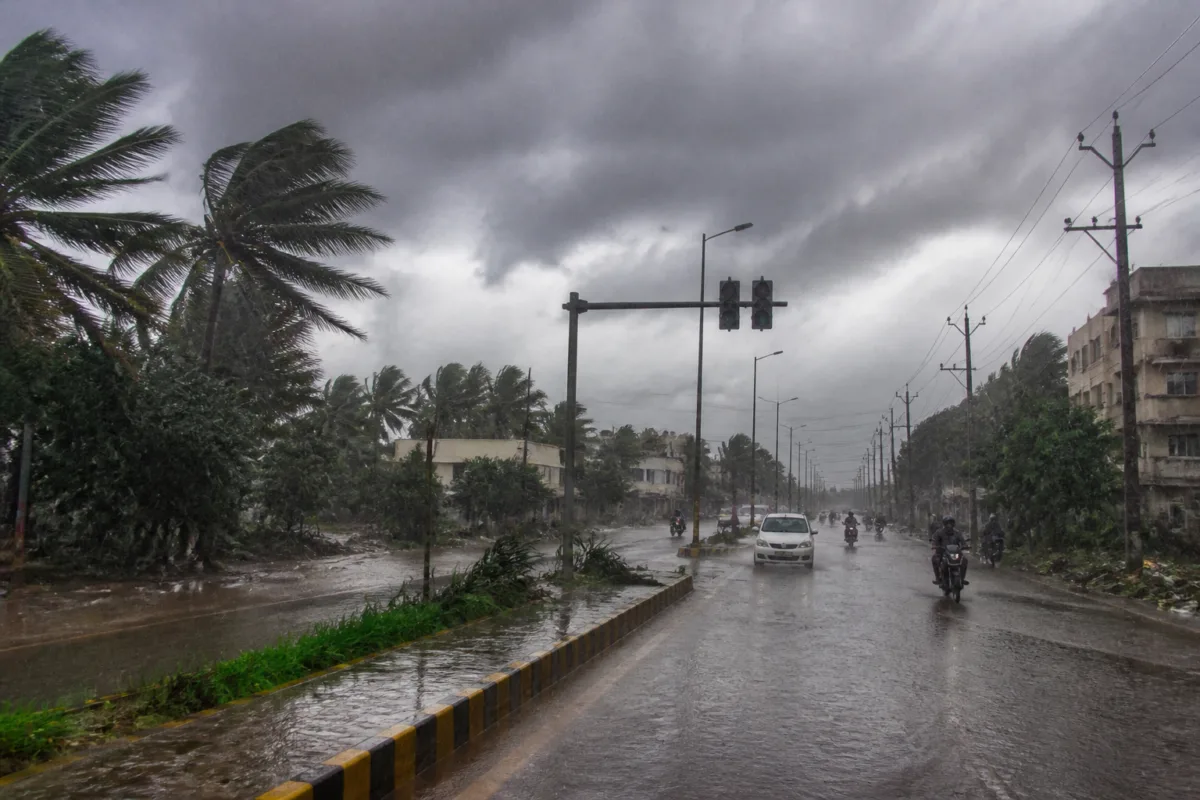
Murasu cyclone has crossed the southern Andhra Pradesh coast near Ongole after intensifying its landfall process, bringing heavy rain and strong winds to Andhra Pradesh, Odisha and northern Tamil Nadu, according to a report citing an official announcement by the India Meteorological Department.
The cyclone formed over the Bay of Bengal and moved towards the Andhra coast, where its landfall began around midnight near Ongole. The report said the system’s landfall process had intensified, with the cyclone’s central eye beginning to move across the coast during the morning.
The weather system has brought heavy rainfall and strong winds to several areas in Andhra Pradesh. Odisha and northern Tamil Nadu are also experiencing rainfall linked to the cyclone, as dense cloud bands from the storm move inland.
The India Meteorological Department has been monitoring the cyclone’s movement and warned of the possibility of heavy rain accompanied by strong winds as the system approached and crossed the coast. The weather conditions could affect normal movement, road operations and local infrastructure in the affected areas, although the report did not provide details of specific road closures, power outages or evacuations.
The landfall near Ongole places the immediate impact zone along the southern Andhra coastline and adjacent inland districts. The report did not specify the cyclone’s maximum wind speed, rainfall totals, the number of districts under warning or the duration of the current conditions. It also did not mention any casualties, structural damage or confirmed disruption to public transport.
The spread of rain into northern Tamil Nadu is significant for urban areas where intense rainfall can quickly affect roads, drainage systems and local mobility. However, the available report did not identify particular cities or municipal areas facing flooding, waterlogging or other damage.
The cyclone’s movement is continuing to be monitored by the weather department. Further warnings, rainfall forecasts and local impact advisories are expected to be issued through the official monitoring process as the system moves inland.

