


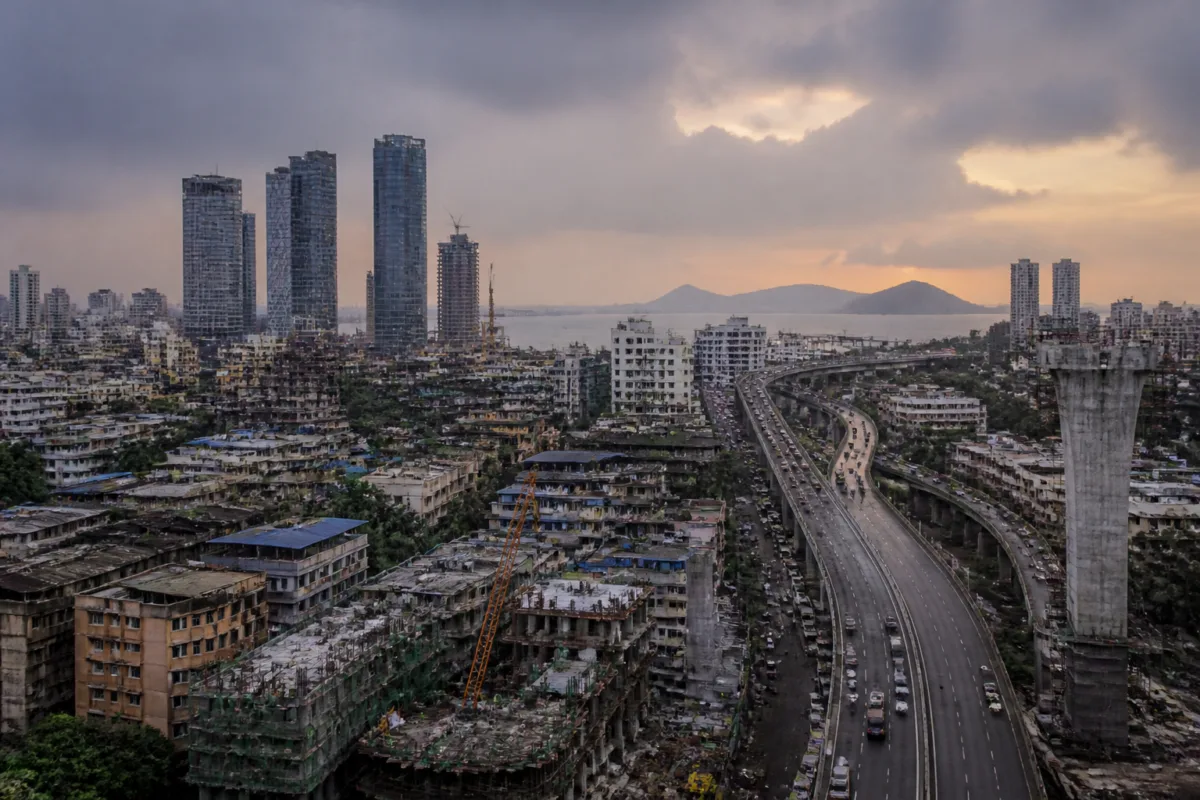
Mumbai has entered the top 10 Asia-Pacific destinations preferred by cross-border real estate investors for 2027, according to property consultancy Colliers’ 2027 Global Investor Outlook, as infrastructure expansion and commercial demand strengthen the city’s investment profile.
The ranking places Mumbai alongside Tokyo, Osaka, Sydney, Melbourne and Singapore. Tokyo was identified as the region’s most preferred destination, followed by Osaka and Sydney.
Colliers attributed India’s stronger position in the global property market to strong occupier demand, a growing supply of investment-grade assets and infrastructure development. In Mumbai, projects including the Mumbai Trans Harbour Link and Navi Mumbai International Airport are expected to improve connectivity across the metropolitan region and support new growth corridors, the report said.
The infrastructure-led shift is also changing the city’s appeal as a place to live and work, according to Akhil Saraf, founder and chief executive of Reloy. Speaking to NDTV, Saraf said Mumbai was entering a long-term transformation phase, with improved connectivity, accessibility and quality of life contributing to its growth outlook.
Saraf also linked the city’s appeal to employment opportunities, lifestyle factors, proximity to family and reduced visa uncertainty for Indian professionals considering overseas work. He said global capital ultimately followed economic opportunity and human capital, describing Mumbai’s position as a reflection of structural change rather than only a cyclical real estate opportunity.
The investment opportunity is extending beyond conventional office properties. Residential, industrial and logistics, hospitality and data centres are attracting increased attention alongside offices.
Office properties accounted for 37 per cent of total real estate investments in India during the first nine months of 2026, according to Colliers. Investments in alternative and hospitality assets rose six to seven times compared with the corresponding period in 2025, the report said.
Mumbai is also drawing interest in the data-centre segment as demand for large-scale computing facilities and enterprise data consumption grows. This broadening of asset classes could give investors more ways to participate in the city’s expansion, while also increasing the importance of infrastructure capacity, connectivity and reliable urban services.
Across the Asia-Pacific region, higher financing costs are encouraging investors to focus on assets where value can be created through redevelopment, refurbishment and improved operations. Colliers said 60 per cent of intended capital deployment by Asia-Pacific investors was directed towards value-add and opportunistic strategies.
For Mumbai, the report suggests that the city’s investment proposition is increasingly tied to the relationship between transport infrastructure, employment centres and development corridors. The ranking reflects investor preference, however, and does not by itself establish the delivery timetable or economic impact of the infrastructure projects cited.

