


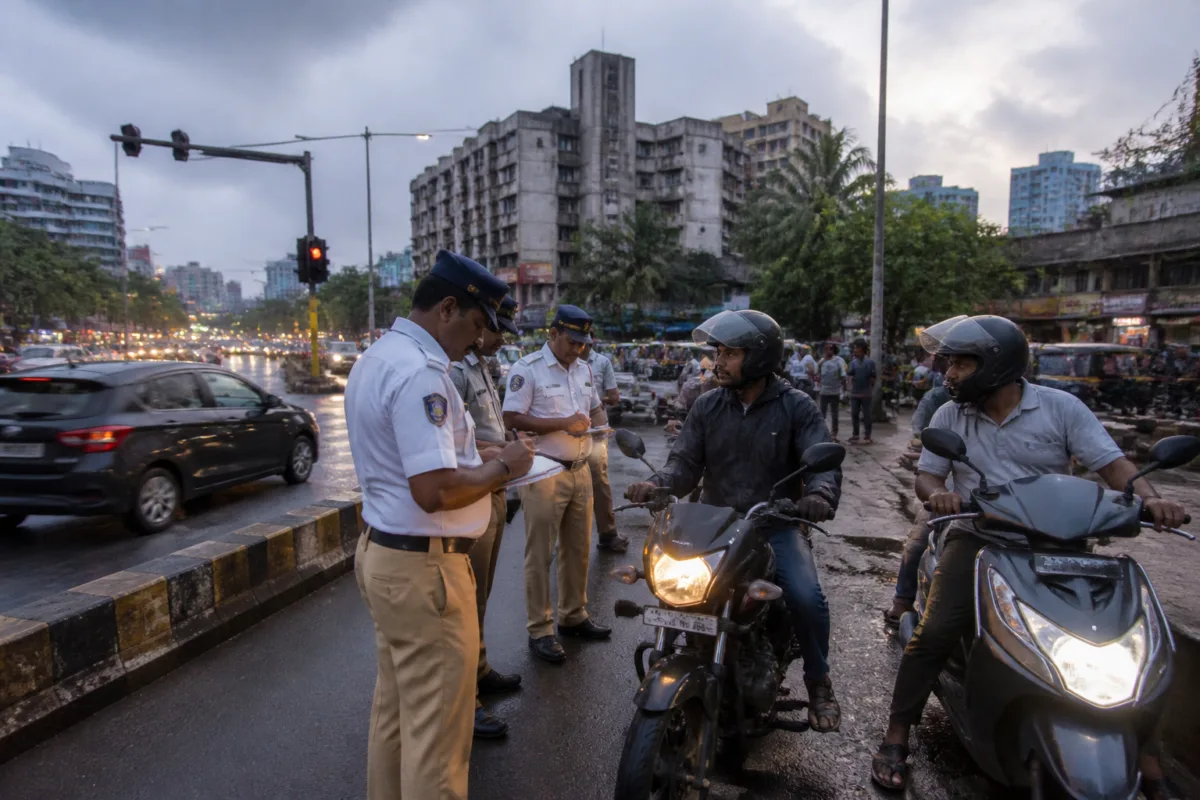
Mumbai traffic police issued more than 38,000 challans for wrong-side driving between January and November 2026, exceeding the combined total recorded during the previous two years, while more than 1,500 FIRs were registered for serious cases between August and November.
Police records showed that 24,500 challans were issued for the offence in 2024 and 2025 together. The latest enforcement figures indicate a significant increase in action against motorists who drive against the designated direction of traffic, a violation that can expose pedestrians, cyclists and other road users to sudden collisions.
The police registered FIRs in cases where wrong-side driving posed a grave risk or caused injury. The enforcement followed several incidents, including the July crash involving eight-year-old Reva Pawar near Cafe Arfa in Jogeshwari. Reva was walking to a coaching class with her mother when she was hit by a motorcyclist travelling in the wrong direction.
Her father, Vikas, said the child suffered injuries to her head, hands, legs and waist, lost consciousness and remained in hospital for 10 days. He said she temporarily lost her hearing and continued to require medication and consultations with a neurologist. Reva stayed home for two months while recovering.
Following the crash, police intensified nakabandis on the stretch and the civic body pruned plants that had been obstructing visibility, Vikas said. He added that wrong-side driving had reduced in the area after these measures and called for the checks to continue.
Police checks found that wrong-side driving was more common in the suburbs than in the island city. Two-wheelers accounted for more interceptions than any other vehicle category. A police officer said the offence was observed more frequently during peak hours, when congestion on city roads was higher.
Joint commissioner of police, traffic, Satya Narayan, said the driving licences of 329 offenders had been sent to Regional Transport Offices for cancellation between mid-August and mid-November. He said all 41 traffic divisions in Mumbai had been instructed to take strong action against the offence.
The enforcement has also drawn attention to the recovery of fines. A transport expert said issuing challans would act as a deterrent only if there was an effective mechanism to recover unpaid penalties, which were currently accumulating. Activist Mohammad Afzal suggested that courts could consider community service or require offenders to watch road-safety awareness videos at traffic police headquarters as additional deterrents.
The current action combines roadside checks, prosecution in serious cases, possible licence cancellations and visibility improvements at locations where road design or obstructions may affect safety. Police and civic authorities are expected to continue enforcement through Mumbai’s 41 traffic divisions.

