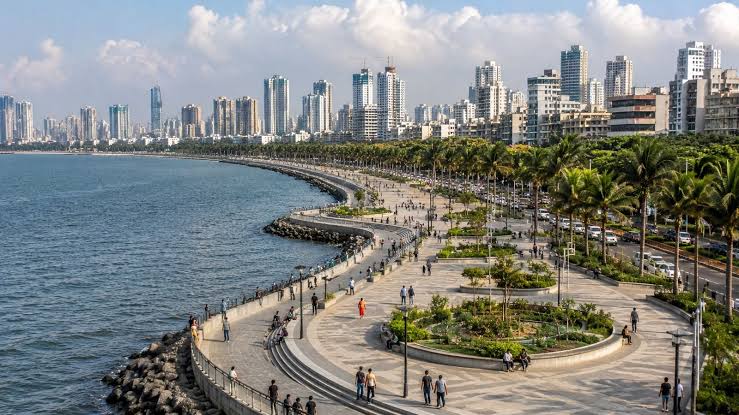
Mumbai Waterfront Planning Enters New Collaboration Phase
Mumbai’s port-led urban transformation is entering a new planning phase, with Japan’s Urban Renaissance Agency exploring potential cooperation on waterfront development, mobility and port-city integration. Discussions held in Japan have opened a possible route for Japanese urban-planning expertise to feed into Mumbai Port Authority’s long-term development programme, including its Vision 2047 framework and plans for areas around the historic port. The proposed cooperation is significant because Mumbai’s eastern waterfront contains some of the city’s largest redevelopment opportunities as well as complex transport, environmental and land-use constraints. Converting port-linked land into productive urban districts will require more than individual real-estate projects. Transport access, public spaces, employment areas, environmental safeguards and existing communities will need to be planned as one system.
The talks also considered the potential role of integrated mobility. Four proposed stations associated with Metro Line 11 in and around Sewri were discussed in the context of improving connections between port areas and the wider city. If coordinated effectively, new metro access could help reduce dependence on private vehicles and make emerging waterfront districts more accessible to workers and residents. For Mumbai, the timing is important. Port areas have historically operated as specialised industrial and logistics zones, often separated from surrounding neighbourhoods by railway lines, major roads and restricted land uses. As land uses evolve, planners face the challenge of opening selected waterfront areas to greater public and economic activity without weakening port operations or disrupting essential logistics infrastructure.
Japanese urban redevelopment experience could offer useful technical inputs, particularly in coordinating large land parcels with transport networks and public amenities. However, international models cannot simply be transplanted into Mumbai. The city has its own patterns of informal activity, high land values, monsoon risks, coastal constraints and infrastructure pressures. Sustainability will therefore be central to any eventual partnership. Waterfront districts face exposure to flooding, sea-level rise and extreme rainfall. New development would need resilient drainage, carefully planned open space and protection of ecologically important coastal areas. Public access should also be considered alongside commercial development so that the waterfront does not become another series of privately controlled enclaves. The possible involvement of the Japan International Cooperation Agency could broaden the collaboration beyond urban design into planning and infrastructure support. At this stage, however, the discussions indicate potential cooperation rather than a confirmed project pipeline or financing commitment.
The next test will be how the ideas translate into detailed plans. Mumbai Waterfront planning can create substantial economic value if new districts connect efficiently with public transport, support employment and improve access to open spaces. Its success will depend on whether redevelopment is treated as city-building rather than simply land development.