Indian Railways Modernisation Strengthens Digital Rail Safety
Indian Railways is committing more than ₹765 crore to upgrade traction and communications infrastructure across three railway zones, targeting capacity and operational improvements on important freight and passenger corridors. The investments span sections connecting Andhra Pradesh, Telangana, Karnataka, Maharashtra and Gujarat, combining higher-capacity electric traction with a larger optical-fibre network. The programme reflects a wider shift towards infrastructure that can support heavier trains, faster services and increasingly digital railway operations. The largest allocation, exceeding ₹318 crore, covers the Duvvada–Visakhapatnam–Vizianagaram section of East Coast Railway. The 106-km route is planned for conversion from a 1×25 kV traction arrangement to a 2×25 kV system. In simple terms, the upgraded configuration can provide greater electrical power to locomotives, supporting higher haulage loads and reducing constraints on busy electrified routes.
The section forms part of the Howrah–Chennai corridor, making the investment relevant beyond the immediate stations involved. Better traction capacity can help railways handle freight growth without relying solely on additional tracks or new alignments. That becomes increasingly important as more long-distance goods movement shifts towards rail, which can reduce the road traffic and emissions associated with heavy trucking. A second traction upgrade, valued at more than ₹259 crore, covers the 126-km Raichur–Guntakal section under South Central Railway. The route forms part of the Mumbai–Chennai rail corridor and carries both passenger and freight traffic. Strengthening the power supply system could give operators greater flexibility in handling heavier trains and maintaining speeds across a strategically important east-west network.
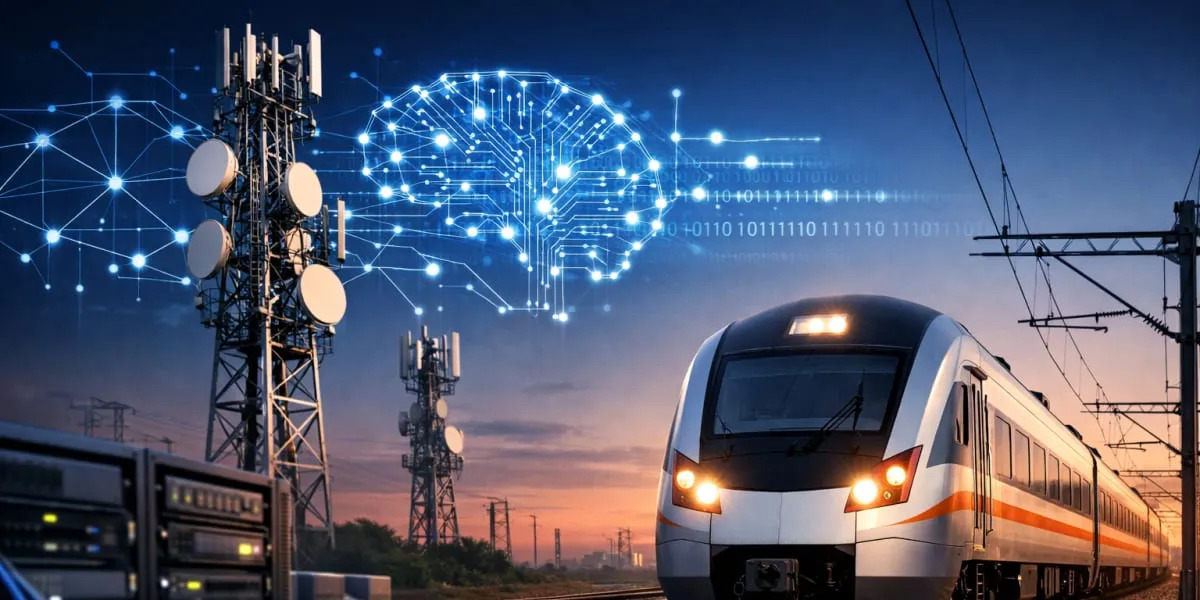
The third investment moves beyond physical rail capacity. Western Railway has received approval for a project worth about ₹187 crore to install 1,000 route-km of optical-fibre cable across its Vadodara and Mumbai divisions. A stronger fibre network can improve railway communications and support digital systems that depend on reliable data transmission. That connectivity is particularly relevant to Kavach, India’s indigenous automatic train-protection system. Such systems rely on dependable communication and signalling infrastructure to improve operational safety. Digital upgrades therefore need to be viewed as part of the railway’s wider safety architecture, rather than as standalone telecommunications projects. The three investments also underline the economic value of upgrading existing railway corridors. Improving power and communications capacity can increase the productivity of infrastructure that is already in service, potentially allowing railways to carry more traffic without equivalent expansion of the physical network.
For cities along these corridors, the benefits could extend to logistics, employment and passenger mobility. The long-term test, however, will be delivery: timely commissioning, reliable maintenance and measurable gains in capacity and safety. If those outcomes materialise, the ₹765 crore programme could demonstrate how targeted technology and infrastructure upgrades can strengthen India’s rail network while supporting more efficient and lower-carbon transport.