


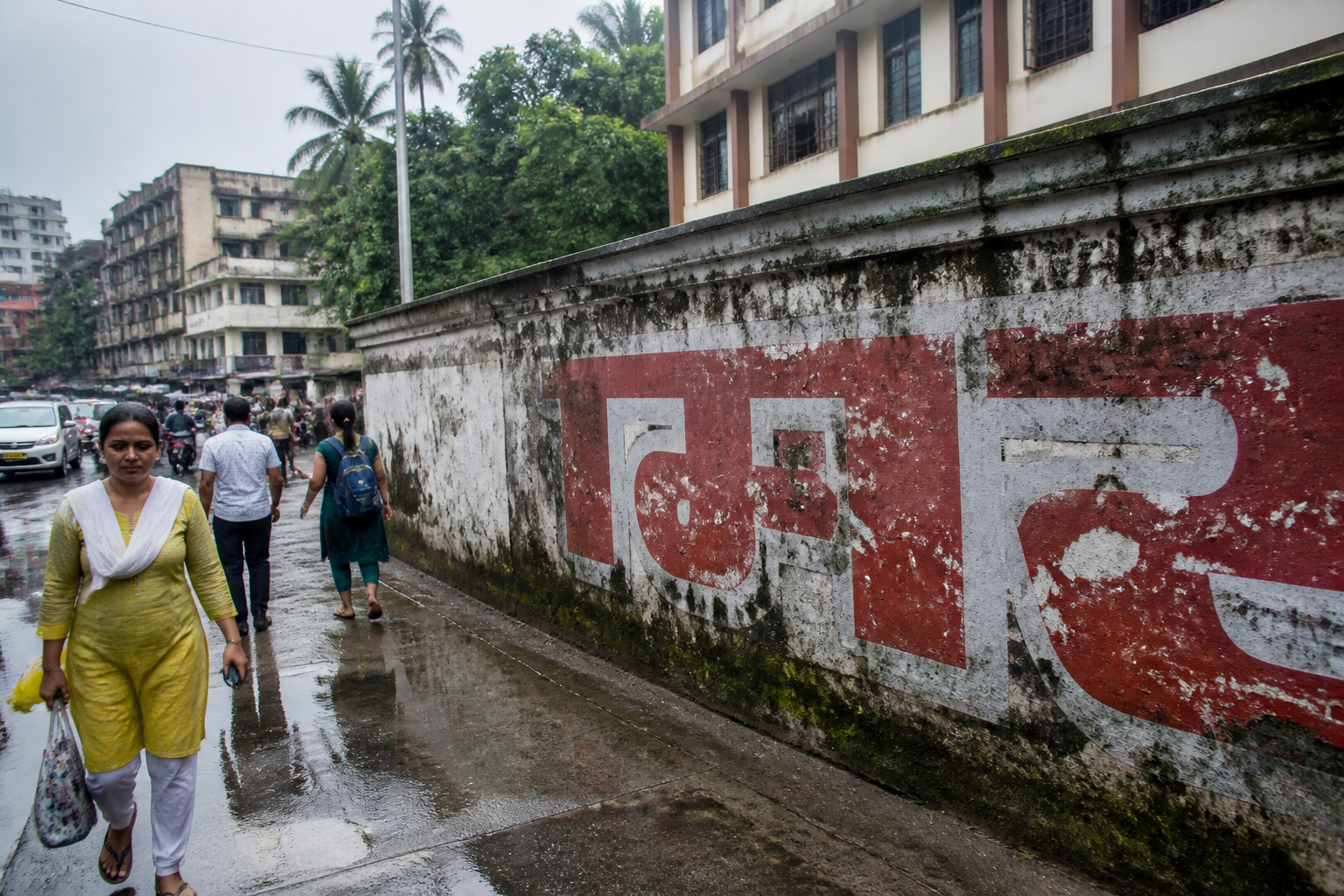
Mumbai wall defacement allegations have led Shivaji Park police to book 73-year-old Ravi Ramlal Kapoor, known locally as “Radio Uncle”, after his moniker appeared for months on walls, compound gates and other structures across Mahim, Matunga and Dadar. Police allege the writings advertised Kapoor’s speaker business and were placed on public property without permission.
The case followed a complaint by a Brihanmumbai Municipal Corporation licensing inspector, who found “RADIO UNCLE” painted on the walls of the BMC School City of Los Angeles Municipal School, a well at Manmala Devi Temple, Lakshmi Sadan near Gokhale Road, around Patkar House and at several other locations. Kapoor has been booked under Sections 3 and 4 of the Maharashtra Prevention of Defacement of Property Act, 1995.
According to the complaint, the painted words were unauthorised advertisements. The markings had reportedly begun appearing in the inner lanes of Mahim West and later spread towards Matunga and Dadar, including areas near the Plaza Cinema junction and the Dadar overbridge. In some locations, the words were painted against a maroon background.
Kapoor has denied personally painting the signs. Speaking to The Indian Express earlier this month, he said a man had approached him and offered to write “Radio Uncle” around the neighbourhood. Kapoor said he agreed because the man claimed to be an artist and he wanted to support someone willing to work. He later asked the man to stop, he said, without specifying how much he had paid or how many locations had been covered.
The police case has brought attention to a neighbourhood figure who had already become familiar to residents around Shivaji Park. Kapoor has spent about a decade travelling through Mahim, Matunga and Dadar on a cycle and scooty, playing old Hindi songs and selling speakers and radios. Residents and shopkeepers described seeing him near Shivaji Park, where he would keep one speaker with him, another nearby and a large bag carrying additional speakers.
Kapoor said his routine involved playing music, demonstrating speakers and speaking to potential customers. His products, sourced from selected shops, cost between Rs 600 and Rs 2,000. He retired from his small electronics business around six years ago, while continuing to sell speakers in the neighbourhood. His son, an advocate, also created an AI-generated pamphlet containing details of the products and Kapoor’s phone number.
The case also places a familiar form of neighbourhood advertising within Mumbai’s broader challenge of regulating markings on public property. The locations cited in the complaint include civic school premises, a temple well and other structures used daily by residents. Under the Maharashtra Prevention of Defacement of Property Act, unauthorised writing or painting on public property can trigger legal action.
Kapoor had earlier said he was not aware of complaints about the painted advertisements. “Some people are bound not to like it. If that happens, I will apologise and rectify it,” he said. The police case will now determine the responsibility for the writings and the circumstances in which they were placed across the three central Mumbai neighbourhoods.
