


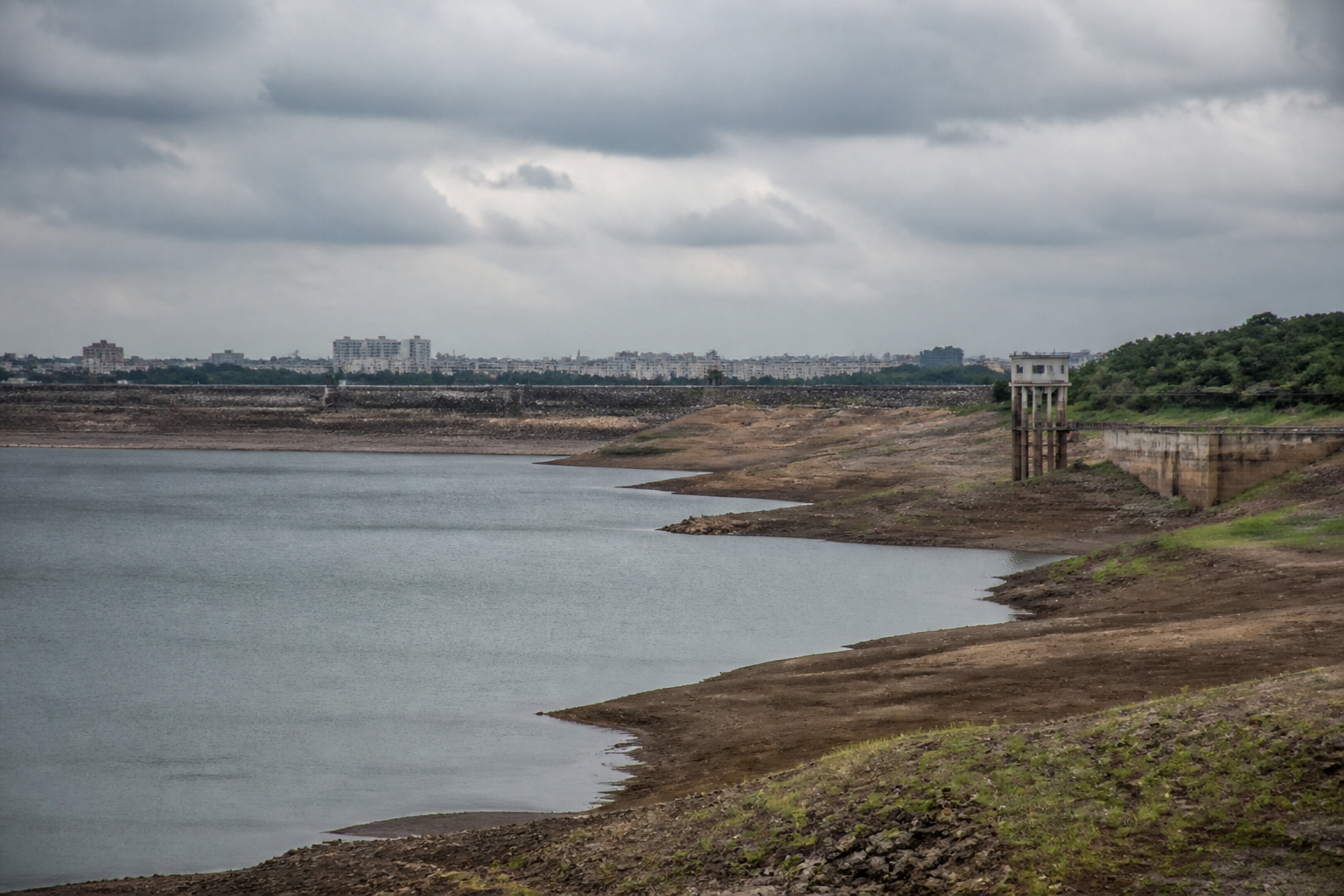
Hyderabad’s water shortage risk is rising after weak monsoons pushed down levels in several reservoirs that supply the city, prompting the Hyderabad Metropolitan Water Supply and Sewerage Board (HMWS&SB) to monitor stocks and prepare contingency plans. The concern affects consumers across the Core Urban Region Economy, comprising the Greater Hyderabad Municipal Corporation, the Cantonment Municipality Corporation and the municipalities in the region.
Reservoir levels in Osman Sagar and Singur have fallen considerably compared with September last year, while Himayath Sagar, Manjeera and the Krishna and Godavari tapping points have also recorded changes. The Water Board is currently supplying 585 million gallons of water a day to meet demand.
According to the reservoir data cited by Telangana Today, Osman Sagar stood at 1,783.60 feet in September 2026, against 1,788 feet during the same period last year. Its full tank level is 1,790 feet. Singur was at 1,691 feet, compared with 1,709 feet last year, against a full tank level of 1,717 feet.
Himayath Sagar measured 1,761 feet this September, down from 1,762 feet last year. The reservoir’s full tank level is 1,763 feet. Manjeera stood at 1,643 feet, compared with 1,647 feet in September last year, against a full tank level of 1,651 feet.
The Krishna or Akkampally tapping point was at 244 metres, matching its level from the previous year, while the Godavari or Yellampally tapping point recorded 484 metres. That was higher than the 481 metres recorded last year. The data shows that the city’s water position is uneven across its supply sources, rather than reflecting a uniform decline at every location.
Water Board officials said current stocks could be managed to maintain supplies until the summer of 2027. However, they have expressed concern over the depletion of groundwater, which could add pressure to the formal supply network if demand remains high or reservoir inflows weaken further.
Demand for tanker water has remained high since February and continues this month, indicating that parts of the urban region are already relying on supplementary supplies. Tankers are an important short-term response for areas with inadequate access to the piped network, but sustained demand also reflects the pressure being placed on household and local water sources.
The Water Board is monitoring the reservoir situation and evaluating emergency contingency plans to avoid inconvenience to more than 14.57 lakh consumers. The immediate response will depend on water levels, inflows and demand across the CURE region. The authorities’ next step is to continue assessing the stocks and contingency measures as the city moves towards the summer of 2027.
