


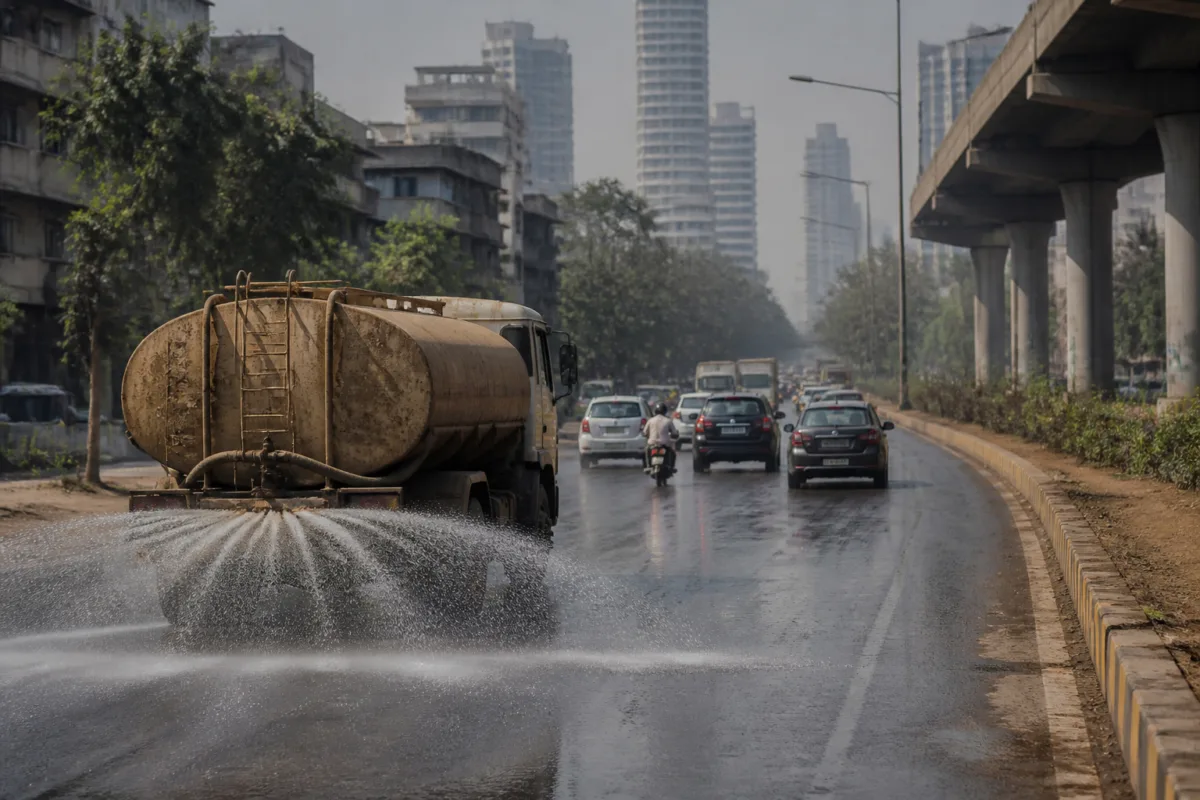
The Brihanmumbai Municipal Corporation is considering using treated sewage water to wash and sprinkle 677 km of Mumbai’s roads, as the city faces a 10 per cent water-supply cut and rising levels of dust pollution. The proposed shift follows objections to using fresh water for road cleaning during a period of shortage.
The civic body had recently placed an Rs 8.13-crore proposal before its standing committee to conduct round-the-clock water sprinkling on city roads. The committee stalled the proposal, calling the use of water for road washing “insensitive” amid the supply cuts caused by deficient monsoon rainfall and the early withdrawal of the southwest monsoon.
Civic officials are now considering water from sewage treatment plants as an alternative. Mumbai currently has only one operational sewage treatment plant, at Colaba, with a treatment capacity of 37 million litres per day. That represents 1.68 per cent of the 2,190 million litres of sewage generated in the city each day.
“A quantity of water for cleaning the roads will be drawn from the Colaba STP. The treated water from this STP is not being used for any potable purpose and is supplied to the garden and roads department and private stakeholders for landscaping. Therefore, it will be absolutely feasible to use STP water for road washing,” a civic official told The Indian Express.
The BMC plans to hire private tankers for the operation. About 29 tankers, each with a capacity of 10,000 litres, are expected to be deployed. At an average hiring cost of Rs 5,000 per tanker, the proposed operation would cost about Rs 1.45 lakh per day. The estimated expenditure for a four-to-five-month drive is between Rs 1.74 crore and Rs 2.17 crore.
The road-washing plan covers 377 public roads extending across 677 km, or about 33 per cent of Mumbai’s total road length. The identified stretches include roads in Colaba, Churchgate, Worli, Lower Parel, Andheri, Ghatkopar, Mankhurd, Deonar, Mulund and the Bandra Kurla Complex. Several of these areas have recorded elevated air-quality levels in recent weeks.
The BMC’s Mumbai Air Pollution Mitigation Plan identifies the resuspension of road dust as a major contributor to worsening pollution. Water sprinkling is intended to keep dust on road surfaces and reduce the amount entering the lower atmosphere, particularly when wind speeds are low.
Mumbai’s longer-term supply of treated non-potable water is linked to seven large sewage treatment plants under construction in Worli, Dharavi, Bandra, Versova, Malad, Ghatkopar and Bhandup. Together, these facilities are planned to have a treatment capacity of 1,200 MLD. The Bhandup plant, with a capacity of 215 MLD, is expected to be ready by December this year and is expected to supply treated water for road washing, according to civic officials.
“Road washing is a primary aspect of controlling pollution levels. Therefore, the drive will be necessary. Mumbai is already facing low wind speeds and high pollution levels, so water sprinkling needs to be carried out regularly,” the official said. The BMC’s next step is to determine the operational arrangements for drawing treated water and deploying tankers across the identified road network.

