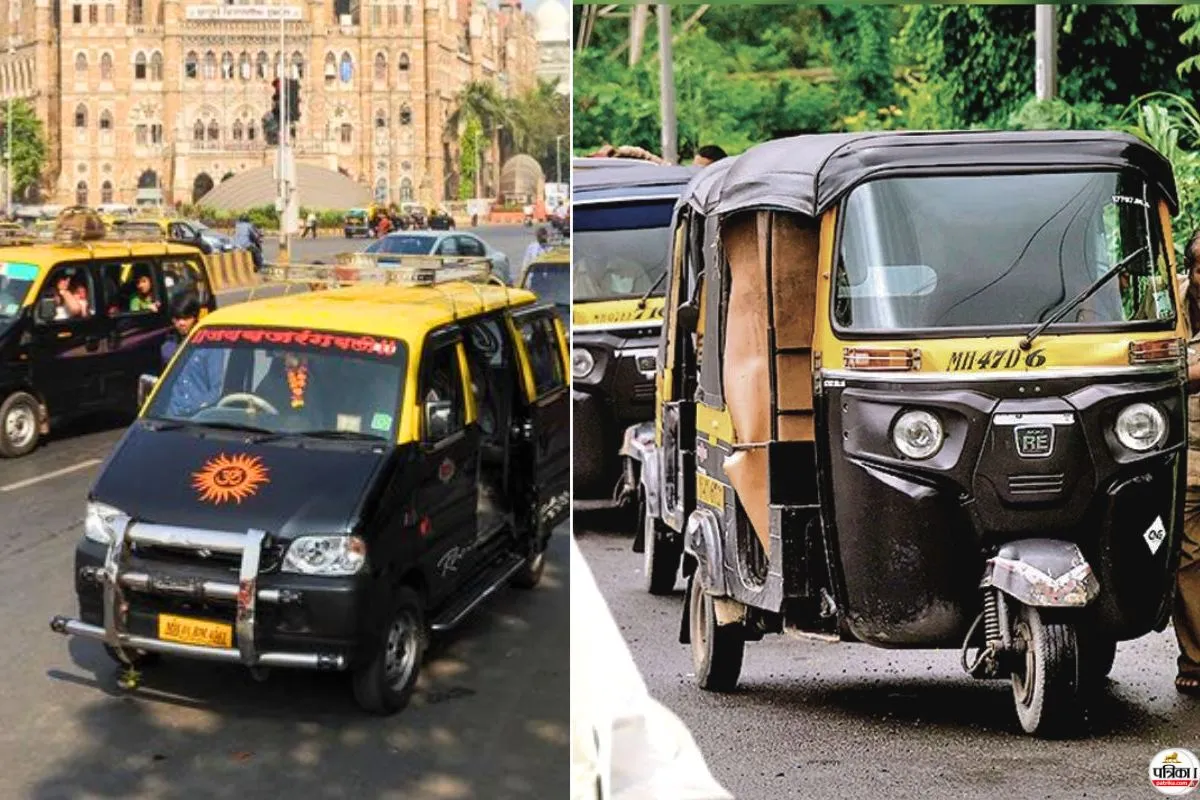
Mumbai’s everyday transport costs have moved higher at the start of September, with revised autorickshaw and taxi fares taking effect across the Mumbai Metropolitan Region just as CNG prices increased. The timing has created a difficult equation for drivers: regulated fares have risen after an 18-month gap, but a simultaneous increase in fuel costs has reduced the financial cushion expected from the revision. The new fare structure raises the minimum autorickshaw charge from ₹26 to ₹27 and the black-and-yellow taxi minimum from ₹31 to ₹33 for the first 1.5 km. The subsequent per-kilometre rates have also increased, with autos moving to ₹18.22 and taxis to ₹21.90. Drivers have until November 30 to complete electronic meter recalibration, with revised tariff cards serving as an interim reference.
The fare revision was intended to account for higher operating expenses faced by the region’s commercial drivers. Those costs extend beyond fuel to maintenance, repairs, insurance, financing and the time lost in Mumbai’s congestion. For drivers operating on narrow daily margins, even a modest increase in the fare can therefore have a limited effect on take-home income. That pressure increased on the same day. Mahanagar Gas Limited raised the retail price of compressed natural gas by ₹2 per kg to ₹88 across Mumbai and surrounding markets from September 1. The company attributed the increase to higher input costs, including greater dependence on more expensive spot regasified liquefied natural gas. The change affects a large fleet of CNG-powered vehicles, including autos, taxis and other commercial and private vehicles. For commuters, the impact is likely to be more visible on frequent short trips. A ₹1 increase in the minimum auto fare and ₹2 increase for taxis may appear small individually, but repeated daily journeys can add to monthly household spending. The effect is particularly relevant for passengers who use autos and taxis to reach railway and Metro stations, where these services often provide the final connection between neighbourhoods and mass-transit networks.
The simultaneous fuel and fare changes also expose a wider challenge in Mumbai’s urban transport economy. Keeping regulated fares affordable for passengers while maintaining viable incomes for drivers requires regular review rather than infrequent revisions after costs have accumulated. Industry representatives have argued that the latest increase remains insufficient against rising expenses, while passengers face their own cost-of-living pressures. There is also a sustainability dimension. CNG remains widely used in Mumbai’s intermediate public transport fleet, but fuel-price volatility can influence the economics of running these vehicles. A longer-term strategy will need to balance driver livelihoods, passenger affordability and the transition towards cleaner, efficient urban mobility.
The immediate priority is implementation. Clear tariff cards, functioning meters and transparent fares can reduce disputes while the revised system settles in. For Mumbai, the larger question is how to keep essential last-mile transport financially viable without making everyday mobility progressively harder to afford.