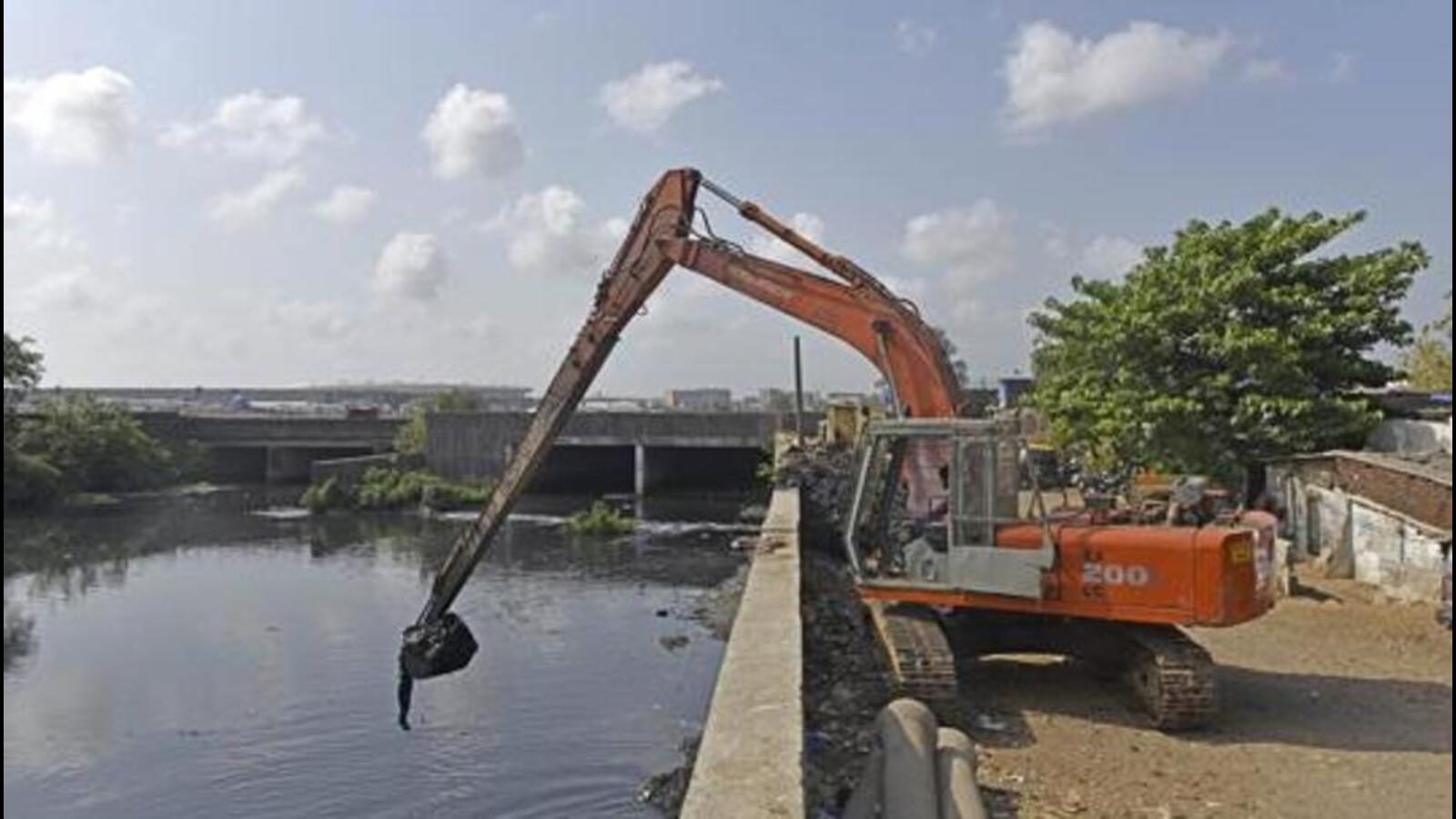
Mumbai’s civic administration has cleared a ₹30 crore contract to accelerate Mithi River desilting, a critical pre-monsoon intervention aimed at reducing flood risks in one of the city’s most vulnerable drainage corridors. The approval comes alongside a directive for weekly progress monitoring, signalling heightened scrutiny amid concerns over execution capacity and delays. The Mithi River, which functions as a key stormwater channel cutting across dense urban zones, has long been central to Mumbai’s flood mitigation strategy. Regular desilting is essential to remove accumulated debris and sediment that restrict water flow during heavy rainfall. However, questions raised within the municipal decision-making process highlight persistent governance and operational gaps that could undermine the effectiveness of such efforts.
Officials and civic observers have pointed to the selection of contractors with limited experience in river desilting. While firms engaged in infrastructure works such as road surfacing or structural construction often possess engineering capacity, river restoration requires specialised equipment and ecological sensitivity. The absence of advanced machinery—typically used to handle deep sediment removal and maintain channel stability—has raised doubts among urban planners about whether the current pace and quality of Mithi River desilting will meet flood preparedness benchmarks. Another structural concern relates to access constraints. In several stretches, dense construction along the riverbanks has reduced space for deploying heavy equipment. Past interventions have reportedly faced setbacks when temporary dismantling of retaining structures led to debris entering the river itself, worsening blockages. Such patterns underscore the need for integrated planning that aligns flood control infrastructure with land-use regulation and housing development. The issue also exposes the fragmented nature of urban water governance. Outfalls of stormwater drains—critical junctions where water enters the river—remain partially inaccessible due to their location within private properties. This complicates desilting operations and weakens the overall drainage network.
Experts note that without coordinated engagement between civic authorities and residential stakeholders, these choke points could continue to pose flood risks despite upstream cleaning efforts. From a sustainability perspective, the focus on Mithi River desilting reflects a broader shift towards climate-resilient urban infrastructure. Mumbai’s increasing exposure to extreme rainfall events demands not just periodic clean-up drives but long-term ecological restoration of its waterways. Reviving natural drainage patterns, improving riverbank stability, and preventing encroachments are seen as equally vital as mechanical desilting. The decision to mandate weekly reporting could improve transparency and accountability, particularly in a city where monsoon preparedness directly impacts livelihoods, mobility, and public safety. Yet, urban policy analysts caution that monitoring alone cannot substitute for technical expertise, institutional coordination, and community participation.
As Mumbai approaches another monsoon season, the effectiveness of this intervention will likely be measured not just by kilometres desilted, but by whether flood-prone neighbourhoods experience tangible relief. The coming weeks will test whether tighter oversight can translate into meaningful on-ground outcomes for a city navigating the pressures of rapid urbanisation and climate uncertainty.