Mumbai Underground Bullet Train Hub Takes Shape At BKC
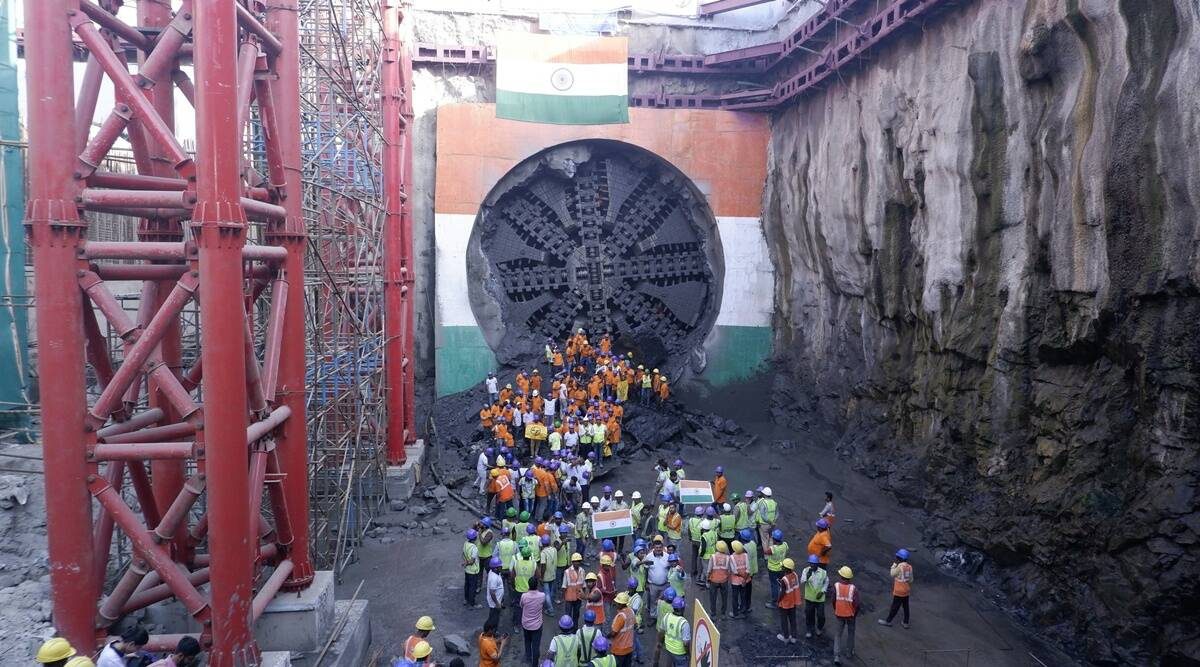
Mumbai’s financial district is witnessing the emergence of one of India’s most complex transport infrastructures, as construction of a deep underground high-speed rail station at Bandra-Kurla Complex (BKC) enters a critical structural phase. Positioned nearly 32 metres below ground, the facility is part of the Mumbai–Ahmedabad high-speed rail corridor and is expected to redefine urban mobility while testing the city’s engineering resilience. Project officials indicate that excavation and foundational work at the BKC site have largely been completed, with structural reinforcement now visible across multiple subterranean levels. The lowest tier, designed to host high-speed rail tracks, is being prepared with dense steel frameworks to support future operations. Above it, platform levels and passenger concourses are taking form, signalling a transition from groundwork to station architecture.
The scale of the BKC underground station reflects the broader ambition of integrating high-speed transit into dense urban environments. Urban planners note that such infrastructure, when embedded within existing business districts, can significantly reduce travel time while influencing land use patterns, commercial activity, and real estate demand. However, they also caution that balancing large-scale construction with environmental safeguards remains critical in a city prone to flooding and soil instability. Engineering efforts at the site have relied on advanced tunnelling and construction techniques. A section of the underground corridor connecting BKC to Thane has been excavated using the New Austrian Tunnelling Method, allowing for controlled excavation in complex geological conditions. Simultaneously, measures such as waterproofing membranes and dedicated drainage systems are being incorporated to manage groundwater ingress—an essential consideration for long-term climate resilience. The project also highlights evolving construction practices in India’s infrastructure sector. Techniques such as temperature-controlled concrete pouring and mechanised material handling are being deployed to maintain structural integrity in deep underground conditions.
Temporary access structures within the site have enabled movement of heavy equipment, ensuring continuity despite spatial constraints typical of inner-city construction zones. Beyond transport, the development is expected to reshape the urban fabric of BKC. Authorities have indicated plans for commercial integration at the surface level, which could transform the station into a multi-use hub linking mobility with business activity. Experts suggest that such transit-oriented development, if executed responsibly, can reduce dependency on road-based transport while encouraging compact, walkable urban clusters. The high-speed rail corridor, spanning over 500 kilometres and connecting key economic centres, is positioned as a long-term mobility solution. Yet, its success within Mumbai will depend on seamless integration with existing public transport networks and careful management of construction impacts on surrounding communities.
As work progresses, the BKC underground station stands as both an engineering milestone and a test case for how Indian cities adapt to next-generation transit systems. The coming phases will determine whether this infrastructure can deliver not only speed, but also sustainability and equitable urban access.