


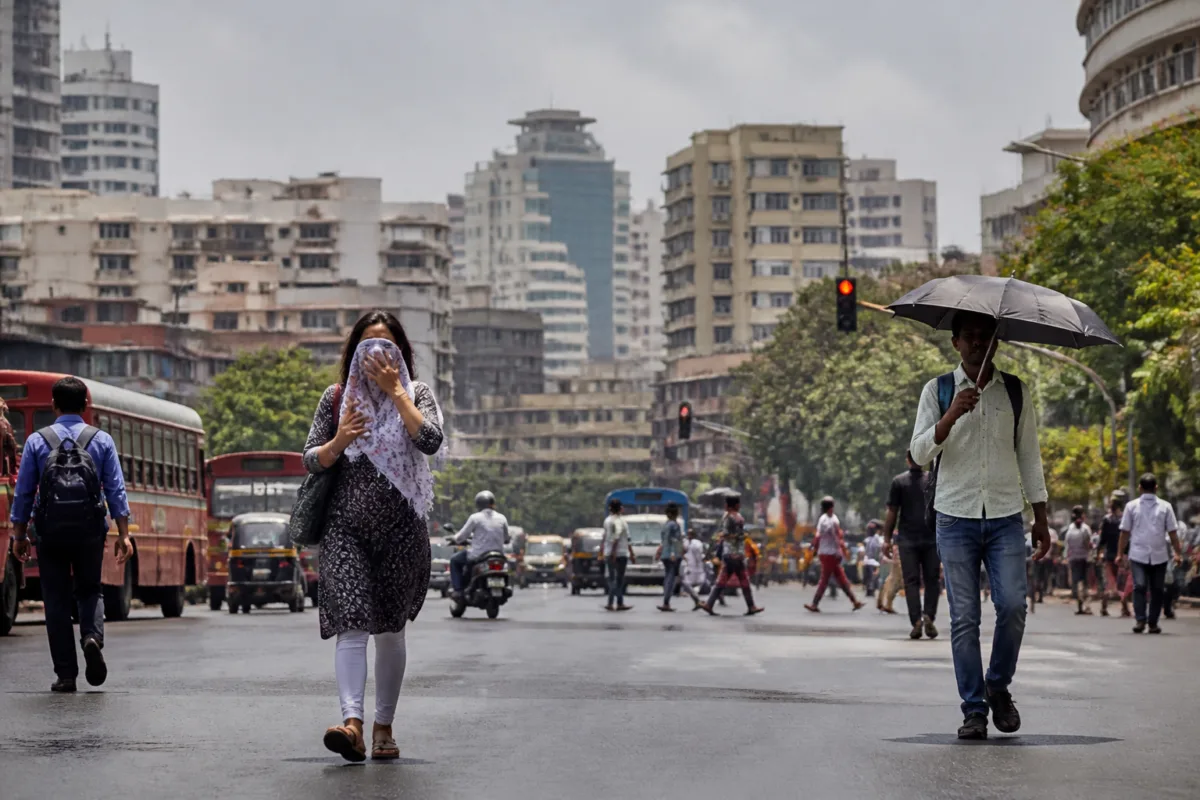
Mumbai recorded Maharashtra’s highest maximum temperature at 36.9 degrees Celsius on Wednesday, as several locations across the state reported warmer-than-normal conditions, according to a weather bulletin cited by Mid-Day.
The city’s minimum temperature was 26.6 degrees Celsius, around 2.3 degrees above normal, indicating that temperatures remained elevated overnight. The reading adds to the heat stress faced by residents during the day and reduces the relief normally provided by cooler night-time conditions.
At the Santacruz observatory, the maximum temperature reached 36.4 degrees Celsius, 1.7 degrees above normal, while the minimum was 23.9 degrees Celsius, 1.5 degrees above normal. The observatory’s readings are used to track conditions across Mumbai’s suburban areas.
Alibag recorded a maximum temperature of 35 degrees Celsius, 1.1 degrees above normal, and a minimum of 27 degrees Celsius, 4.4 degrees above normal. The bulletin identified Alibag’s minimum as the highest among the locations listed. Ratnagiri recorded a maximum of 34.8 degrees Celsius and a minimum of 24.6 degrees Celsius, while Dahanu recorded 34.5 degrees Celsius and 22.9 degrees Celsius. Neither station reported rainfall.
Solapur recorded Madhya Maharashtra’s highest maximum temperature at 36.3 degrees Celsius. Mahabaleshwar recorded the state’s lowest maximum at 26.8 degrees Celsius, while its minimum temperature was 17.4 degrees Celsius. The same minimum was recorded in Yavatmal, which shared the state’s lowest reading. All reporting stations in Madhya Maharashtra recorded nil rainfall.
Pune was forecast to see mainly clear skies on Thursday, with conditions expected to turn partly cloudy during the afternoon and evening. The maximum and minimum temperatures were expected to remain around 33 degrees Celsius and 19 degrees Celsius, respectively, with no rainfall indicated in the forecast.
The Shivajinagar observatory in Pune recorded a maximum of 32.7 degrees Celsius, 1.4 degrees above normal, and a minimum of 19.7 degrees Celsius, 3.7 degrees above normal. The city recorded no rainfall during the observation periods at 8.30 am and 5.30 pm. Relative humidity stood at 77 per cent in the morning and 59 per cent in the evening.
Pune’s seasonal rainfall was recorded at 428 mm against a normal of 804 mm, leaving a deficit of 376 mm. The rainfall gap, combined with above-normal temperatures, is relevant to the city’s water and heat-management pressures, although the bulletin did not provide a forecast of future rainfall or outline any municipal response.
Temperatures also remained above normal across reporting stations in Marathwada. Dharashiv recorded a maximum of 34 degrees Celsius and a minimum of 19.6 degrees Celsius. Chhatrapati Sambhajinagar recorded 35 degrees Celsius, 3.7 degrees above normal, while Parbhani recorded 33.9 degrees Celsius. All three stations reported nil rainfall, and data for Nanded and Beed were unavailable in the bulletin.
In Vidarbha, Akola and Amravati recorded the region’s highest maximum temperature at 34.8 degrees Celsius each. Amravati’s reading was 3 degrees above normal. Brahmapuri recorded the largest below-normal maximum departure in the bulletin at 31.2 degrees Celsius, or 1.1 degrees below normal, while Gondia recorded 31.5 degrees Celsius, also slightly below normal. All 10 reporting stations in Vidarbha recorded nil rainfall.
The weather bulletin also recorded Ahilyanagar’s minimum temperature at 22.3 degrees Celsius, 6.3 degrees above normal—the largest positive departure among the listed minimum temperatures. Yavatmal’s minimum was 0.2 degrees below normal, making it the only below-normal minimum in the bulletin.

