Mumbai Regional Corridor Set To Transform Connectivity
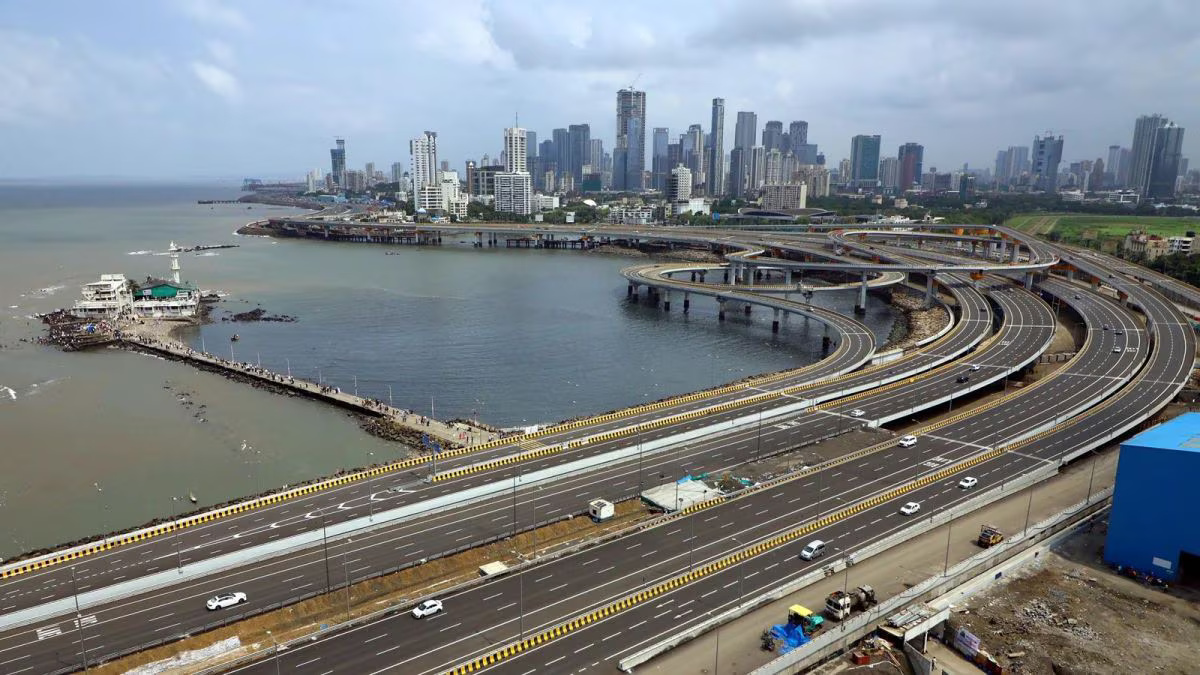
Maharashtra has cleared the first phase of the ambitious Virar-Alibaug corridor, a major regional transport project expected to reshape connectivity across the Mumbai Metropolitan Region while supporting freight mobility, airport access and long-term urban expansion planning. The access-controlled highway, designed as a 14-lane corridor, received approval from the state’s infrastructure decision-making body earlier this week. The project will form a critical transport spine linking northern and southern sections of the metropolitan region while integrating major logistics and infrastructure assets including the Jawaharlal Nehru Port, the upcoming Navi Mumbai International Airport and the Mumbai Trans Harbour Link.
Officials associated with the project said the first phase will cover a nearly 100-kilometre stretch connecting Vasai in the northwestern metropolitan belt to Pen in Raigad district. Once fully developed, the corridor will extend across more than 120 kilometres through multiple urbanising and peri-urban zones of the Mumbai Metropolitan Region. The Virar-Alibaug corridor is being positioned as a strategic mobility intervention aimed at easing mounting traffic pressure on Mumbai’s existing road network. Urban planners believe the route could help redistribute freight and passenger traffic away from saturated city corridors while improving east-west and inter-regional movement across rapidly growing suburban clusters. The highway is also expected to improve integration between several national highways, expressways and industrial routes across the region. Infrastructure analysts say this could significantly alter logistics flows by reducing travel time for cargo movement between ports, manufacturing hubs and warehousing zones emerging across Thane, Navi Mumbai and Raigad districts. However, experts caution that the scale of the Virar-Alibaug corridor also raises important questions around ecological sensitivity, land-use transformation and sustainable growth management. The alignment cuts across densely populated settlements, environmentally fragile belts and expanding suburban landscapes already experiencing pressure from rapid construction activity.
Urban development researchers note that large transport corridors often accelerate speculative real estate growth along adjoining areas. Without stronger planning controls, they warn, such projects can intensify unregulated sprawl, increase dependency on private vehicles and strain local ecosystems. State authorities intend to implement the project through a public-private partnership model under a long-term concession framework. The construction timeline for the first phase has reportedly been capped at three years, with priority sections near key interchange zones expected to be completed earlier to support regional traffic movement. The corridor also forms part of a broader transformation underway across the Mumbai Metropolitan Region, where mega infrastructure projects are increasingly redefining economic geography. New transport links are shifting growth patterns away from the island city towards peripheral districts, creating fresh opportunities for logistics, industrial investment and residential development.
Transport experts argue that the long-term success of the Virar-Alibaug corridor will depend not only on engineering execution but also on how effectively it integrates with public transport systems, environmental safeguards and regional planning strategies. As Mumbai continues expanding beyond its traditional urban boundaries, the challenge for policymakers will be ensuring that high-capacity infrastructure delivers equitable and climate-resilient mobility rather than merely enabling faster urban sprawl across the metropolitan edge.