


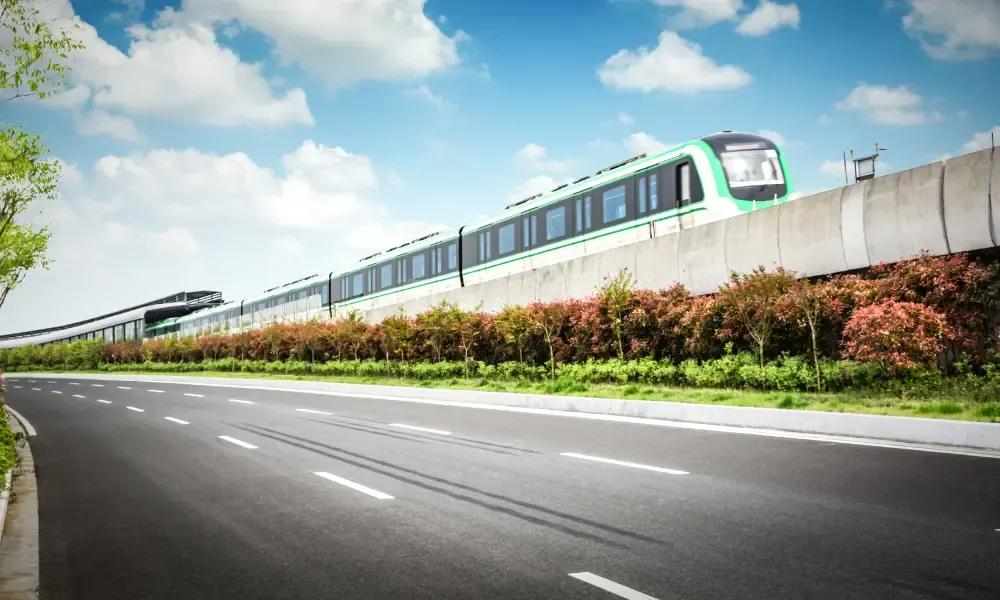
A major rail manufacturing facility in Chennai is set to supply more than 150 air-conditioned metro coaches for urban transit operations in Bengaluru, underlining the growing role of domestic industrial networks in supporting India’s expanding public transport infrastructure. The development reflects increasing investments in high-capacity mobility systems as large cities confront rising congestion, pollution, and commuter demand.
The coach procurement is linked to ongoing metro expansion projects aimed at strengthening connectivity across Bengaluru’s rapidly growing urban corridors. With the metropolitan region witnessing sustained population growth and outward real estate development, transport planners view mass rapid transit systems as essential for reducing road dependency and improving economic productivity.Urban mobility experts say the expansion of metro infrastructure has become increasingly important for Indian cities attempting to transition towards lower-emission transport systems. Rail-based public transit is widely considered more energy efficient than private vehicle usage and can help reduce traffic congestion, fuel consumption, and air pollution when integrated effectively with buses, pedestrian access, and last-mile connectivity.The manufacturing order also highlights the strategic importance of Chennai’s industrial ecosystem within the country’s transportation and engineering supply chain. The city has emerged as a significant hub for rail equipment, automobile production, and heavy manufacturing, supplying components and rolling stock for infrastructure projects across multiple states.Industry analysts note that localised manufacturing of metro coaches could strengthen domestic capability in urban transit technology while reducing long-term procurement dependency on imports.
It may also generate employment opportunities across engineering, fabrication, electronics, and maintenance sectors linked to public infrastructure development.At the same time, urban planners caution that expanding metro networks alone may not fully resolve mobility challenges unless accompanied by integrated planning.Bengaluru continues to face persistent traffic bottlenecks, fragmented public transport links, and uneven pedestrian infrastructure despite ongoing investments in rail transit. Experts argue that transit-oriented development, affordable feeder services, and better land-use coordination remain necessary to maximise the social and environmental benefits of metro systems.The growing scale of India’s metro rail expansion reflects broader shifts in urban policy where sustainable mobility is becoming central to economic planning. Cities increasingly recognise that transport infrastructure influences housing patterns, employment accessibility, commercial growth, and environmental quality.Climate specialists also emphasise that investment in electrified public transport systems can contribute significantly to urban decarbonisation goals if supported by cleaner energy sources and reduced private vehicle dependence. As cities experience worsening air quality and infrastructure stress, mass transit networks are expected to become a defining element of future urban resilience strategies.
For Bengaluru commuters, the additional metro coaches are likely to improve carrying capacity and operational efficiency as new corridors become functional over the coming years. The broader challenge, however, will lie in ensuring that transit expansion remains inclusive, accessible, and aligned with sustainable urban growth objectives rather than merely responding to rising commuter volumes.
Also Read:Karnataka Government Schools Face Deep Teacher Deficit
