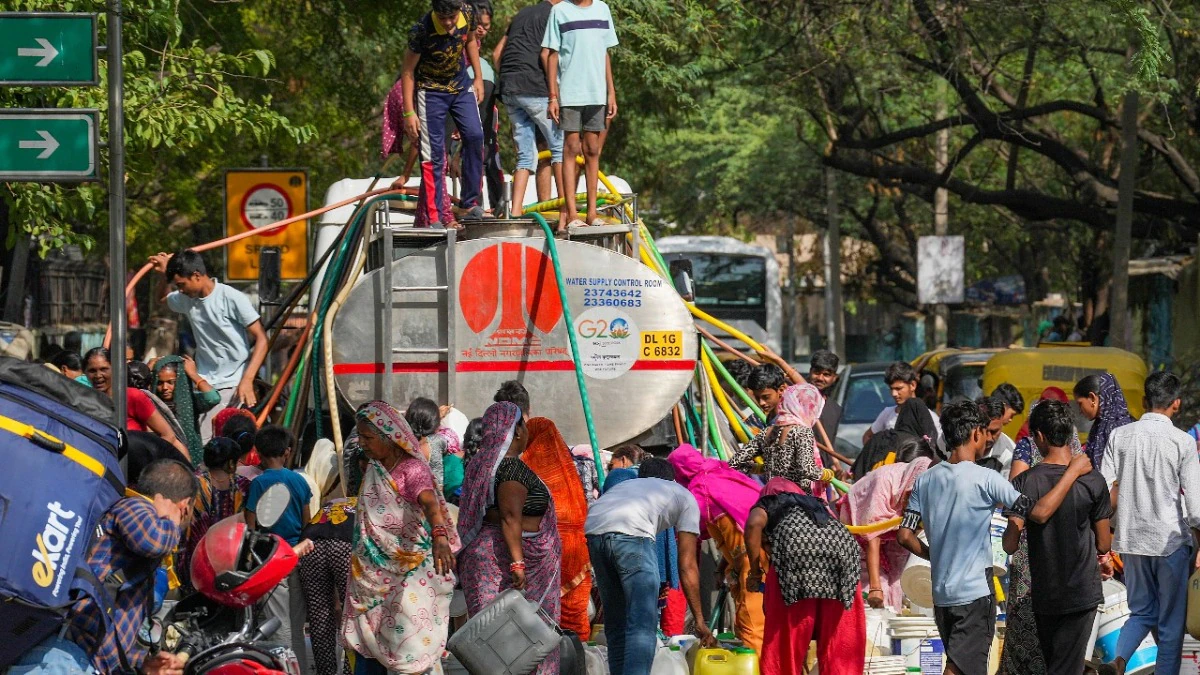
Mumbai will begin operating under a 10% reduction in water supply from May 15 as reservoir levels decline ahead of the monsoon, prompting authorities to activate precautionary measures amid concerns over erratic rainfall patterns and rising summer temperatures. The decision affects not only the financial capital but also neighbouring urban regions dependent on the same reservoir system, underscoring the growing vulnerability of Indian cities to climate-linked water stress. Civic officials confirmed that storage across Mumbai’s seven lakes has fallen to less than one-fourth of total capacity, even as demand continues to rise during peak summer consumption. While current reserves remain higher than levels recorded during some previous drought-prone years, planners are increasingly worried about delayed rainfall and prolonged dry spells linked to evolving El Niño conditions in the Pacific Ocean.
The latest restrictions highlight a recurring challenge for Mumbai’s urban infrastructure: balancing rapid population growth with long-term resource resilience. The city, which depends almost entirely on distant reservoir systems for drinking water, loses significant volumes through evaporation, leakage, and uneven distribution during heatwaves. Urban planners say these seasonal shortages expose the limitations of relying primarily on large surface reservoirs without parallel investments in decentralized water management. Officials have indicated that emergency reserve stocks from key dams will be released to stabilize supply through the pre-monsoon period. However, authorities are simultaneously urging residential societies, commercial establishments, and construction projects to reduce discretionary consumption and improve efficiency in daily use. The Mumbai water cut comes at a time when climate scientists are warning that Indian cities may experience sharper swings between intense rainfall and extended dry periods. Such volatility increases pressure on ageing civic infrastructure, particularly in coastal megacities where water demand continues to expand alongside real estate development and urban migration.
Experts tracking urban sustainability note that recurring water restrictions over the past several years point to the need for structural reforms rather than seasonal emergency responses. These include wider adoption of rainwater harvesting, wastewater recycling, groundwater recharge systems, and mandatory water audits for high-consumption developments. Several planners have also called for stronger integration between land-use planning and water security strategies, especially in rapidly urbanising metropolitan regions. For residents, the immediate impact may include reduced supply timings, lower water pressure in some neighbourhoods, and higher dependence on private tankers in areas already facing distribution gaps. Commercial sectors such as hospitality, retail, and small manufacturing units could also experience operational adjustments if the restrictions continue into the monsoon months.
Despite the precautionary measures, civic authorities maintain that there is no immediate threat of severe scarcity. The current strategy, officials say, is intended to stretch available reserves until rainfall stabilises reservoir inflows. Yet the repeated need for annual cuts is becoming a larger warning for India’s urban centres, where climate resilience is increasingly tied to how cities manage water, density, and infrastructure growth together.