


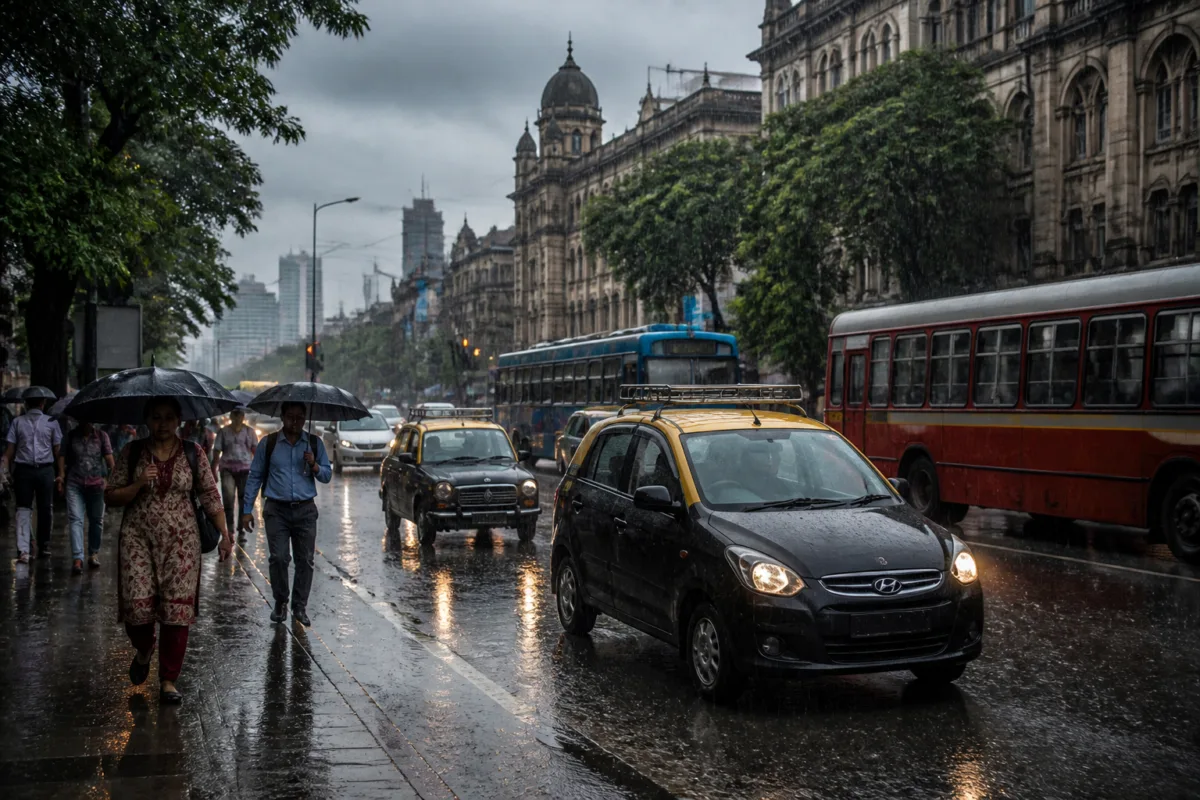
The Mumbai rain forecast points to scattered showers across the city for the next four to five days, with independent meteorologists expecting rainfall to peak around November 2 and 3 before easing on November 4, according to the India Meteorological Department and weather experts quoted by Mid-Day.
Mumbai recorded scattered showers on October 30 and 31, marking the beginning of an unusual wet spell at the start of November. The India Meteorological Department said light rain could continue across Mumbai and parts of Maharashtra during the period.
The Santacruz observatory recorded nearly 1 cm of rain by Saturday morning, while Vikhroli also reported considerable showers. The IMD said a weather system forming over the Bay of Bengal could move towards Andhra Pradesh, bringing rain to parts of Marathwada and Vidarbha, while Konkan, Madhya Maharashtra and Goa may receive scattered showers.
Bikram Singh, head scientist at the IMD’s Regional Meteorological Centre in Mumbai, said the developing system was likely to influence rainfall across parts of the region. The forecast covers a broad area of Maharashtra, with the intensity and spread of rainfall expected to vary between districts.
Independent meteorologist Rushikesh Agre said Mumbai could see a pattern of morning rain that intensifies around the middle of the week. He expected rainfall to peak on November 2 and 3 and subside on November 4, while cautioning that it was too early to determine whether Diwali would be affected by rain.
Cloudy conditions may keep maximum temperatures lower in the city during the spell. Officials also said Mumbai could record lower air-quality index levels in the coming days, as rain and cloud cover influence atmospheric conditions. The forecast, however, does not establish how long any improvement in air quality would last after the showers end.
The late-season rain also has implications beyond Mumbai’s streets. Akshay Deoras, senior research scientist at the University of Reading in the United Kingdom, said rainfall would need to be widespread and heavy to significantly recharge groundwater. Local thunderstorms alone, he said, were unlikely to produce that effect.
Deoras added that farmers who had already sown rabi crops could benefit from the rain. However, he noted that the area under rabi cultivation may already be limited because the summer monsoon was poor. The possible agricultural benefit therefore depends on both the spread of the rainfall and the extent of sowing.
The IMD’s immediate outlook remains focused on light rain in Mumbai and scattered showers across parts of Maharashtra. The next significant forecast marker is November 2 and 3, when independent meteorologists expect rainfall activity in Mumbai to reach its highest levels before easing on November 4.

