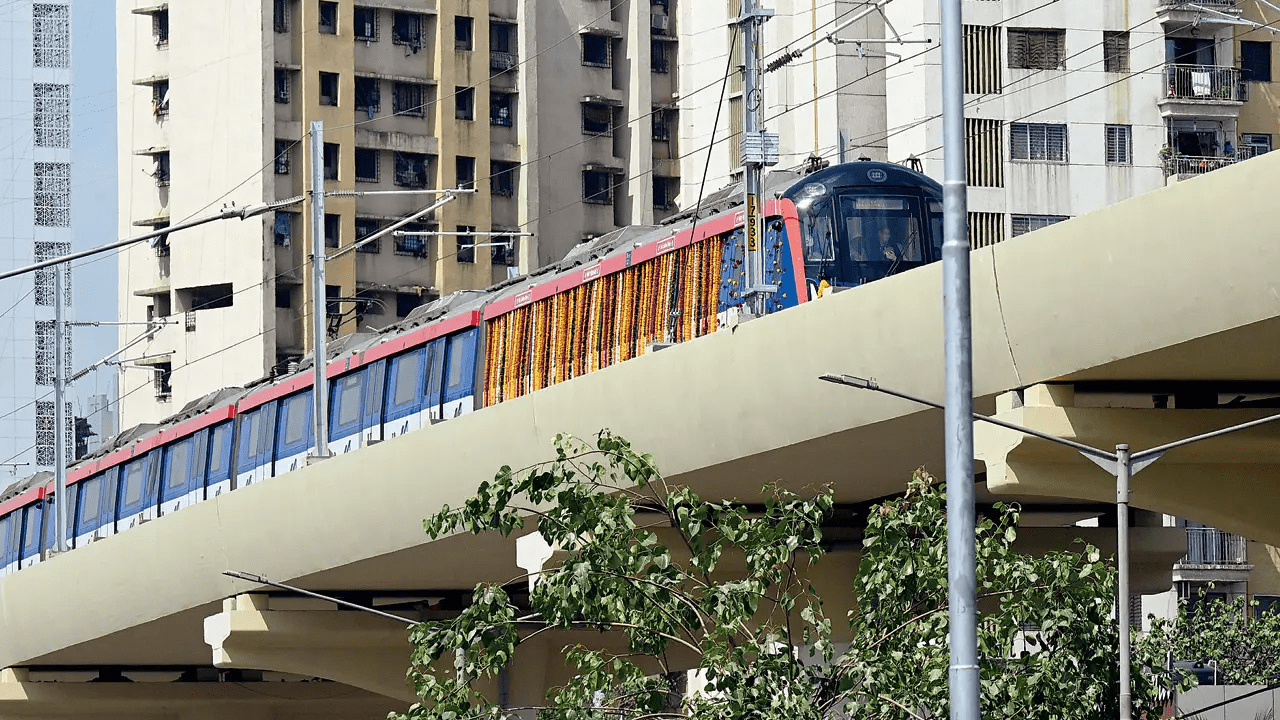
Mumbai’s suburban connectivity is set for a significant upgrade as the first operational stretch of Metro Line 9 approaches launch, promising to integrate fast-growing residential zones in Mira-Bhayandar with the city’s broader transit network. The development is expected to ease commute pressures in the western suburbs while reinforcing the role of mass transit in managing urban expansion. The initial phase of Mumbai Metro Line 9 spans a short but strategic elevated corridor linking Kashigaon and Dahisar. Once operational, it will seamlessly connect with an existing metro line, allowing commuters to travel across key business districts without changing trains. This integration is particularly important for daily passengers travelling between peripheral residential clusters and employment hubs in Andheri and beyond.
Urban mobility experts note that such extensions are critical in reducing dependence on road-based transport, especially in areas where population growth has outpaced infrastructure capacity. By improving first- and last-mile connectivity, the corridor is expected to reduce travel time variability and support more predictable commuting patterns. The launch is also likely to coincide with progress on other transport projects, including the introduction of tunnel boring machines for a major underground corridor linking Thane and Borivali. This tunnel is designed to cut cross-regional travel time significantly, addressing one of the most persistent bottlenecks in the metropolitan region. In parallel, a proposed pod-based transit system in a key commercial district is being positioned as an experimental step towards alternative mobility solutions in dense urban environments. The broader significance of Mumbai Metro Line 9 lies in its role within a larger network strategy aimed at decentralising mobility. By linking suburban growth centres directly to established transit corridors, authorities are attempting to reduce pressure on arterial roads and suburban rail systems. This approach aligns with long-term goals of lowering congestion, improving air quality, and supporting climate-resilient urban transport.
However, infrastructure expansion has not been without challenges. Adjacent road projects, including a flyover near the metro alignment, have faced criticism over design choices that impact traffic flow. Such concerns highlight the need for integrated planning, where multiple transport interventions are coordinated to deliver cumulative benefits rather than isolated improvements. From a real estate perspective, improved metro access is expected to influence property demand in the Mira-Bhayandar belt, where affordability has driven residential growth. Enhanced connectivity could further accelerate development, raising questions about balancing growth with infrastructure capacity and environmental sustainability. As Mumbai continues to expand, projects like Mumbai Metro Line 9 underscore the importance of transit-oriented development. The effectiveness of these investments will depend not only on timely execution but also on how well they are integrated into a wider framework of sustainable urban planning.
With final approvals pending, the upcoming rollout will be closely watched as a marker of progress in the city’s ongoing transition towards a more connected and resilient mobility ecosystem.