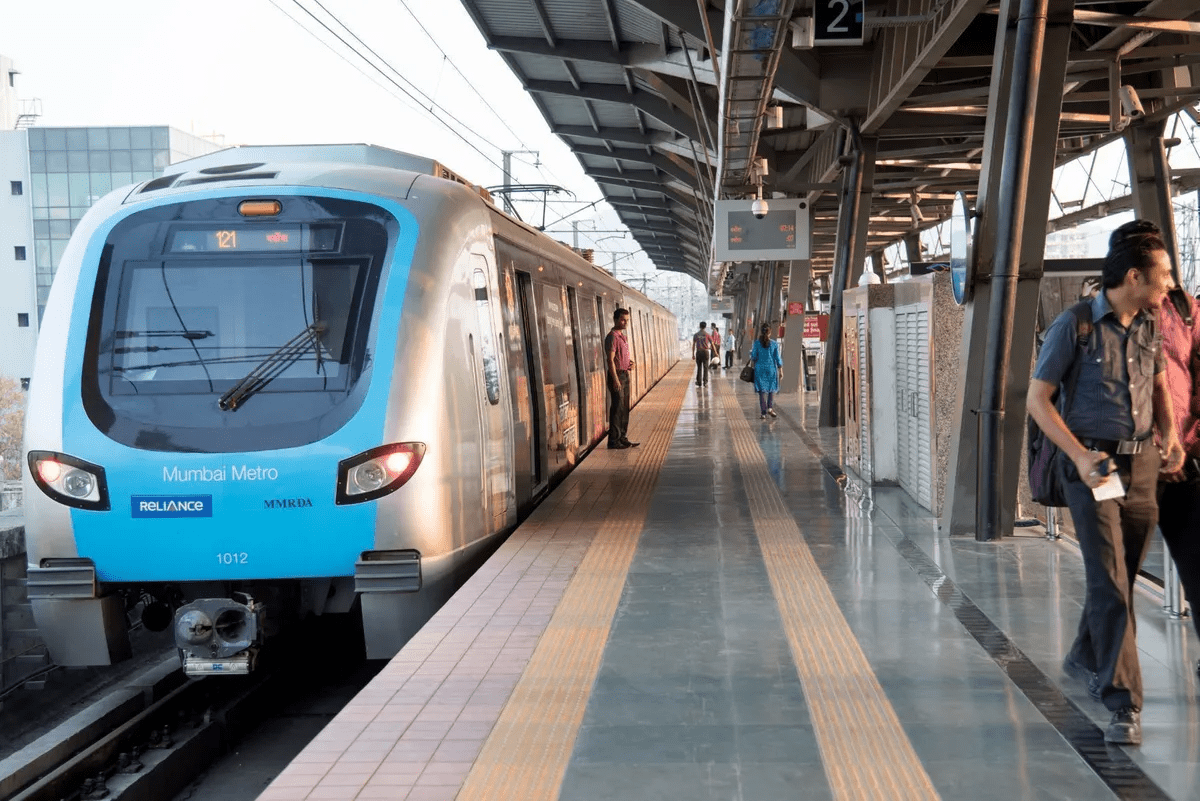
Mumbai’s suburban transport landscape is set for a significant upgrade after the Maharashtra government cleared a revised investment plan for an expanded metro corridor linking Thane, Bhiwandi, Kalyan and Ulhasnagar. With an outlay now crossing ₹18,000 crore, the project reflects both the scale of demand in the Mumbai Metropolitan Region and the growing complexity of building transit systems in densely populated urban clusters. The reworked Mumbai Metro Line 5 project introduces design and alignment changes aimed at overcoming earlier constraints related to land availability and local congestion. Authorities have opted for a hybrid approach in key stretches, combining elevated and underground sections to reduce disruption in high-density zones. This shift is seen as an attempt to balance infrastructure expansion with the need to limit displacement and preserve existing urban fabric.
One of the notable engineering elements includes a double-decker structure integrating a road flyover with the metro line. Such designs, increasingly used in space-constrained cities, are intended to optimise land use while easing traffic bottlenecks. Urban mobility experts note that these layered transport systems could become more common as cities seek to accommodate multiple transit modes within limited corridors. The updated plan also reconfigures the network’s reach by extending connectivity towards Ulhasnagar through an additional link. This adjustment reflects changing development patterns, with residential and commercial growth shifting towards peripheral areas. By aligning transit infrastructure with these emerging zones, planners aim to create more equitable access to jobs, services and economic opportunities. For commuters, the expanded Mumbai Metro Line 5 corridor is expected to provide a more reliable alternative to overcrowded suburban rail lines and congested road networks.
The Thane–Bhiwandi–Kalyan belt, a key industrial and residential region, has long struggled with limited direct connectivity. Improved transit options could reduce travel times and enhance daily mobility for a large section of the working population. Beyond commuter benefits, the project carries broader implications for sustainable urban development. High-capacity metro systems are central to reducing dependence on private vehicles, thereby lowering emissions and improving air quality. However, experts caution that these gains depend on effective integration with feeder services, last-mile connectivity, and transit-oriented development around stations. The corridor’s phased implementation, with initial sections nearing completion, indicates progress despite earlier delays. Yet, challenges remain in ensuring timely execution, cost control, and seamless coordination among agencies. As investment in urban infrastructure rises, accountability in delivery is becoming a key focus for both policymakers and citizens.
Looking ahead, the success of the metro expansion will hinge on how well it integrates with the wider transport ecosystem, including other metro lines, buses and regional rail. For a rapidly growing metropolitan region, the project represents not just an infrastructure upgrade but a step towards building a more connected, efficient and climate-responsive urban future.