


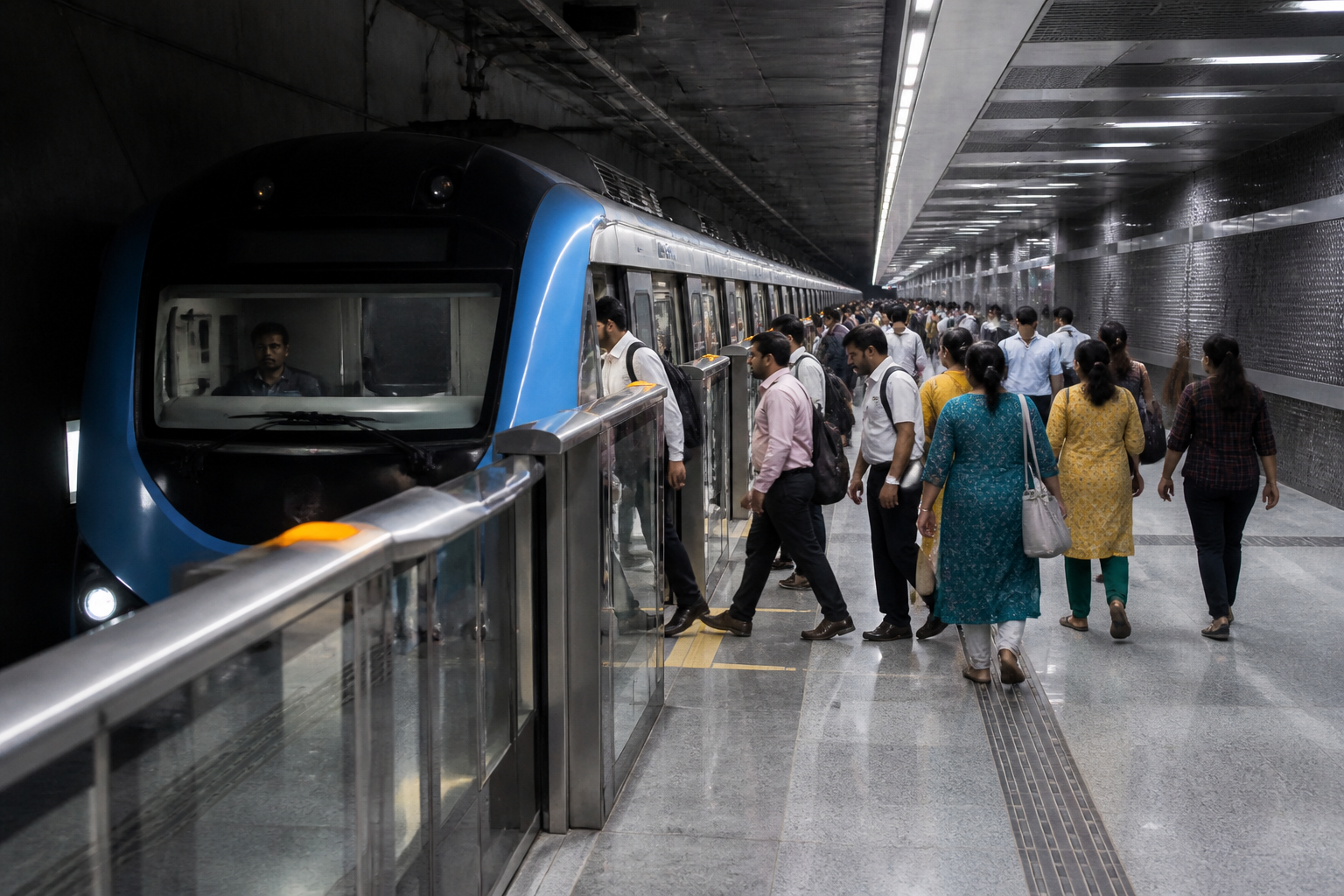
Mumbai Metro 3, the city’s underground Aqua Line, has recorded 7 crore passenger journeys during its first full year of operations, connecting Cuffe Parade with Aarey JVLR through some of Mumbai’s busiest employment, transport and commercial districts, according to a report by the Times of India.
The 33.5-kilometre corridor has 27 stations, including 26 underground stations and one at-grade station. The line provides an end-to-end journey time of about 54 to 60 minutes, linking south Mumbai with the airport area, Bandra Kurla Complex and the northern end of the operational corridor.
The Aqua Line operates daily from 5:55 am to 10:30 pm. During peak hours, trains run at intervals of up to five minutes, while fares range from Rs 10 to Rs 70. The reported ridership figure represents an average of more than 1.9 lakh passenger journeys a day over the first 365 days, although passenger journeys are not the same as unique individual users.
A key feature of Metro 3 is its access to Chhatrapati Shivaji Maharaj International Airport. The line provides underground access to both Terminal 1 and Terminal 2, giving air passengers a direct rail connection that avoids dependence on congested surface roads for part of their journey.
The corridor also connects with several major suburban and long-distance railway hubs, including Chhatrapati Shivaji Maharaj Terminus, Churchgate, Mumbai Central and Dadar. These links place Metro 3 within Mumbai’s wider public transport network rather than treating it as an isolated corridor. Its stations also serve important commercial areas such as Nariman Point, Vidhan Bhavan and the Bandra Kurla Complex.
The first-year milestone is significant because the line runs through dense parts of the city where road expansion is difficult and surface traffic is often slow. By shifting some journeys from roads to a high-capacity underground railway, the corridor is intended to reduce pressure on key road routes and improve connections between employment centres, transport terminals and residential catchments.
The line’s reported performance also reflects the importance of frequency, operating hours and fare levels in building ridership. A service that begins before the morning peak, runs into the evening and offers fares up to Rs 70 can serve a mix of office commuters, airport users and passengers transferring between rail systems. The available report does not provide a detailed breakdown of ridership by station, passenger category or time of day.
Metro 3 is now entering its second year of operations with its first full-year passenger milestone established. The next phase of attention will be on maintaining service frequency, managing interchange demand at major railway and airport stations, and tracking how the corridor affects passenger flows and road traffic across the areas it serves.
