


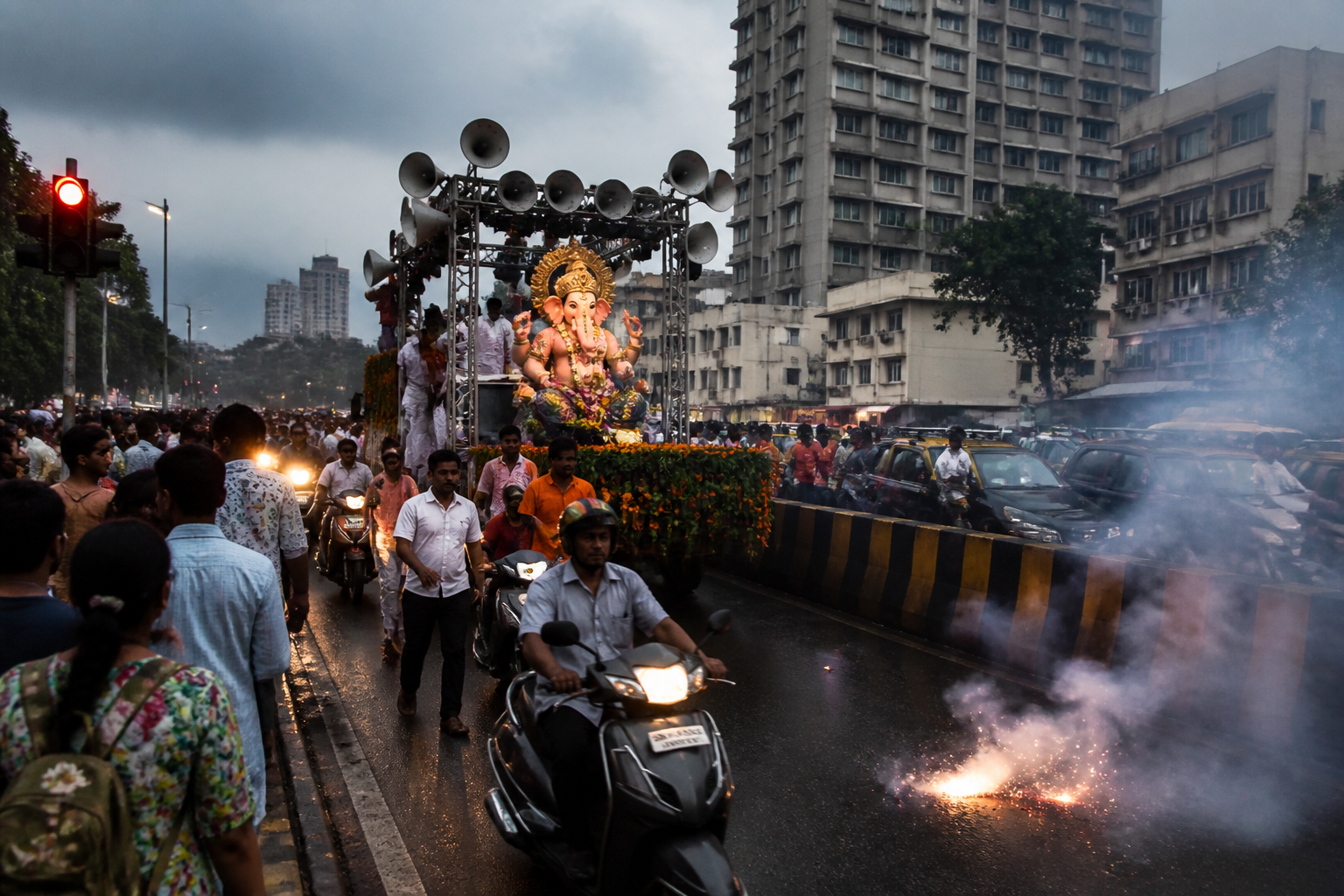
Mumbai Ganeshotsav noise pollution has come under scrutiny from the Bombay High Court, which initiated a suo motu public interest litigation over loud music, firecrackers and alleged breaches of permitted timings during the festival. The court said citizens could not be made to suffer because of a few people creating objectionable noise pollution and sought responses from the authorities.
A bench of Justices Girish S Kulkarni and Neela K Gokhale said existing rules did not appear to be properly implemented “from the ground realities”, causing “serious prejudice to the citizens at large”. The court said there could be no objection to festivals and processions, but they had to be conducted in a manner that recognised the rights of residents affected by them.
The bench specifically questioned permissions granted for DJ sound systems and the continuation of loud music beyond permissible hours. It observed that permissions were otherwise limited to 10 pm, but loud procession music was being allowed until midnight in some cases. The court said there was “no logic” in permitting this extension when the authorised hours were shorter.
The court also pointed to the combined effect of multiple processions playing loud music at the same time, along with firecrackers being burst. It said timelines and permissible hours were being breached, and that the resulting collective decibel levels had worsened noise conditions during the festival.
The observations also covered public safety. The bench flagged the “imminent danger of accidents” involving cars and pedestrians when firecrackers were burst on public roads. It further said firecrackers contributed to air pollution and toxicity, and prima facie observed that it was “high time” that firecrackers causing noise and air pollution were banned to reduce their harmful effects.
The case also connects festival regulation with Mumbai’s wider air-quality challenge. The court referred to a 2023 suo motu PIL concerning air pollution in the city and noted that authorities had been struggling to reduce high pollution levels during September and October, when a persistent haze was observed.
The bench said residents were being seriously and adversely affected by high levels of noise pollution and were left to suffer silently. It added that no responsible citizen could be permitted to pollute the atmosphere or create noise pollution by bursting firecrackers when those activities intensified severe air pollution.
The proceedings place implementation, rather than the absence of rules, at the centre of the court’s concern. The court’s observations indicate that permissions, timing restrictions and enforcement during processions will be examined alongside the health, safety and environmental effects reported during Ganeshotsav. The authorities have been asked to respond, and the matter has been posted for hearing on September 22.

