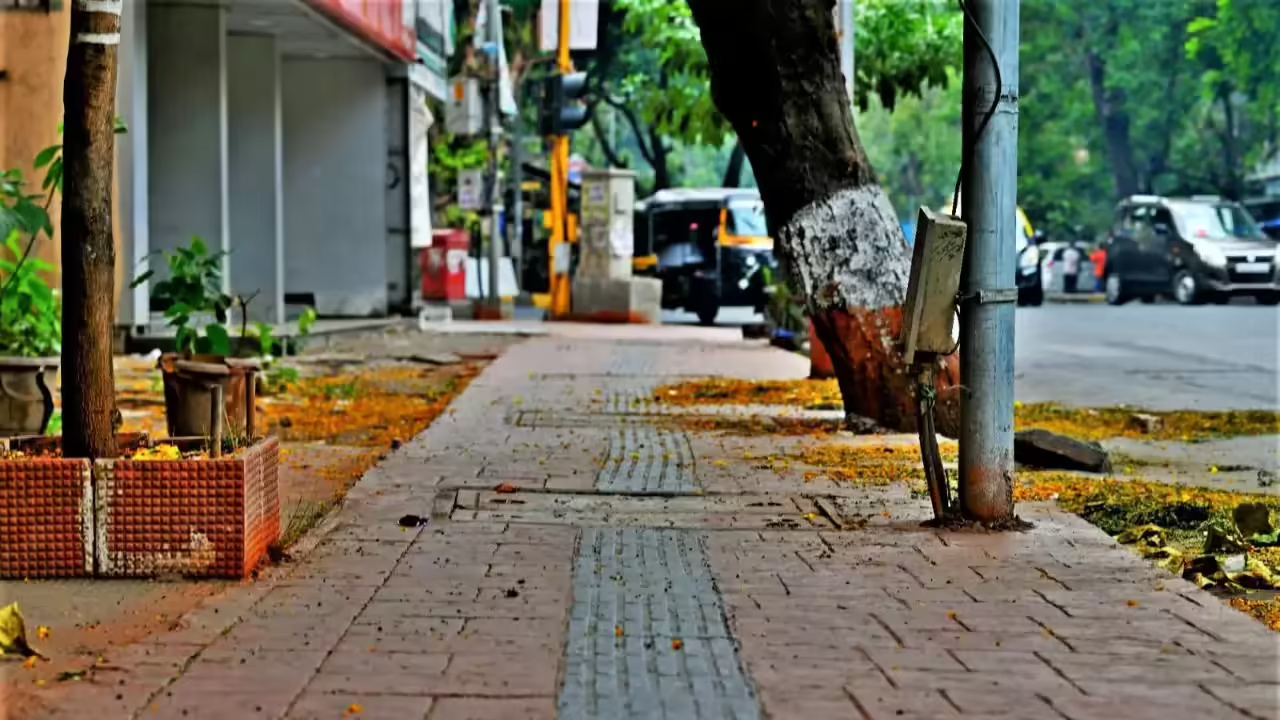
Mumbai’s civic administration has reported action across 1,711 locations, with about 246 km of footpaths cleared of obstructions under its ongoing pedestrian-focused enforcement drive. The exercise, covering all 26 administrative wards, comes as officials and urban planners examine how street design, enforcement and maintenance can make walking safer and more reliable across the city. The scale of the intervention highlights a basic infrastructure problem in Mumbai: a footpath is useful only when people can actually move along it continuously. Unauthorised structures, commercial extensions, parked vehicles, poorly positioned street furniture and poorly planned roadside elements can push pedestrians towards traffic, particularly around railway stations and other high-footfall areas.
The civic body is now focusing on a first phase covering 200 footpaths, with work already under way at 136 locations. Recent enforcement has included areas around Andheri, Vile Parle and Jogeshwari railway stations, showing the importance of improving pedestrian access around public transport nodes. For Mumbai’s transport system, the issue extends beyond convenience. Walking is the first and last leg of most public transport journeys. If footpaths are inaccessible, the effectiveness of rail, metro and bus networks is weakened because commuters face unsafe gaps between stations, roads and neighbourhoods. Better pedestrian infrastructure can therefore improve access to mass transit without requiring additional road capacity. Urban planners at a recent civic workshop also stressed that clearing an obstruction is only the beginning. Footpaths need consistent widths, accessible ramps, safer crossings and designs that account for trees, utility infrastructure and traffic islands.
The city’s own pedestrian policy identifies footpaths as part of the wider transport network and calls for continuous, dedicated pedestrian movement rather than isolated stretches of walkway. The environmental dimension is equally important. Streets that are easier to walk can support shorter local trips without motor vehicles, while shaded and appropriately landscaped pedestrian corridors can improve comfort during Mumbai’s increasingly hot and humid conditions. However, tree planting and street design need to preserve usable walking space rather than create new obstacles. The enforcement challenge remains significant. Civic officials have been advised to conduct regular ward-level reviews, inspect cleared stretches and prevent encroachments from returning. Coordination with police and other agencies will also be necessary where enforcement involves complex legal or ownership issues.
The next test for Mumbai footpaths will therefore be permanence rather than the number of clearances recorded. Sustained maintenance, inclusive design and reliable enforcement will determine whether the newly available space becomes a lasting improvement in how Mumbai’s residents move through the city.