


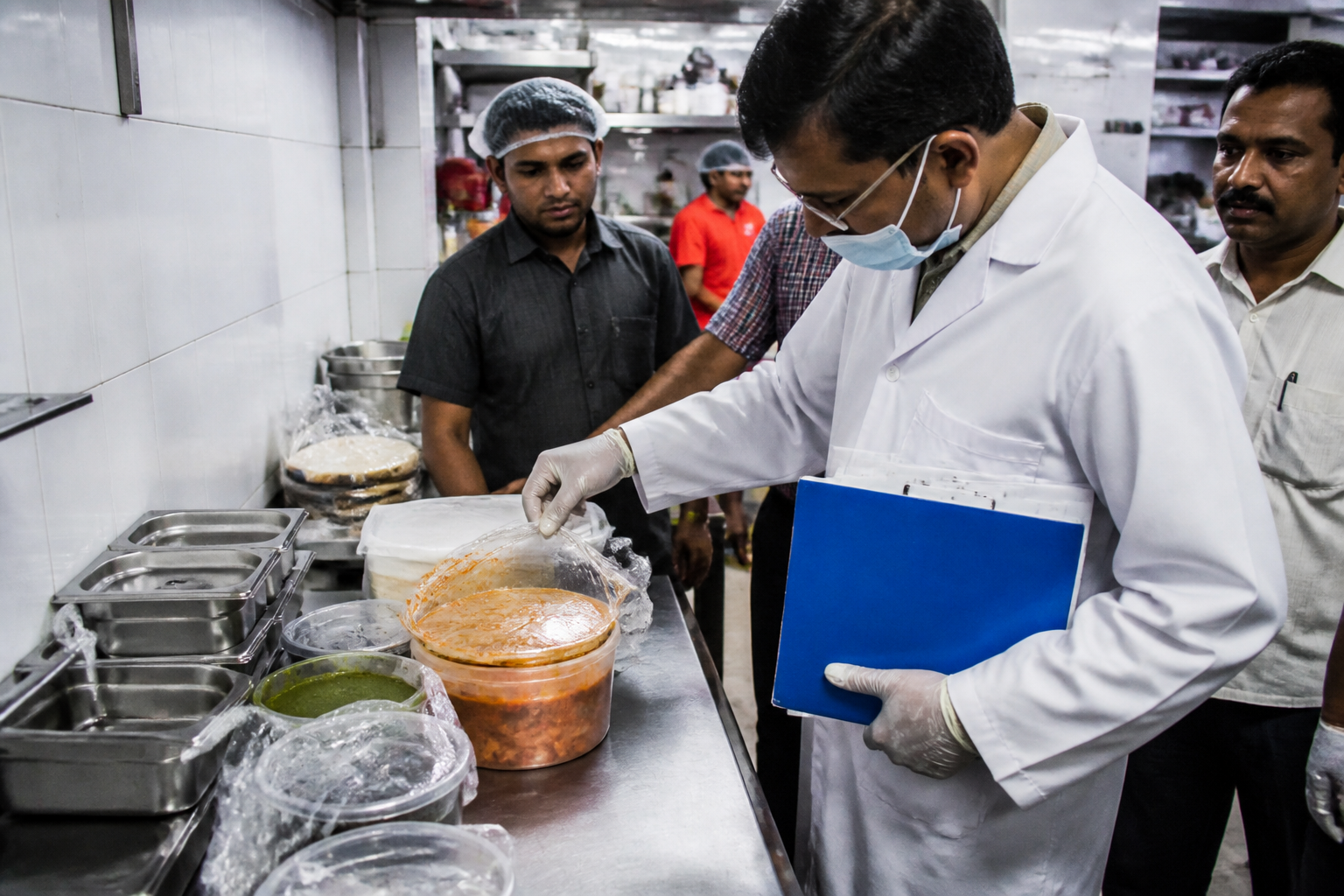
The Maharashtra Food and Drug Administration’s latest action against Mumbai eateries has done more than put a 94-year-old Colaba landmark under scrutiny. It has exposed a widening gap between the public image of the city’s food establishments and the basic systems that are supposed to keep kitchens safe, registered and accountable.
Café Mondegar, known for its old-world character and Mario Miranda murals, faced action after an FDA inspection on September 12 identified food safety, hygiene and structural deficiencies, according to the Times of India. The inspection was part of a Ganeshotsav food-safety drive that covered 38 establishments across Mumbai between September 11 and 14. Officials collected 47 food samples and suspended the licences of nine establishments for violations.
The immediate story is about enforcement. The larger story is about trust: how much can diners know about the conditions in a kitchen they cannot see, and how consistently are food businesses monitored before problems become visible to consumers or regulators?
## Mumbai food safety enforcement is no longer limited to small outlets
The recent action has unsettled some diners because the establishments facing scrutiny are not confined to informal roadside businesses. The timeline supplied in the report includes prominent restaurants, bakeries, clubs, sports facilities, food-service companies and outlets linked to major delivery platforms.
Earlier action cited in the report included establishments such as Flint & Waarsa at the National Centre for the Performing Arts, M. K. Bakery, Hotel Shrikrishna, Hotel Gopal Krishna, Karak Enterprises and Madras Diaries. K. Rustom & Co., Parsi Dairy Farm and Poornima Restaurant were also among the establishments facing action. Inspectors reportedly found fungal growth on stored vegetables and bananas at Poornima.
The FDA later suspended or acted against several clubs and sports facilities, including the CCI, RK Juhu Gymkhana, MIG Cricket Club, Aparna Juhu Gymkhana, Willingdon Sports Club and Goregaon Sports Club. The list also included Domino’s outlets, food outlets linked to Blinkit, Instamart and Zepto, and establishments such as Otters Club, the Bombay Presidency Radio Club, McDonald’s Metro House and Khar Gymkhana.
That range matters because it suggests that food safety risk is not neatly divided between formal and informal economies. A recognised brand, an established club or an iconic restaurant may have stronger public visibility, but visibility is not the same as continuous compliance. The FDA’s action indicates that different types of food businesses can fail on basic operational requirements, even when customers associate them with reputation, longevity or institutional standing.
## What the inspections reveal about hidden kitchen systems
Restaurants are public-facing businesses, but many of the conditions that determine food safety remain hidden from diners. Customers can observe a dining room, a service counter or the appearance of a plate. They generally cannot see how ingredients are stored, whether frying oil is reused, how staff hygiene is managed, or whether food preparation areas meet required standards.
The responses described in the report show how regulatory scrutiny can lead to changes inside those unseen systems. One Mumbai eatery said it had stopped using artificial colour in its sweet chutney, stopped reusing frying oil and strengthened hygiene measures among staff after FDA action.
These changes are significant not because they prove that every business will comply permanently, but because they identify the operational details that determine whether food safety exists beyond the dining room. Ingredient handling, storage, oil reuse and staff practices are routine processes. They are also areas where customers have limited ability to independently verify what is happening.
This creates an accountability problem. A diner can choose whether to return to a restaurant, but that decision is made with incomplete information. The regulator, by contrast, has the authority to inspect, collect samples and act against licences or registration certificates. The effectiveness of the system therefore depends not only on the existence of rules, but on how regularly inspections occur, how findings are recorded and how quickly establishments correct violations.
The supplied report does not establish how often each establishment had previously been inspected, whether all suspended licences were later restored, or how the violations were distributed by type. Those gaps matter because a list of enforcement actions shows where regulators found problems at a particular point in time, but does not by itself measure long-term compliance across Mumbai’s food sector.
## The institutional role of the FDA
The Maharashtra FDA is the central institutional actor in this episode. Its Ganeshotsav drive brought inspections together across a defined period, with officials examining establishments and collecting samples. The suspension of nine licences shows that the agency used a formal enforcement mechanism rather than relying only on warnings.
For consumers, the distinction between registration, licensing and actual compliance can be difficult to understand. The report refers to food licences and registration certificates being suspended in different cases. That points to a regulatory system in which establishments may have different legal statuses and obligations depending on their operations. Yet the public-facing question remains straightforward: is the business currently permitted to operate and is it meeting food-safety requirements?
The Commissioner, Tukaram Mundhe, urged consumers not to stop eating out but to become more mindful. His advice, as reported, includes checking cleanliness and sanitation and ensuring that an establishment is properly registered and licensed.
That guidance places part of the burden on consumers, but it also highlights the limits of consumer vigilance. Diners can observe cleanliness in visible areas and look for registration or licensing information where it is displayed. They cannot independently assess every food sample, storage condition or preparation practice. Consumer awareness can complement enforcement, but it cannot replace inspection capacity or transparent regulatory communication.
The timeline also raises a question about how enforcement information reaches the public. The report identifies action against a long list of establishments over several weeks, from late June through August, followed by the September inspection drive. However, the supplied material does not specify whether the FDA publishes a consolidated, regularly updated public database showing the reason for each action, the date of compliance and the current licence status.
Without that information, consumers may learn about enforcement through news reports, scattered announcements or word of mouth. That can produce anxiety without giving diners a reliable way to make informed decisions. A suspension announcement is more useful when it is accompanied by clear information about what was found, what corrective action is required and whether the establishment has been cleared to resume operations.
## A citywide issue, not only a restaurant issue
Mumbai’s food economy operates across neighbourhood restaurants, iconic eateries, hotels, clubs, bakeries, branded chains, cloud kitchens and delivery-linked businesses. The establishments named in the FDA timeline reflect that variety. Food safety enforcement must therefore work across different formats, ownership structures and customer bases.
The public reaction described in the report shows how regulatory action changes the way diners interpret that market. One Santacruz media professional said the findings had made her wary of eating out. A Powai corporate professional said the involvement of clubs and well-known brands raised questions about how much consumers know about the food served to them. A parent from Parel said she was more careful when eating out with her child and wanted assurance that food was fresh and basic hygiene standards were being followed.
These responses reveal the practical consequence of enforcement: uncertainty travels beyond the establishments named by the regulator. When a familiar restaurant is found to have deficiencies, customers may begin to question businesses that have not been inspected publicly or whose inspection status is unknown. That is why consistent disclosure matters. Public trust is shaped not only by violations, but also by whether the regulatory system gives people credible information about compliance.
At the same time, one diner described inspections as a positive development because they make restaurants more accountable. That response points to the constructive side of enforcement. Inspections need not be understood only as punishment. They can establish a baseline, identify failures and push businesses to improve routine practices that are otherwise invisible to customers.
## What remains unclear after the crackdown
The latest action confirms that Mumbai’s food-safety regulator is carrying out inspections and suspending licences or registrations where officials identify violations. It also confirms that enforcement has reached a broad range of establishments, including popular restaurants, clubs, chains and delivery-linked outlets.
What it does not establish is whether the action represents a temporary festival-linked surge or a sustained inspection system. The source material does not provide the FDA’s total inspection capacity, the number of food businesses operating in Mumbai, the full classification of violations, the outcome of each suspension or the rate at which establishments return to compliance.
Those details would determine whether the crackdown becomes a durable accountability mechanism or remains a sequence of high-profile interventions. For diners, the immediate lesson is to pay attention to visible cleanliness and licensing information, as the FDA Commissioner advised. For the regulator and food businesses, the larger test is whether inspections, corrective action and public disclosure become a continuous system rather than a periodic response.
Mumbai’s latest food-safety episode has therefore shifted the conversation from individual restaurants to the city’s regulatory infrastructure. The public can see the enforcement headlines, but confidence will depend on what happens after them: whether violations are corrected, whether compliance is verified and whether consumers can access timely, precise information about the places where they eat.
