


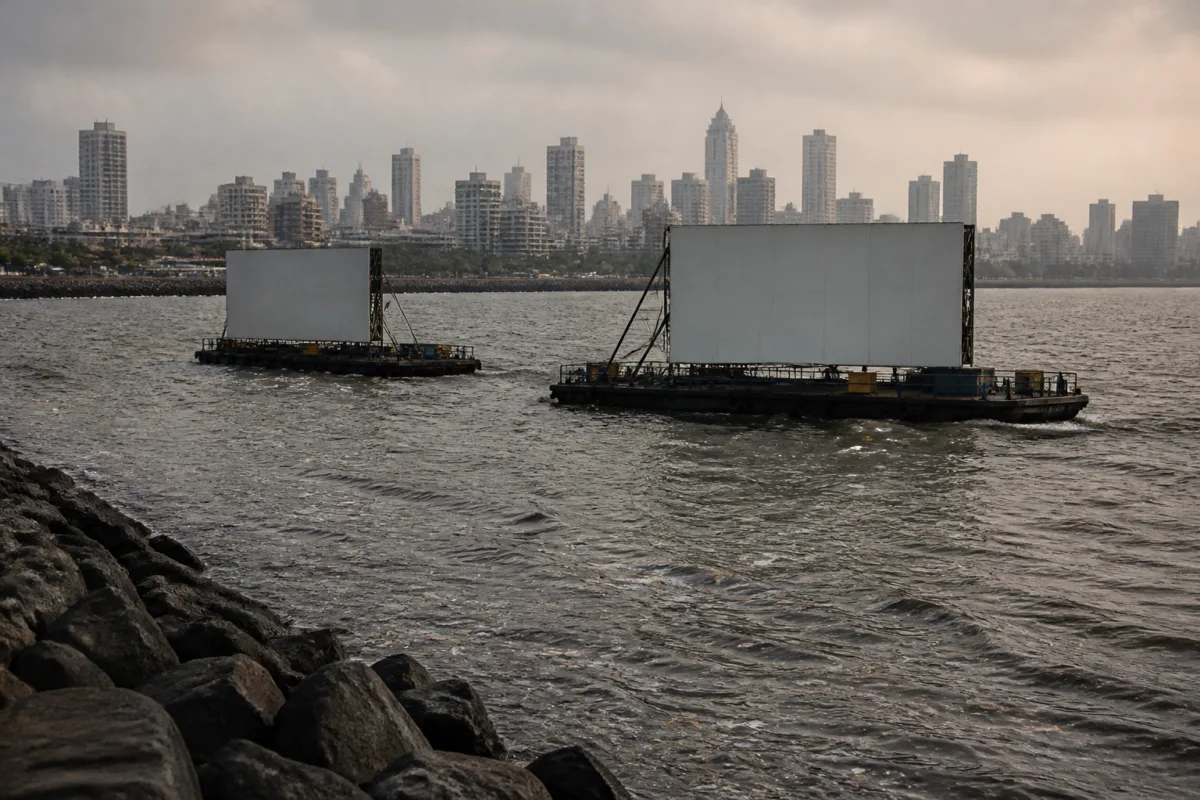
Mumbai’s reported move to allow floating advertisements on barges along prominent waterfronts has drawn opposition from Shiv Sena (UBT) leader Aaditya Thackeray, who has urged Maharashtra Chief Minister Devendra Fadnavis to intervene and stop the decision.
In a letter to the Chief Minister, a copy of which he shared on X on Thursday, Thackeray described the permission as “highly irresponsible” and said floating hoardings would damage Mumbai’s aesthetics. He also linked the issue to the city’s existing pollution burden, saying the sea had become barely visible from much of the city, including locations only a short distance inland.
The Mumbai Maritime Board has decided to allow advertisements to be displayed on barges along prominent waterfronts, according to the report. The supplied information does not specify the number of barges, the locations covered, the duration of the permission or the conditions attached to the approval.
Thackeray criticised the move in the context of what he described as inadequate action to address pollution on land and at sea. He said residents already faced the effects of rampant pollution and argued that allowing advertisements on the water would further commercialise one of Mumbai’s most visible public landscapes.
He also called for a broader hoarding policy to regulate LED advertisements that inconvenience citizens at night and to limit the number of hoardings across the city. In his letter, he said “aesthetics over cartels” should guide decisions on outdoor advertising and alleged that the current decision favoured contractors over the appearance of the city.
Thackeray urged the Chief Minister to intervene and stop what he called a decision that was “highly irresponsible, possibly corrupt and surely one that ruins the aesthetics of Mumbai”. The report does not indicate whether the Chief Minister’s office or the Mumbai Maritime Board has responded to the demand.
The dispute places Mumbai’s waterfront advertising rules alongside wider questions about how public visual space is regulated. It also raises an operational issue for the city: whether advertisements placed on moving or stationary barges would fall under the same controls as land-based hoardings, including limits on brightness, location and public inconvenience. No details of such regulations were provided in the supplied material.
Thackeray had also recently written to Fadnavis about a proposed artificial intelligence data centre in a residential area of Thane. In that case, he questioned the project’s location and said concerns raised by residents remained unanswered. He also questioned the composition of a committee formed by the state government after a protest, saying most members apart from its head were ex-officio administration officials.
The next step in the hoarding dispute is the Maharashtra government’s response to Thackeray’s request and any clarification from the Mumbai Maritime Board on the approval’s scope, safeguards and implementation.

