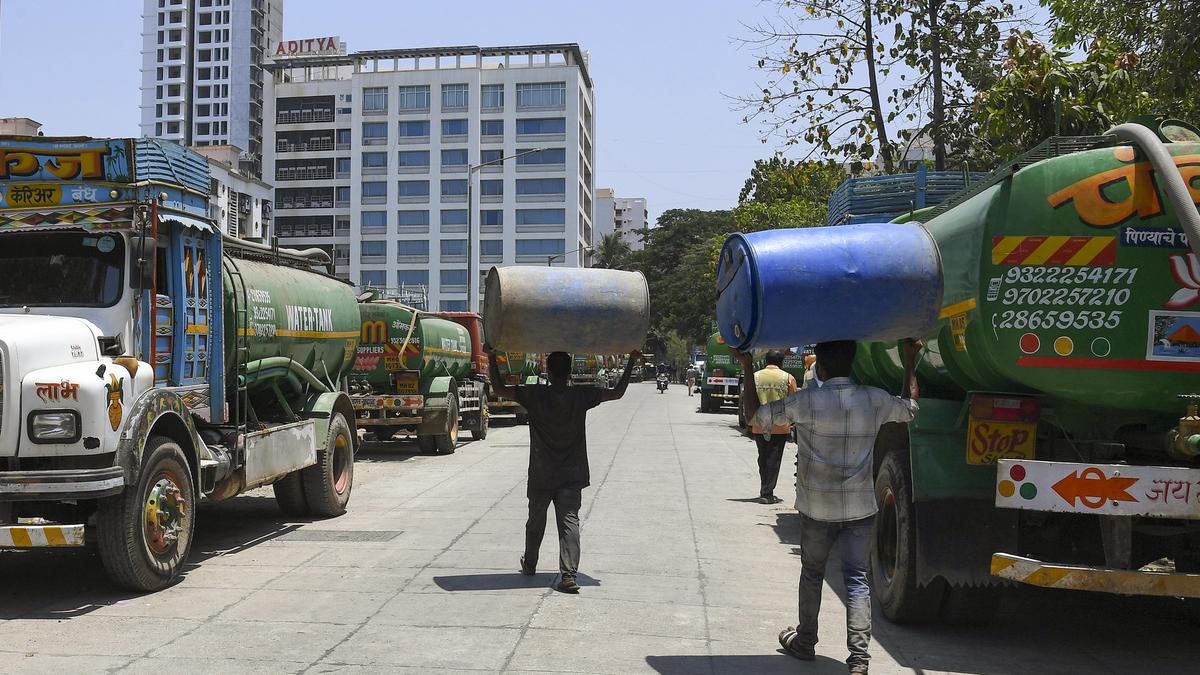
Mumbai is set to experience a temporary but widespread reduction in water supply as civic authorities undertake critical maintenance of key underground infrastructure, highlighting both the fragility and long-term importance of urban water systems in India’s financial capital. The planned Mumbai water supply cut, scheduled over a week in late April, will reduce water availability by around five per cent across several wards. The disruption stems from essential work on two major transmission tunnels that channel water from eastern reservoirs to central and southern parts of the city. While the scale of reduction may appear modest, its impact is expected to be felt across densely populated neighbourhoods already operating under tight water margins.
Urban infrastructure experts note that such maintenance is unavoidable in a city where ageing systems are under constant stress from population growth, climate variability, and uneven distribution. The tunnels undergoing servicing form a critical backbone of Mumbai’s water network, and processes like flushing, disinfection, and system calibration are necessary to maintain water quality and operational reliability. However, the Mumbai water supply cut also exposes a recurring challenge: balancing preventive maintenance with minimal disruption in a megacity where millions depend on daily, predictable access to water. Several eastern suburban wards and parts of south and central Mumbai are expected to face reduced pressure, particularly during peak demand hours. For residents and businesses, even a marginal supply dip can translate into storage pressures, increased reliance on private tankers, and higher costs. Informal settlements and lower-income households, which often lack storage capacity, are likely to face disproportionate stress.
Urban planners suggest that such recurring disruptions underline the need for decentralised water management systems, including rainwater harvesting, local storage, and reuse infrastructure. The maintenance exercise also comes against the backdrop of broader climate concerns. Mumbai’s water supply is heavily dependent on monsoon-fed reservoirs, making it vulnerable to erratic rainfall patterns. Ensuring that transmission systems remain efficient is therefore central not just to daily supply, but to long-term water security. Civic officials have urged residents to adopt conservation practices during the period, but experts argue that demand-side measures alone cannot offset structural limitations. There is growing consensus that cities like Mumbai must accelerate investments in smart water networks, leak detection technologies, and diversified supply sources, including treated wastewater reuse.
As the Mumbai water supply cut unfolds, it serves as a reminder that infrastructure resilience is not just about expansion, but also about maintenance, transparency, and equitable distribution. With climate pressures intensifying and urban populations rising, the city’s ability to manage such disruptions efficiently will shape its path towards a more sustainable and inclusive water future.