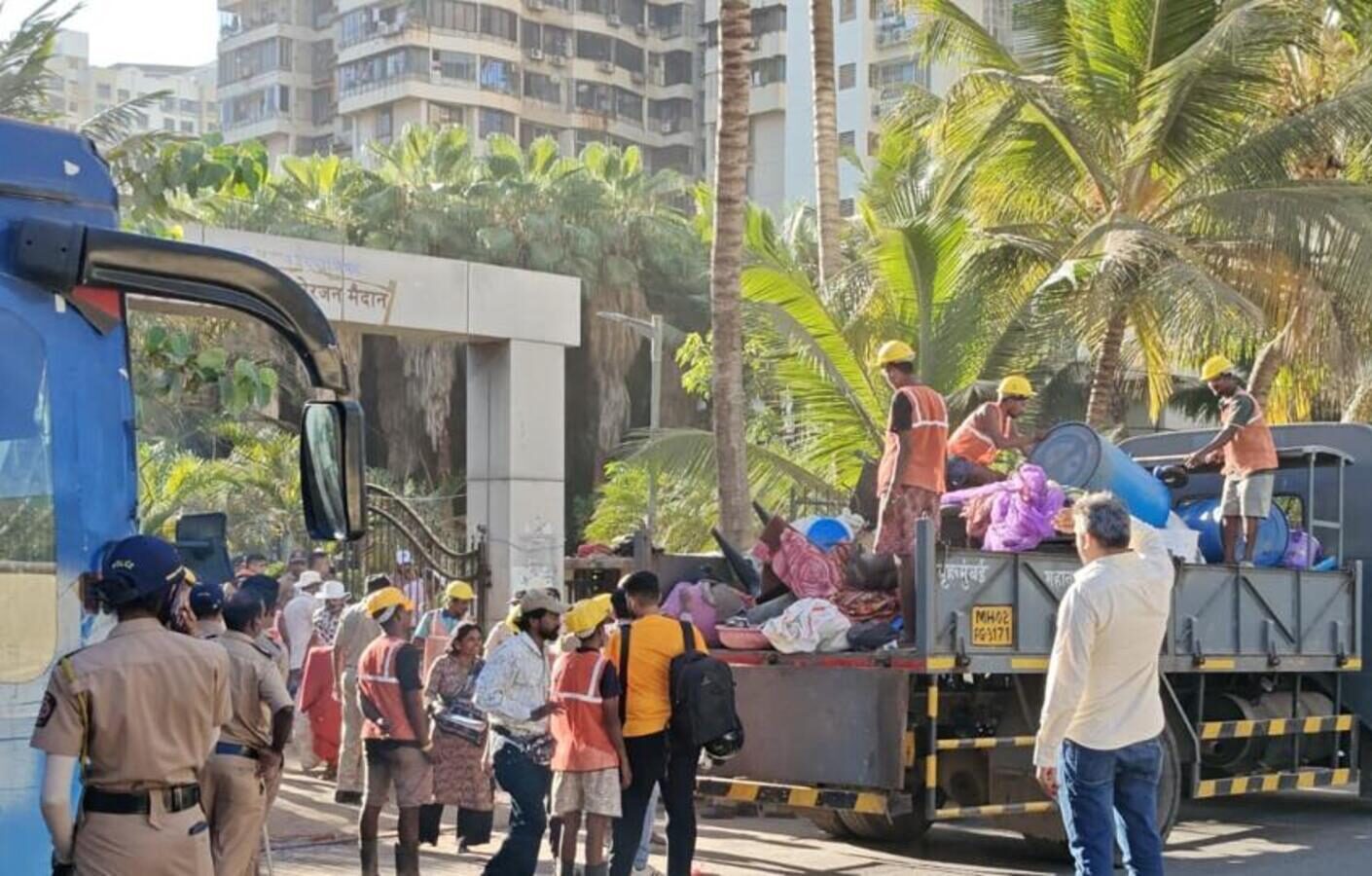
A recent eviction exercise in Mumbai’s Borivali suburb has disrupted the education of dozens of children, with at least 35 students unable to appear for their final examinations after their homes were cleared during a civic anti-encroachment operation. The incident highlights the growing intersection between urban infrastructure enforcement and social vulnerability in informal settlements.
The Mumbai demolition drive targeted a cluster of hutments along a drainage corridor in the Chikuwadi area, where around 60 structures were removed. Residents, many of whom reported living in the locality for decades, were displaced with little time to secure belongings. Among the most immediate consequences was the loss of school materials, including books and uniforms, leaving children unable to attend scheduled exams. Urban policy experts point out that such disruptions expose a critical gap in planning, where enforcement actions often overlook the continuity of essential services like education. Many affected children were enrolled in nearby municipal schools, while some attended low-cost private institutions, indicating reliance on localised education networks that are easily disrupted by sudden displacement.
Community representatives have raised concerns about the frequency of such actions in the area, noting that this was not the first clearance carried out in the past year. They argue that without structured rehabilitation or transitional housing, repeated evictions can destabilise already vulnerable households, affecting livelihoods, schooling, and access to basic services. Officials have maintained that the Mumbai demolition drive was necessary to clear unauthorised constructions on public land, particularly in areas prone to flooding ahead of the monsoon season. Clearing encroachments along drainage lines is often cited as a preventive measure to reduce urban flooding risks, a recurring challenge in Mumbai’s low-lying neighbourhoods.
However, urban planners caution that while such interventions may serve environmental and infrastructure objectives, they must be aligned with inclusive development frameworks. In the absence of adequate resettlement options or prior notice mechanisms, enforcement actions can inadvertently deepen socio-economic inequalities. The civic education department has indicated that remedial measures will be explored to ensure affected students do not lose an academic year. This may include allowing them to reappear for missed examinations. Experts suggest that institutional safeguards—such as coordinated planning between civic and education departments—are essential to minimise disruptions in future operations.
The incident also draws attention to the broader need for integrating housing, education, and infrastructure planning in rapidly growing cities. As Mumbai continues efforts to clear encroachments and upgrade civic systems, balancing environmental resilience with human impact will be crucial. Ensuring that development interventions do not interrupt access to education remains central to building equitable urban futures, where infrastructure upgrades and social protections progress in tandem.
Mumbai Eviction Drive Disrupts Students Exams In Borivali