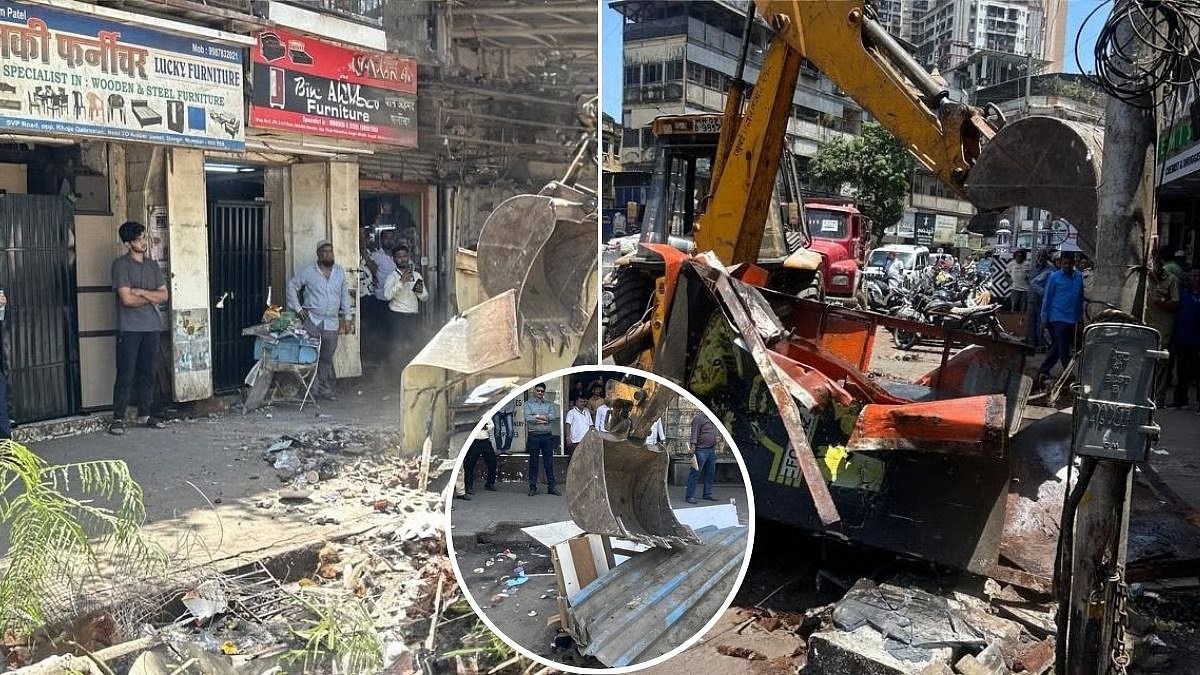
Mumbai’s civic administration has intensified enforcement against unauthorised commercial activity in dense inner-city neighbourhoods, carrying out a targeted clearance operation in Dongri that led to the removal of multiple illegal structures. The exercise reflects a broader push to reclaim public space and improve pedestrian accessibility in one of the city’s most congested urban zones.
During the latest Mumbai encroachment drive, officials dismantled nine unapproved shops located along a key arterial stretch and adjoining lanes in Dongri. Authorities indicated that these structures had narrowed already constrained footpaths and road edges, affecting mobility and safety for residents in the area. The action also extended to removing extensions built beyond permitted shop limits, along with signboards and physical barriers placed on roads for informal parking. Civic teams from multiple departments coordinated the operation, supported by law enforcement to ensure minimal disruption. Officials noted that such interventions are increasingly necessary in high-density neighbourhoods where commercial activity often spills into public spaces due to limited formal infrastructure and high demand for retail frontage.
Urban planners highlight that while enforcement is essential, recurring encroachments point to deeper structural challenges. In areas like Dongri, where mixed land use is common and space is scarce, small businesses often operate in informal conditions due to a lack of affordable, regulated commercial premises. This creates a cycle where enforcement drives clear spaces temporarily, but without parallel planning interventions, the pressures tend to resurface. The Mumbai encroachment drive also included action against unauthorised street vending and informal installations that restricted movement. Officials maintain that such measures are aimed at restoring equitable access to public infrastructure, particularly for pedestrians, senior citizens, and persons with disabilities who are most affected by blocked pathways.
Earlier in the month, a large-scale clearance exercise along the Ghatkopar–Mankhurd corridor saw authorities reclaim significant stretches of public land from unauthorised occupation. That operation involved extensive manpower and machinery, underlining the scale at which encroachments have expanded in certain parts of the city. Experts suggest that these patterns are closely linked to housing shortages, migration, and the absence of inclusive urban design strategies. From a sustainability perspective, reclaiming encroached land can improve urban circulation, reduce congestion-related emissions, and enhance access to essential services. However, urban policy observers caution that enforcement-led approaches must be complemented by long-term solutions such as planned vending zones, affordable commercial spaces, and participatory planning frameworks.
Civic authorities have indicated that similar actions will continue across Mumbai as part of routine governance. The long-term impact of these efforts will depend on whether they are integrated with inclusive planning measures that address the root causes of informal urban growth, ensuring that both livelihoods and public space are sustainably balanced.
Mumbai Clears Illegal Shops In Dongri Drive