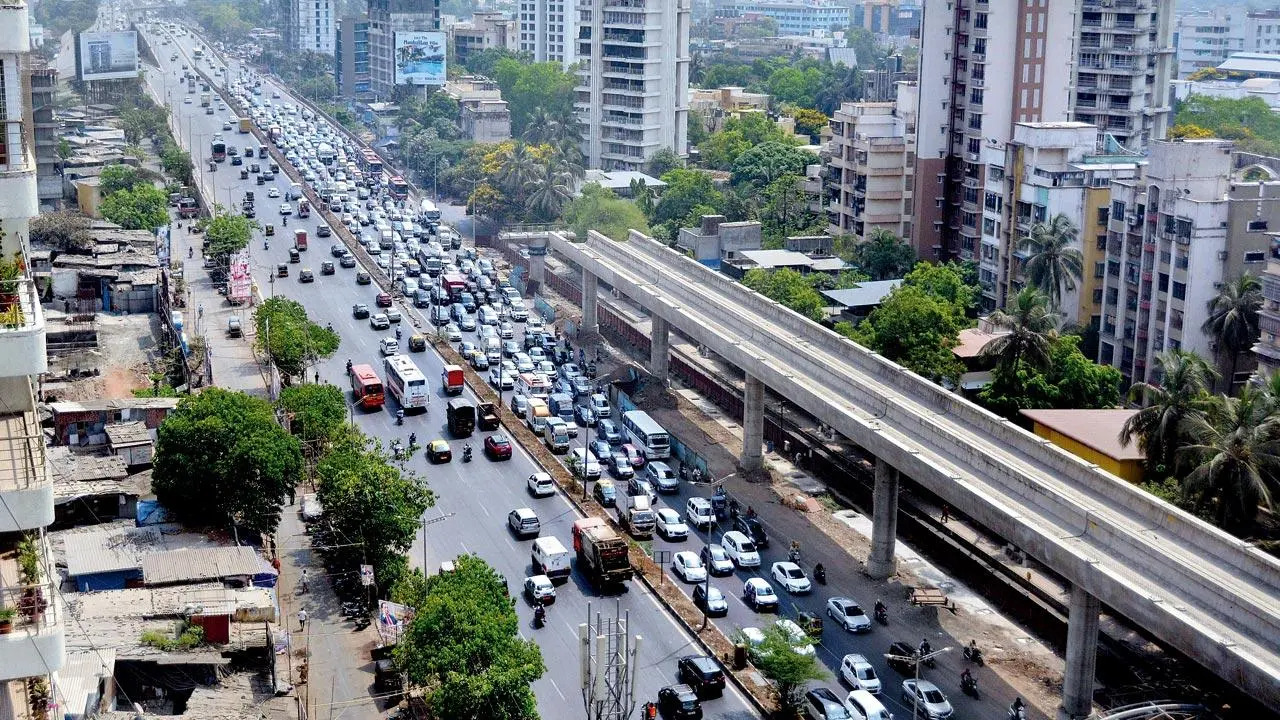
Mumbai East West Connectivity Gains Major Road Upgrade
Mumbai’s Santacruz-Chembur Link Road has reached a major network milestone with the opening of its final 1.4 km connection between Bharat Nagar Road and Vakola Junction. The addition completes a continuous east-west road system linking the Eastern and Western Express Highways, with direct access to Bandra Kurla Complex. The project could shorten several cross-city journeys, while shifting how traffic moves through some of Mumbai’s busiest suburban corridors. The newly operational section forms part of the SCLR Extension Phase II. MMRDA’s project documentation describes the final component as a combination of a 500-metre four-lane elevated section and a 900-metre two-lane connector. Together, these links integrate previously separate road structures around BKC, Mumbai University, Vakola and the Western Express Highway.
The completed network is intended to provide a signal-free route between the two express highways. The authority estimates that some journeys could save as much as 35 minutes, although actual savings will vary with traffic volumes, entry and exit points and peak-hour demand. The more important change may be the redistribution of vehicles away from heavily constrained junctions around Vakola, Kalina and Kalanagar. For BKC, the connectivity gain is particularly relevant. The commercial district has become one of Mumbai’s largest employment centres, generating substantial daily travel from both eastern and western suburbs. A direct road connection to the Western Express Highway can widen its road-based catchment, but it could also increase traffic entering surrounding neighbourhoods if demand grows faster than network capacity. That creates a broader urban planning question. New road capacity can reduce bottlenecks in the short term, yet easier driving can encourage additional private-vehicle trips over time. The long-term value of the Mumbai SCLR will therefore depend on how effectively it works alongside Metro, suburban rail, buses, walking routes and other high-capacity transport systems.
The project also illustrates Mumbai’s growing reliance on elevated infrastructure to overcome dense development and limited road space. Such structures can save land and avoid lengthy disruptions to existing traffic, but their success depends on the quality of approaches below and around them. Pedestrian crossings, drainage, noise management, junction design and safe access remain essential parts of the transport system. MMRDA had earlier reported that the wider SCLR extension would connect BKC with both express highways and include multiple flyovers and a cable-stayed bridge. The final connection now brings those components into a more integrated network. For Mumbai SCLR, the opening is therefore less about one elevated road than about completing a missing piece in the city’s east-west movement system. The next test will be whether the time savings translate into more reliable journeys without simply transferring congestion to adjoining streets.
For Mumbai’s increasingly dense urban economy, that balance matters. Efficient connectivity can improve access to jobs and services, but durable mobility gains will require road investment to be matched by strong public transport and people-friendly streets.