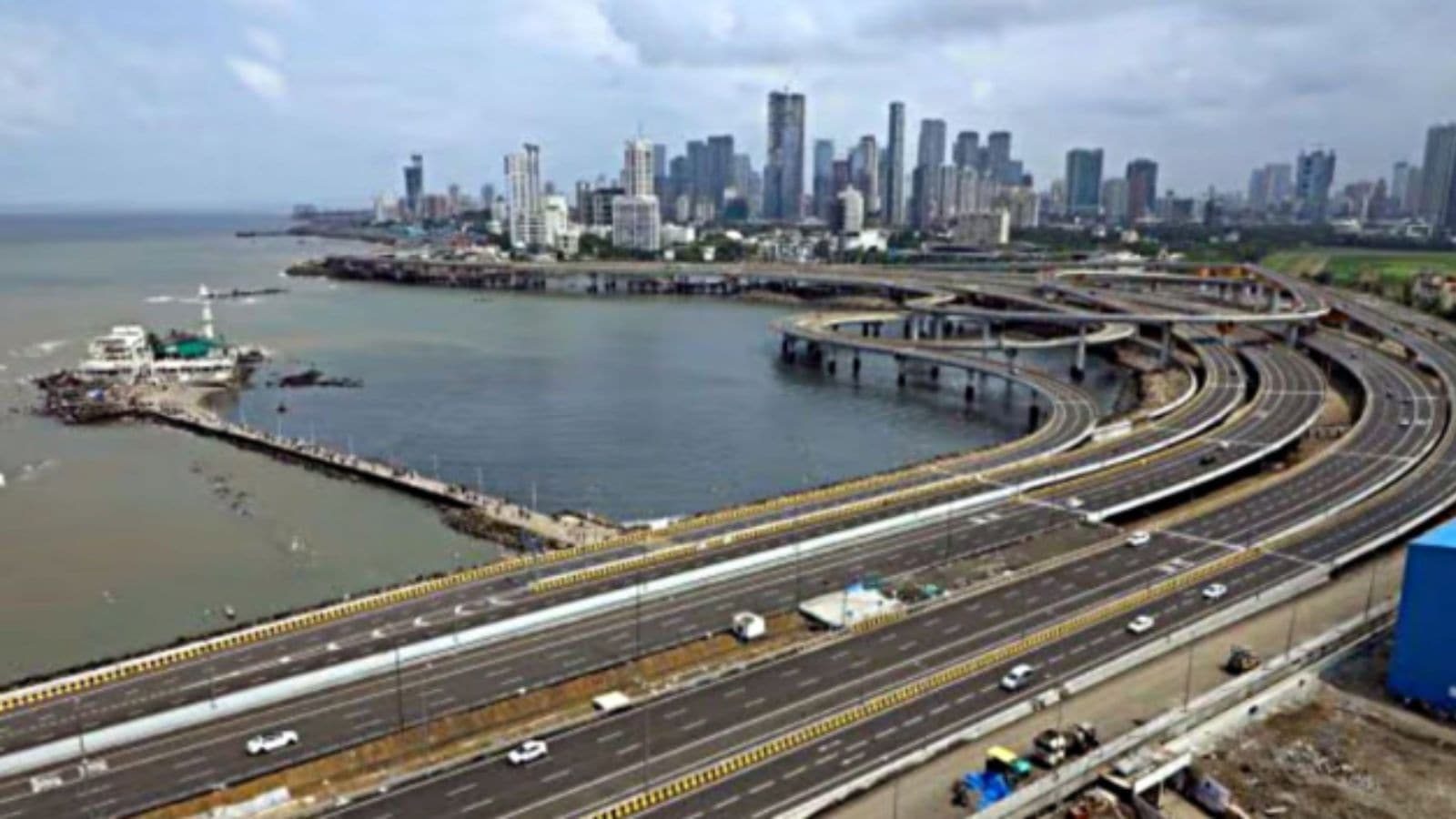
Mumbai’s flagship seafront mobility project has witnessed another cost revision, with the total outlay nearing ₹15,000 crore, raising fresh questions around financial planning, design adaptability and long-term sustainability in large urban infrastructure programmes. The Mumbai Coastal Road cost has now reached approximately ₹14,977 crore following its latest revision, reflecting incremental additions linked to design changes, heritage considerations and operational infrastructure. The project, which connects south Mumbai’s Marine Drive to the Worli end of the Bandra-Worli Sea Link, has undergone multiple recalibrations since its inception, illustrating the complexity of building in ecologically sensitive and densely developed coastal zones.
Urban infrastructure experts note that cost escalations in such projects are often tied to evolving technical requirements and regulatory interventions. In this case, modifications have included expanded carriageways, shoreline protection measures, and the integration of public amenities such as promenades and seating areas. Additional investments in control systems and structural safeguards have also contributed to the revised budget. A significant portion of the recent increase is attributed to engineering changes along critical stretches, where road alignment adjustments required additional land reclamation, reinforced sea walls and mitigation against tidal impacts. Heritage preservation requirements, including the careful relocation and restoration of historic structures, have further added to both cost and execution timelines. While the project has been partially opened in phases and is already altering traffic patterns in south Mumbai, its financial trajectory underscores broader challenges in urban project delivery. Analysts point out that initial estimates for mega infrastructure works often face revisions due to incomplete baseline data, shifting design priorities and evolving environmental safeguards.
The Mumbai Coastal Road cost debate also intersects with questions of urban equity and environmental resilience. Critics argue that high-investment road infrastructure must be evaluated alongside investments in mass transit systems, which typically offer wider public benefit and lower per capita emissions. At the same time, planners highlight that coastal protection elements embedded within the project may contribute to long-term climate adaptation, particularly in a city vulnerable to sea-level rise and extreme weather events. From a governance perspective, repeated cost revisions place increased scrutiny on approval mechanisms and fiscal accountability. Transparent reporting and periodic audits are seen as essential to maintain public trust, especially when projects rely on significant public funding. The coastal road also represents a shift in how Indian cities approach large-scale urban transformation—integrating mobility, recreation and shoreline management within a single framework. However, balancing these multiple objectives within constrained budgets remains a persistent challenge.
As Mumbai continues to expand its infrastructure footprint, the experience of this project offers key lessons in planning for uncertainty, managing stakeholder expectations and embedding resilience into design. Going forward, the focus is likely to remain on ensuring that such high-value investments deliver measurable improvements in mobility, environmental protection and public access, while maintaining fiscal discipline in an era of increasingly complex urban demands.