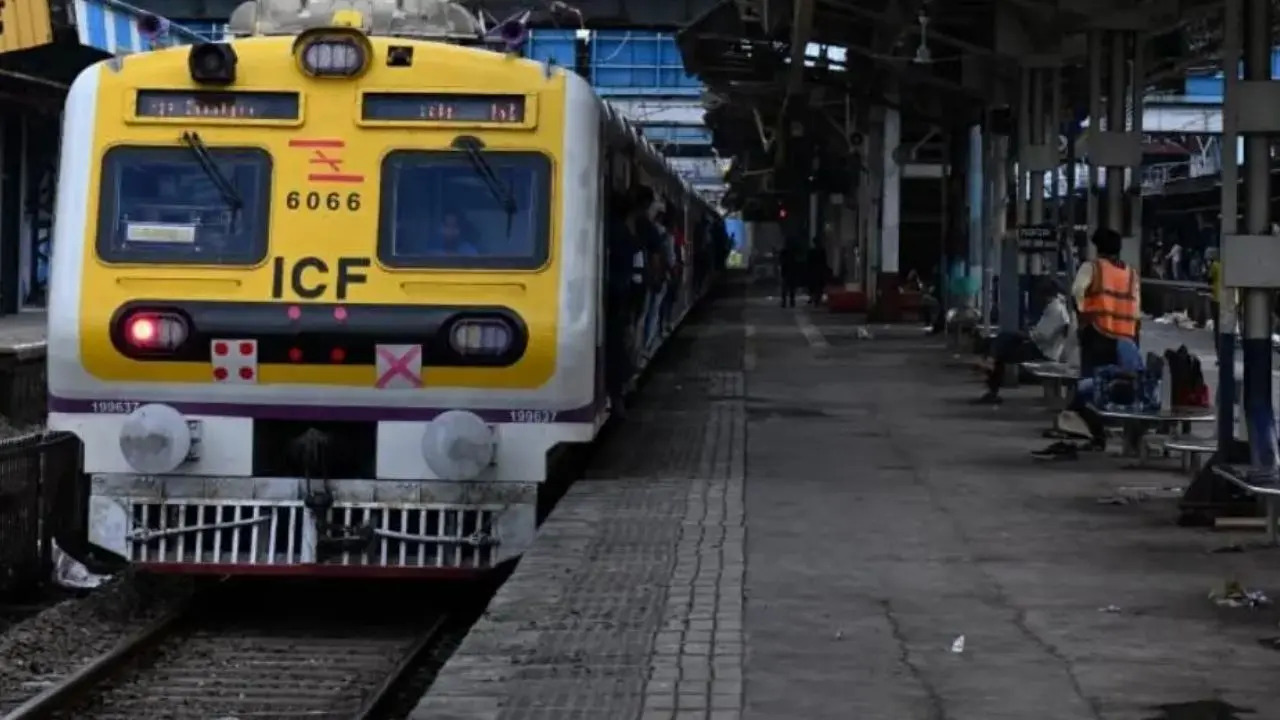
Mumbai’s suburban rail network is moving towards a major capacity upgrade on the Borivali–Virar corridor, with the ₹2,184-crore fifth and sixth line project reaching 30% physical progress and a revised completion target of 2029. The 26-km expansion is intended to separate suburban services from long-distance and other mainline trains, creating additional room for more reliable commuter operations on one of the region’s busiest rail corridors. The Borivali Virar rail expansion is being implemented under the Mumbai Urban Transport Project IIIA and is designed around a basic capacity problem: the existing tracks carry different categories of trains on the same corridor. Separating those movements is expected to reduce operational conflicts and create greater scope for improving suburban services. The project is being executed by the Mumbai Railway Vikas Corporation with the Ministry of Railways and Maharashtra sharing the project cost.
The planned infrastructure covers eight stations and includes new bridges, smaller railway crossings, a road overbridge and extensive earthwork. Platform arrangements at several stations also need to change to accommodate the additional tracks. Work is progressing around Dahisar, Mira Road, Bhayandar, Naigaon, Nalasopara and Vasai Road, making the project more than a track-laying exercise; it is also a substantial intervention within already built-up suburban neighbourhoods. Land and environmental clearances have been important components of the programme. Government records confirm that the project requires land acquisition and other statutory approvals, while railway documents identify the Borivali–Virar section as a key measure for separating suburban and non-suburban traffic. The project design also includes land affected by sensitive coastal and wetland environments, making construction management and compliance important alongside physical progress.
For commuters, the value of the Borivali Virar rail expansion will ultimately depend less on the headline construction milestone and more on what additional capacity translates into once the lines become operational. A segregated corridor can improve timetable flexibility, reduce the knock-on effects of delays and allow suburban trains to operate with fewer conflicts with longer-distance services. The wider economic implications extend into Mumbai’s northern suburbs and parts of the Palghar growth belt. Better rail capacity can strengthen access to employment centres while supporting more efficient movement between established residential districts and the wider metropolitan economy. Urban planners also note that rail-led capacity expansion can help contain pressure for car-dependent growth, provided new development is matched with walkable station areas, safe pedestrian access and adequate public amenities.
The Borivali Virar rail expansion therefore represents a long-term capacity intervention rather than simply a new-track project. With construction now at 30%, the next challenge will be maintaining momentum through land, rehabilitation, engineering and station works while ensuring that the completed corridor improves everyday mobility without creating new environmental or neighbourhood pressures.