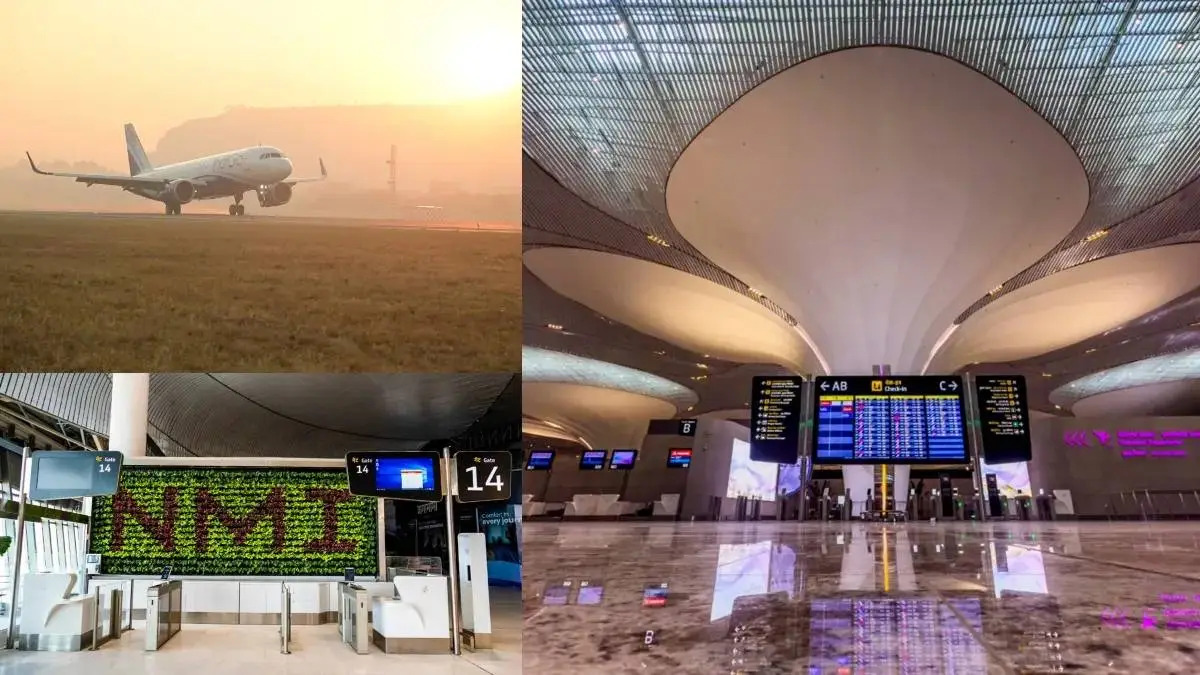
Mumbai Airport Reroutes International Traffic To Navi Mumbai
Mumbai’s aviation network is set for a significant operational shift from October, with around five million international passenger capacity expected to move annually from Chhatrapati Shivaji Maharaj International Airport to Navi Mumbai International Airport. The change is linked to the planned redevelopment of the northern section of Terminal 1B, making the move more than a flight transfer: it marks the beginning of a more integrated two-airport system for the Mumbai Metropolitan Region. Under the proposed arrangement, the international capacity will move from Mumbai’s Terminal 2 to Navi Mumbai from October 1. The adjustment is designed to create room at T2 for domestic passengers currently using the section of Terminal 1 that is due to close for redevelopment in January 2027.
The numbers explain the logic behind the reshuffle. Terminal 1 currently handles roughly five million passengers a year in the section affected by the redevelopment. Moving those domestic travellers to T2 would put additional pressure on a terminal already serving a large international market. Shifting an equivalent international capacity to Navi Mumbai provides additional operating space without requiring Mumbai airport to absorb the entire displaced passenger load. For Navi Mumbai, the move could accelerate the airport’s transition from a new regional facility into a substantial component of the MMR aviation system. The airport has an international passenger capacity of about six million annually, meaning the proposed five-million-passenger transfer would bring it close to full utilisation of that international capacity.
The change also has implications beyond airport terminals. Navi Mumbai’s growing role as an aviation gateway could influence business travel, logistics, hospitality and commercial development across the region. Better distribution of air traffic can reduce pressure on Mumbai’s constrained airport site, while creating new demand around the Navi Mumbai airport corridor. However, the shift will also test regional connectivity. For passengers, the two airports are not interchangeable from a journey-planning perspective. Airport access depends on road congestion, public transport, travel time and the location of homes and workplaces. A more distributed aviation network will therefore require reliable connections between the airport and surrounding urban centres if the benefits are not to be offset by longer ground journeys. The transition is expected to unfold in stages. Further domestic flight movements from Terminal 1 are planned to shift towards T2 later in October, while redevelopment of the northern T1B section is scheduled to begin in January 2027. The redevelopment is expected to continue for several years.
For Mumbai, the immediate test will be operational coordination. For the wider MMR, the longer-term question is whether two airports can function as a genuinely connected metropolitan aviation network, supported by efficient public transport and balanced development rather than simply moving congestion from one location to another.