


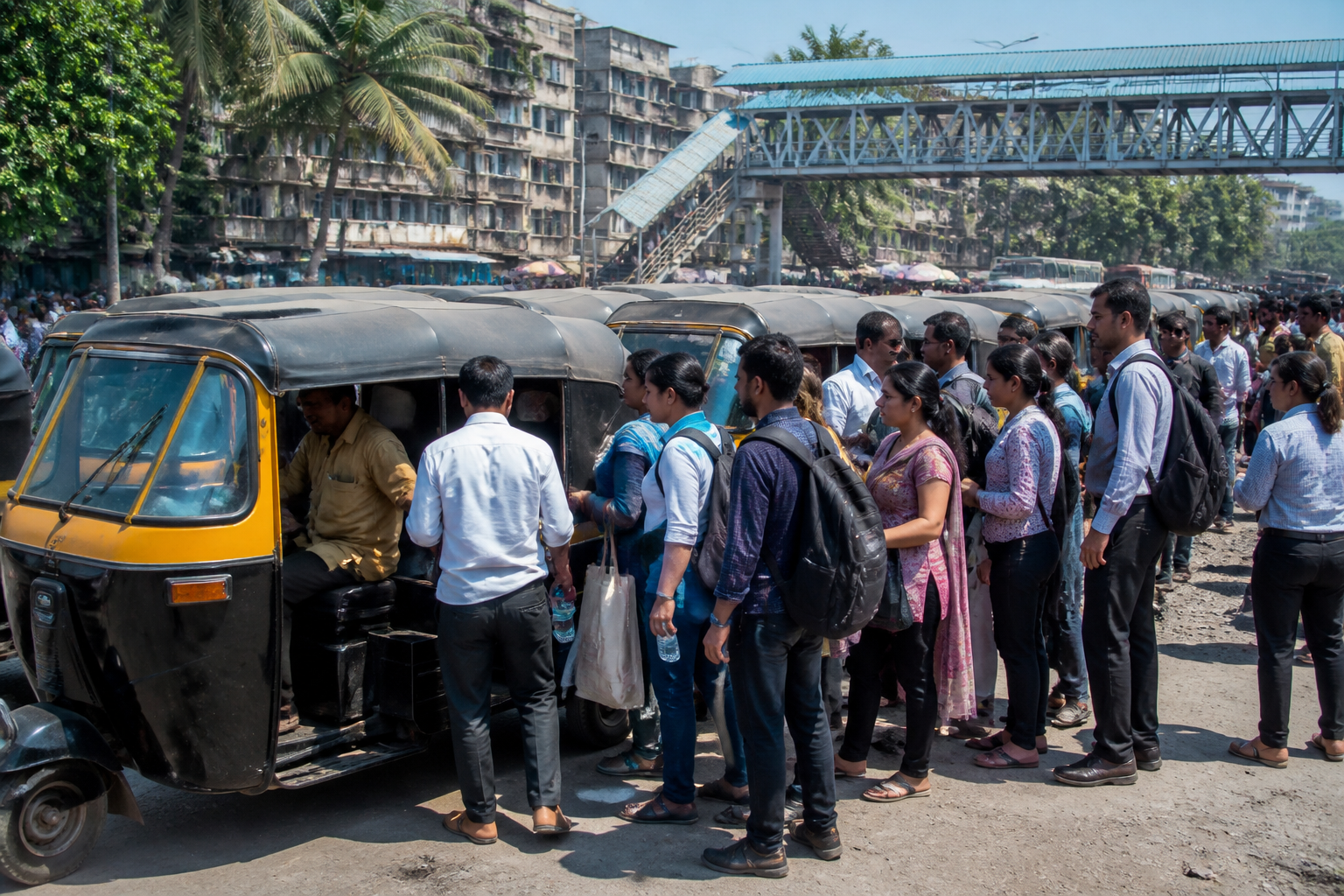
Commuters in Vasai-Virar are paying more for shared auto-rickshaw journeys after an official increase in minimum fares and enforcement against the illegal practice of carrying a fourth passenger, according to a report by Loksatta. The combined impact has raised shared-rickshaw fares by an estimated 20% to 25%, with daily passengers paying an additional Rs 5 to Rs 10 for regular trips.
The fare increase was implemented across the Mumbai Metropolitan Region from 1 September, when the minimum auto-rickshaw fare rose by Rs 1 from Rs 26 to Rs 27. The increase was linked to rising inflation and higher compressed natural gas prices, the report said. The Regional Transport Authority approved the revised minimum fare.
At the same time, traffic police in Vasai-Virar have begun strict action against rickshaws carrying a fourth passenger. The practice is outside the permitted passenger limit and has been targeted as part of measures to reduce road accidents. Shared autos in the region commonly operate with passengers travelling along fixed or semi-fixed routes, making the enforcement action particularly significant for daily commuters.
According to Loksatta, drivers have responded to the fare and passenger-limit changes by raising shared-rickshaw charges independently. The reported increase has affected short-distance journeys, while some drivers are refusing nearby trips because they consider them financially unviable under the revised operating conditions.
The dispute is creating daily friction around railway station areas and other commuter points. Passengers and drivers are reportedly arguing over fares, with college students and office workers among those facing difficulties. For commuters who use shared autos for the first or last part of their journey, even a Rs 5 to Rs 10 increase can add substantially to regular travel expenses over a month.
The situation reflects two separate administrative decisions operating at the same time: the Regional Transport Authority’s revision of the regulated minimum fare and traffic police enforcement of passenger-safety rules. The report described this as the second fare increase in about 18 months. Together, the measures have changed both the price and the operating pattern of shared-rickshaw services in Vasai-Virar.
The immediate issue for passengers is the lack of clarity over shared-auto fares on individual routes. While the minimum fare has been officially revised, drivers’ reported 20% to 25% increase in shared fares has led to disputes at the point of boarding. The refusal of short-distance trips has further reduced travel options for passengers who depend on autos to connect with stations, workplaces and educational institutions.
The report did not mention a separate enforcement or fare-communication mechanism for resolving these disputes. The next steps remain linked to continued traffic-police action against fourth-passenger violations and implementation of the revised fare structure by the Regional Transport Authority.

