


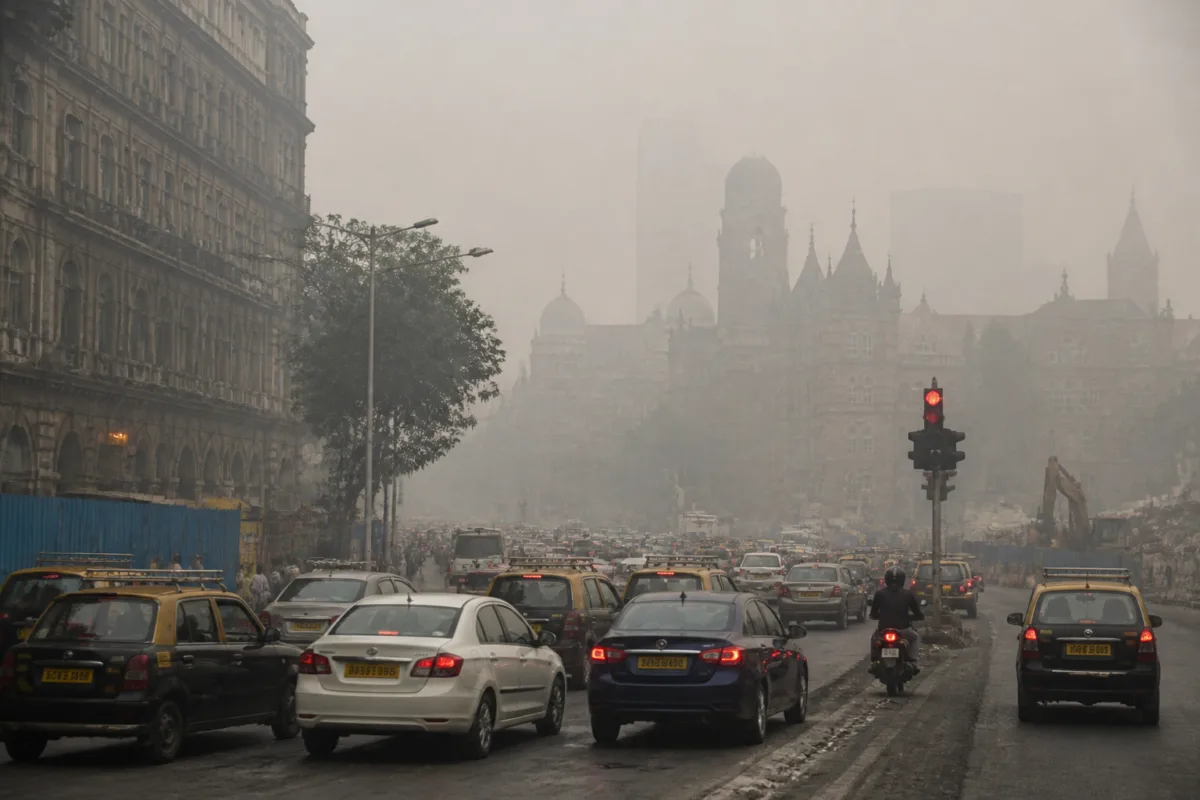
The Bombay High Court has warned Mumbai’s civic, police and pollution-control authorities that they could face accountability for failing to enforce measures against air and noise pollution, after observing that the city was surpassing Delhi in pollution levels and describing the situation as an emergency.
A bench of Justices Girish S Kulkarni and Neela K Gokhale raised the issue while hearing a suo motu public interest litigation on noise pollution and the bursting of firecrackers on public streets during festivities. The court expressed concern over Mumbai’s worsening air quality, visibility falling below 500 metres on Tuesday and what it described as weak implementation of its earlier orders.
The judges referred to an incident in south Mumbai, where firecrackers were burst on busy streets outside a police station near Crawford Market. The court described the episode as a rampant breach of its directions, including a complete ban on bursting firecrackers on public streets during festivities and requirements for sound-system licences to be displayed during processions.
The court said police inaction could amount to a violation of citizens’ rights under Articles 14 and 21 of the Constitution. It warned that errant officers could face penalties and prosecution for dereliction of duty. Justice Kulkarni questioned how officials responsible for implementing the orders could have a peaceful sleep while lakhs of people were facing the effects of pollution.
The court also criticised the lack of effective action at construction sites. Justice Kulkarni said the Brihanmumbai Municipal Corporation appeared not to be doing enough to control developers and construction activity or recover fines. The observation places construction dust alongside firecracker emissions and traffic-related pollution in the enforcement challenge facing the city.
The judges cautioned against relying only on air-quality readings from Mumbai’s cleanest locations. Justice Gokhale observed that pollution near traffic signals and in slum areas could be overlooked when authorities present overall or selective readings. The court also questioned whether officials were experiencing the same air as residents.
Justice Kulkarni said Mumbai’s natural advantages, including its sea breeze and open spaces, had not prevented the deterioration in air quality. He said residents should not have to check air-quality levels before deciding whether to step outside, while warning that firecrackers added toxicity to already polluted air.
The court directed the Mumbai Police Commissioner to convene a meeting with police station in-charges to ensure meticulous implementation of its orders. It also directed the commissioners of the police and the BMC, along with the chief of the Maharashtra Pollution Control Board, to make presentations at the next hearing on October 26.
The presentations are expected to cover public notices, awareness campaigns through news and social media, and efforts to involve celebrities in communicating the noise and toxic effects of firecrackers. The Bombay High Court will also examine the steps taken by the authorities to enforce the directions and address the city’s worsening pollution conditions.

