


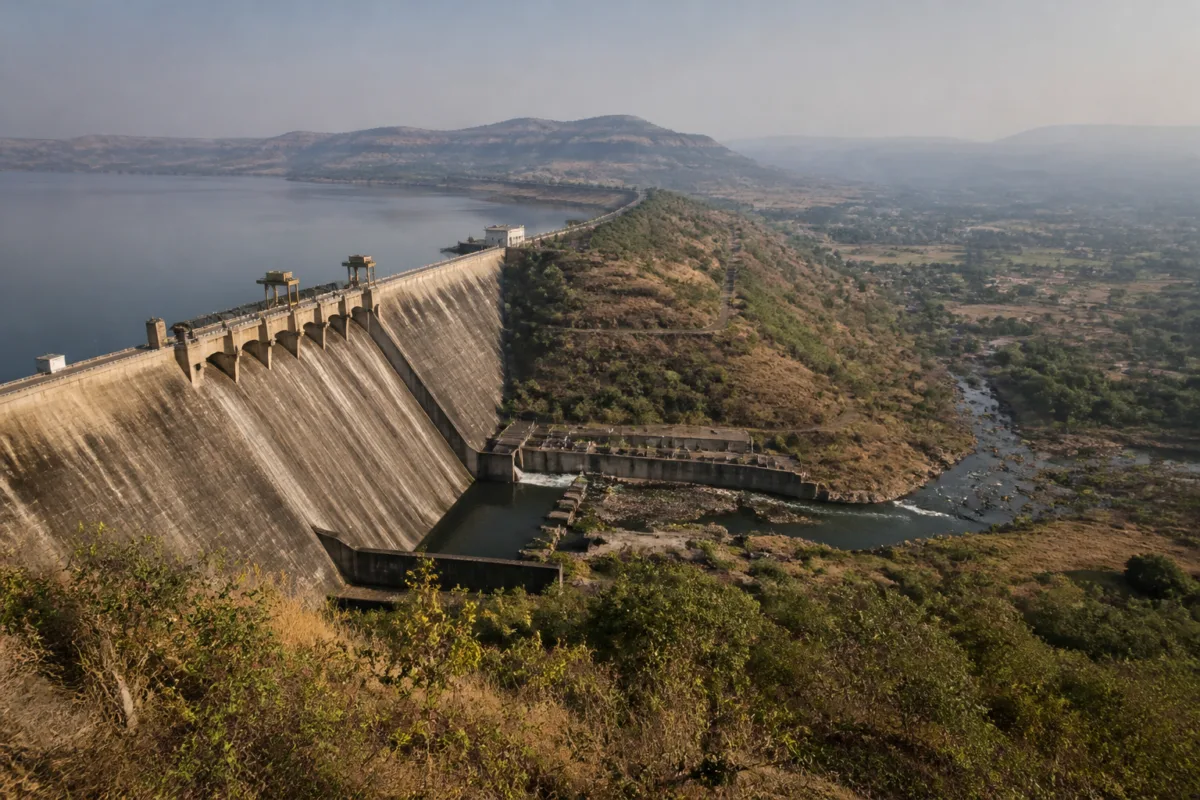
Daund MLA Rahul Kul has asked the Maharashtra government to reduce the quantity of Mulshi dam water used for power generation and release it into the Mula-Mutha and Bhima rivers, citing severe drinking-water and irrigation shortages in Pune and Solapur districts. Kul has written to Chief Minister Devendra Fadnavis seeking an urgent meeting on the demand.
The request comes against what the report describes as drought-like conditions across Maharashtra. Villages along the Mula-Mutha and Bhima rivers are facing drinking-water shortages, while farmers are struggling to access water for irrigation. The report also says that the availability of fodder for livestock has become a serious concern in affected areas.
Kul’s intervention focuses on how water from Mulshi dam is currently allocated and where it ultimately flows. According to the demand cited in the report, the dam’s water is used mainly for power generation and flows westward. As a result, Kul argues, drought-affected areas to the east do not receive a direct benefit from that water.
The MLA has proposed reducing the water diverted for power generation and releasing it into the Mula-Mutha and Bhima river systems instead. He has said that such a step would help address drinking-water needs in settlements along the rivers and provide irrigation water to farmers in Daund taluka as well as parts of Pune and Solapur districts.
The request also links the proposed release to the Ujani dam, whose storage could be replenished by additional inflows through the Bhima river system. Kul has said this would provide relief to Solapur district, where the report identifies drinking water, irrigation and livestock-related pressures.
The proposed change would require coordination between the state government and the agencies responsible for dam operations, water allocation and power generation. The source report does not state that the government has accepted the demand, issued a release order or set a quantity and schedule for any diversion. It records the request for an urgent meeting and the reasons presented by the MLA.
The dispute highlights the competing demands placed on multipurpose water infrastructure during periods of shortage. Water stored in a dam can support electricity generation, drinking-water supply, irrigation and downstream storage, but decisions on changing its use affect multiple districts and river-dependent communities. In this case, the political demand is to prioritise eastern, drought-affected areas over the existing westward flow associated with power generation.
Kul has further stated that the proposed measure could support livestock, the rural economy and industries in the surrounding area. These benefits remain part of the case made in his letter, while the report does not provide an official response from the chief minister’s office, the dam-operating authority or the power-generation agencies.
The next formal step requested by Kul is an urgent meeting with the chief minister. Any decision on reducing power-generation releases or directing water into the Mula-Mutha and Bhima rivers will depend on the state government’s response and the operational assessment of the authorities managing Mulshi dam and downstream water systems.

