


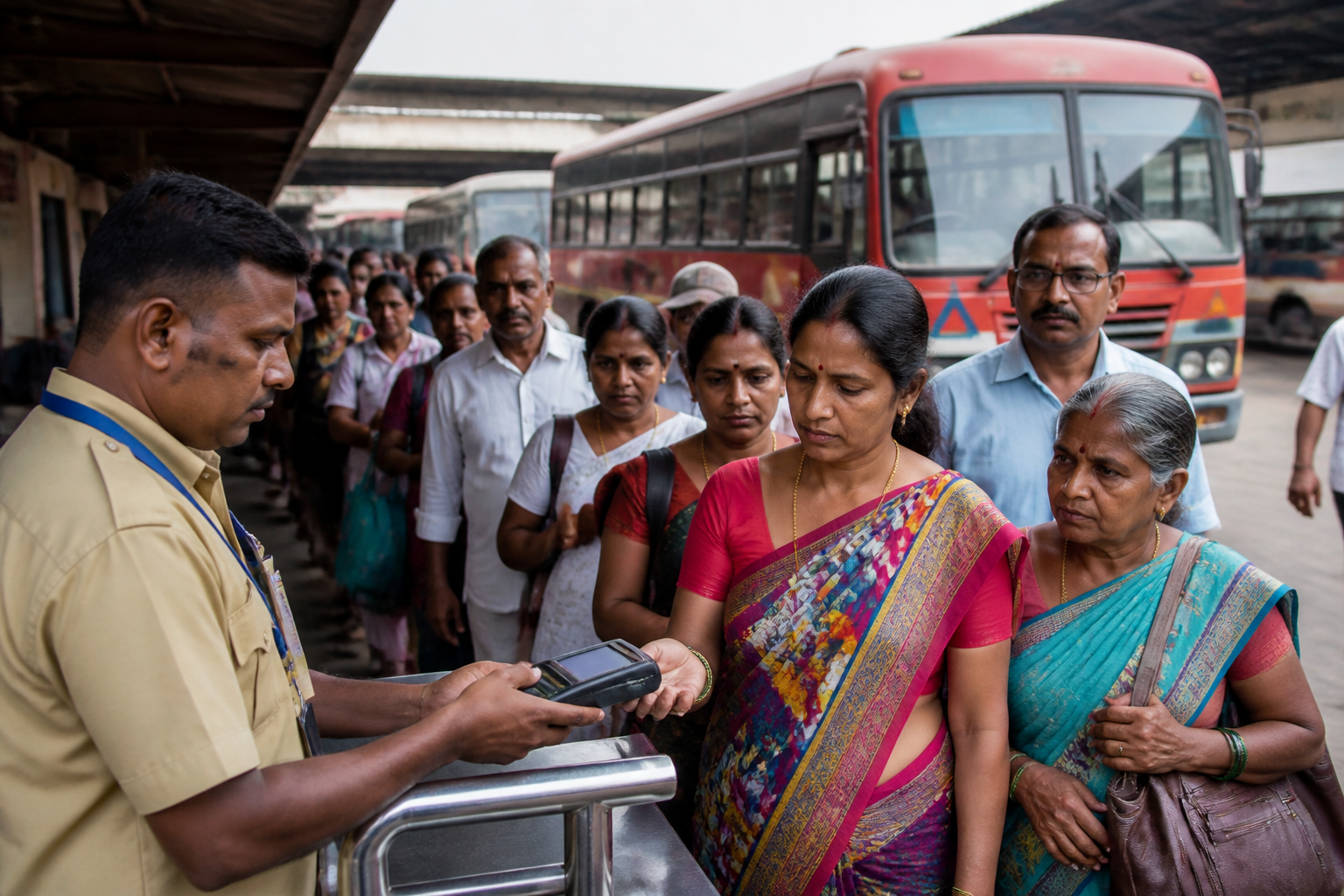
MSRTC has temporarily relaxed its mandatory NCMC card rule for concessionary travel after women and senior citizens reported being charged full fares because of registration, server and recharge problems across Maharashtra.
Mumbai | September 3, 2026
The Maharashtra State Road Transport Corporation made the National Common Mobility Card mandatory from September 1 for women travelling under the state concession scheme and for senior citizens aged 65 to 75 using concessionary fares. Following complaints from passengers, the corporation issued a circular signed by Nitin Maind, general manager for transport, directing divisional controllers to implement six relaxations immediately.
Under the first relaxation, women and senior citizens who had already booked tickets online can continue to travel at the concessional fare without an NCMC card if the reservation was made before the rule took effect. Passengers who have registered for a card but have not yet received it can show their registration receipt and travel on a concessionary ticket until September 30.
The corporation has also extended the earlier concession system for passengers travelling under the “ST Sange Teerthatan” scheme until September 12. NCMC cards will not be compulsory for group reservations made for Ganeshotsav. In addition, paper concession tickets will remain valid until September 14 because of server-related pressure.
The circular clarifies that concessionary tickets issued through the card system will be available only to passengers with an active NCMC card. The report said 1.11 crore passengers had registered for an NCMC card, but those who had not registered were being required to purchase full-fare tickets instead of receiving the concession.
Passengers reported technical difficulties in obtaining and using the cards. Complaints included server outages, a lack of clarity over recharge facilities and disagreements between passengers and conductors. In some depots, passengers were reportedly told that recharges could be completed through authorised agents, while agents directed them to conductors. The report said conductors did not have recharge facilities, leading to queues at ticket windows.
The difficulties have also affected passengers in rural areas. Citizens living 30 to 35 kilometres from an ST depot may have to travel to the depot simply to recharge their cards. Deepak Chavan, working president of the Ganeshbhakt Konkanvasi Pravasi Sangh, called for recharge facilities through conductors or gram panchayat offices and said the Aadhaar card should continue as an alternative until those arrangements are available.
Passenger Vandana Sonawane said she was charged a full fare of Rs 480 while travelling between Kamothe and Ambegaon Phata instead of receiving the concession. She said obtaining an NCMC card involved several technical difficulties and argued that cards should be delivered to senior citizens at home.
Nationalist Congress Party MLA Rohit Pawar also criticised the arrangement in a post on X. He said requiring passengers to buy a card for Rs 199, maintain a minimum balance of Rs 100 and recharge it repeatedly created an unnecessary burden for rural women and senior citizens.
The temporary measures remain tied to the dates set out in the MSRTC circular: September 12 for the older concession under the pilgrimage scheme, September 14 for paper concession tickets and September 30 for passengers travelling with registration receipts.
